

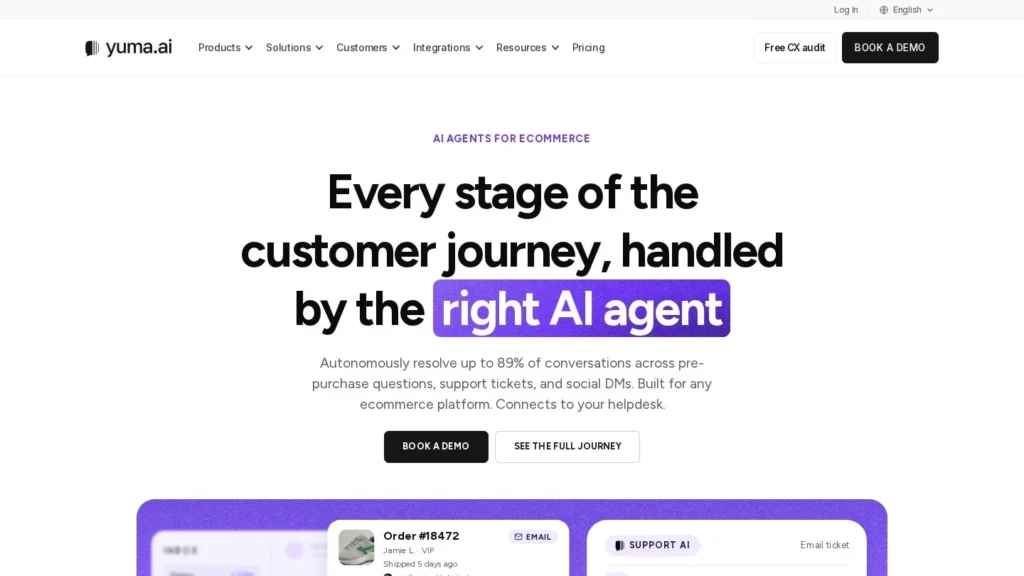
Yuma AI’s cheapest plan on the Shopify App Store costs $850 a month, which tells you who it is for: stores whose inbox has outgrown a part-time assistant. In return, the agent closes tickets on its own. It can refund an order, cancel it, start a return or change a shipping address, then reply to the customer in their own language.
For a dropshipper, the draw is the flood of “where is my order” messages that long supplier shipping times create. Yuma reads live order and tracking data, answers those questions without staff, and handles the refund requests that follow when a parcel runs late.
How Yuma AI Works
Yuma sits on top of the helpdesk you already use, including Gorgias, Zendesk, Kustomer, Re:amaze and, by third-party accounts, Gladly, Front and Salesforce Service Cloud. It connects to Shopify plus tools such as Recharge for subscriptions, Loop for returns, ShipUp for tracking and Klaviyo for marketing data. Tickets arrive by email, SMS, live chat, social media or contact forms.
Stores switch the agent on one playbook at a time, for example order status first, then cancellations. Merchants can set hard limits on refund and discount amounts so the AI cannot give away more than a set figure. A conversational assistant inside Yuma helps staff build new automations, dig through ticket trends and track performance. Reviewers also describe Web Actions, which drive a Chrome browser to work in tools that lack an API, and a voice product that takes backend actions during calls.
Yuma came out of Y Combinator’s Winter 2023 batch. Founder Guillaume Luccisano shipped the first prototype in December 2022, and the company reportedly raised $5 million in late 2024. Besides Shopify, it supports WooCommerce, Magento and BigCommerce.
Yuma AI Pricing
The Shopify App Store lists two plans: Small Merchant at $850 a month and Medium Merchant at $1,200 a month. Each includes a package of automated tickets, with overage fees beyond it, and comes with a 14-day free trial. Charges sit on top of your Shopify subscription.
Stores that buy directly are reported to sign annual bundles, starting around $14,400 a year for roughly 12,000 resolutions, with no implementation fee or per-seat charge. On those plans, a ticket counts only when the AI resolves it with no human touch.
What to Watch Out For
Run the numbers against your margins first. A store taking 200 support tickets a month would pay several dollars per ticket at the entry price, a cost that thin dropshipping margins may not absorb. Setup is sales-led, and results build gradually as each playbook goes live.
Reviewers mention occasional wrong answers that still need a human eye, and operators report full-resolution rates of roughly 30 to 50 percent, below the figures in Yuma’s marketing. The Shopify listing carries a 5.0 rating, but from only nine reviews.
User Reviews
Nobody has rated it here yet. Be the first AI Agents Choice user to rate Yuma AI.