Datadog Test Optimization

CI test monitoring in Datadog that detects flaky tests, labels their root cause with AI and quarantines them by rule.

$20 per committer a month billed yearlyAI flaky test management inside a CI observability platform
8.1/10 our score

4.6 on Capterra (373) See all ratings

Visit website
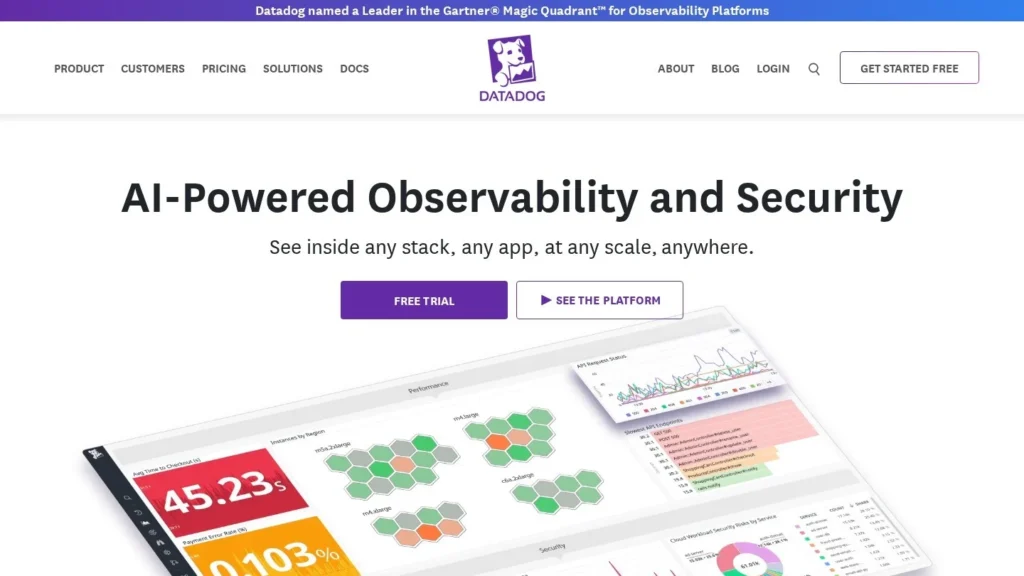
Datadog Test Optimization website: CI test monitoring in Datadog that detects flaky tests, labels their root cause with AI and quarantines them by rule.
Datadog Test Optimization website

Datadog Test Optimization Review

DeveloperDatadog
Websitedatadoghq.com
Agent typeAI flaky test management inside a CI observability platform
Best forEngineering teams already on Datadog that want flaky tests found, labeled, quarantined and tracked to a fix without a separate tool.
Fit noteSmall teams without Datadog may find a standalone test reporter cheaper to adopt, since pricing is per active committer.
Pricing modelPer active Git committer per month
Starting price$20 per committer a month billed yearly
Pricing detailsTest Optimization: $20 per active Git committer a month billed yearly, $24 month to month, $29 on demand. A free trial is offered; the price list does not state its length. Bits Code, which writes flaky test fixes, was in Preview in Datadog's January 2026 announcement and has no separate price list entry.
Free planNo
Free trialFree trial (length not stated)
ChannelsDatadog web app, GitHub pull requests, notifications
What it does on its ownDatadog detects new flaky tests on the default branch, assigns each an AI root cause category and applies per-repository policies that quarantine, disable or mark tests fixed. With Bits Code enabled, it can diagnose a flaky test and open a GitHub pull request with a fix for review.
IntegrationsGitHub, Datadog CI Visibility and Pipeline Visibility, Bits Code
PlatformsWeb (Datadog SaaS)
Compliance and securityPart of the Datadog platform; retries after the first run are not billed as test spans
Details last verified15 November 2026
CategoriesDetecting Flaky Tests, IT & DevOps, Test Automation
Ratings4.6/5 on Capterra (373)
8.1/10

Datadog Test Optimization Score

Our editorial score across six weighted criteria, based on Datadog Test Optimization’s published documentation, pricing and public user ratings. How we score

  • Autonomy8.5

    It detects, labels and quarantines flaky tests by policy and can open fix pull requests through Bits Code.

  • Ease of Setup7.0

    Teams need Datadog test instrumentation first, and the trial length is not listed.

  • Pricing Value7.5

    $20 per committer a month billed yearly, and retries after the first run are not billed as test spans.

  • Integrations8.5

    It ties into GitHub and the rest of Datadog's CI and pipeline data.

  • Trust and Security8.0

    Fixes arrive as reviewable pull requests, and policies are set per repository.

  • User Sentiment9.0

    Capterra shows 4.6 out of 5 from 373 reviews for Datadog.

Fourteen Root Cause Labels for Flaky Tests

Datadog Flaky Test Management sorts each eligible flaky test into one of 14 root cause categories. They include Concurrency, Randomness, Timeout, Order Dependency, Network and Time. To qualify, a test needs at least one failed run with an error message and stack trace.

We researched the Datadog price list, its Flaky Test Management docs, its January 2026 Bits Code post and 373 Capterra reviews. Teams that already ship CI data to Datadog get the most from it, in our reading. We rate it 8.1/10 on our scale.

Points Engineering Managers Check First

  • Price: $20 per active Git committer a month billed yearly.
  • Month to month costs $24, and on demand costs $29.
  • Quarantined tests keep running but stop failing CI.
  • Bits Code can open fix pull requests; it was a Preview in January 2026.
  • Capterra shows 4.6 out of 5 from 373 reviews.

Where Each Datadog Fact Comes From

FactDetailSource
Price$20, $24 or $29 per committer a monthDatadog price list
Categories and statuses14 root causes; Active, Quarantined, Disabled, FixedFlaky Test Management docs
Fix agentDraft PRs labeled Attempt to Fix, in PreviewDatadog blog
Rating4.6 out of 5 from 373 reviewsCapterra

The Life of a Flaky Test in Datadog

Datadog moves each test through four states.

Active and Quarantined

An Active test is known to flake and still runs. A Quarantined test also runs, but its failures no longer affect CI status. So the team keeps the history without blocking merges.

Disabled

A Disabled test is skipped in CI. Datadog never moves it to Fixed on its own, so someone has to revisit it.

Fixed

A test becomes Fixed after 30 days without a flake. However, a test that failed every run for 7 days is flagged as broken and stays put.

How Bits Code Tries a Fix

Bits Code picks tests that waste real time. A test needs a failure rate of at least 5%, at least 2 hours of wasted time and at least 2 failed pipelines. It must also have flaked on the default branch.

Then Bits Code writes a change and opens a draft pull request labeled Attempt to Fix. Datadog retries the test 20 times by default on that commit. Retries after the first run are not billed as test spans.

Datadog, TestDino and CloudBees on Flaky Tests

ToolEntry priceWhat it does with a flaky test
Datadog Test Optimization$20 per committer a month billed yearlyLabels root cause, quarantines, proposes a fix
TestDinoFree; Pro $39 a month billed yearlyLabels each failure as bug, flaky or UI change
CloudBees Smart Tests$120 per committer a year on AWS MarketplaceFlags flaky tests and selects which tests run

What 40 Committers Pay

At $20 each on yearly billing, 40 active committers cost $800 a month, or $9,600 a year. On demand, the same team pays $1,160 a month.

Teams Likely to Gain From Datadog

Platform teams that already use Datadog for logs and APM gain the most, since flaky test data sits next to pipeline data. Large monorepos with many flaky tests get value from the root cause labels, because they show where to start.

Where Datadog Is More Than You Need

Teams with no Datadog account may want a lighter tool. Also, Bits Code was in Preview when announced, so plan to review its pull requests closely.

What 373 Capterra Reviewers Say About Datadog

Reviewers like having metrics, logs, traces and APM in one place. Many praise fast log search and broad integrations. On the other hand, several say costs rise quickly with usage. Others report a steep learning curve and noisy alerts.

How Datadog Earns 8.1 on Our Scale

Autonomy and reviews score high. Setup scores lower because tests must be instrumented first. Pricing scores in the middle, since cost grows with every committer.

Short Answers on Datadog Flaky Tests

Does Quarantine Hide the Test?

No. A quarantined test still runs and builds history. Only its failures stop affecting CI status.

Is Bits Code Generally Available?

Datadog described Bits Code as a Preview in its January 2026 post. Check your account before you plan around it.

How Is Test Optimization Priced?

It costs $20 per active Git committer a month on yearly billing.

Guides Related to Datadog Test Optimization

Features

  • Flaky Test Management view with failure rate, pipeline failures and CI time wasted | AI root cause category for each eligible flaky test, from Concurrency to Network and Time | Statuses: Active, Quarantined, Disabled, Fixed | Per-repository policies for quarantine, disable, Attempt to Fix and Fixed | Automatic retries of a fix, 20 times by default | Alerts when a new flaky test appears on the default branch | Bits Code fix pull requests (Preview)

Strengths and Areas to Improve

Strengths

  • AI root cause labels across 14 categories | Quarantine keeps tests running without failing CI | Fixed status set automatically after 30 days without a flake | Published per-committer prices | Datadog holds 4.6 out of 5 on Capterra from 373 reviews

Areas to Improve

  • Needs a Datadog account | The fix agent, Bits Code, was announced as a Preview | Trial length is not listed on the price list | Capterra reviewers say Datadog costs can rise quickly

Datadog Test Optimization Ratings

373 reviews across 1 review site. Ratings are shown as published on each site and were last checked in November 2026.

What Reviewers Like

  • Reviewers value metrics, logs, traces and APM in one platform.
  • Many praise fast log search for troubleshooting.
  • Users mention broad integrations with cloud platforms and Kubernetes.

Common Complaints

  • Several reviewers say costs rise quickly with usage and retention.
  • Some report a steep learning curve.
  • Some describe noisy alerts and hard monitor setup.

Themes are summarized in our own words from public reviews on the sites above.

Write a Review