

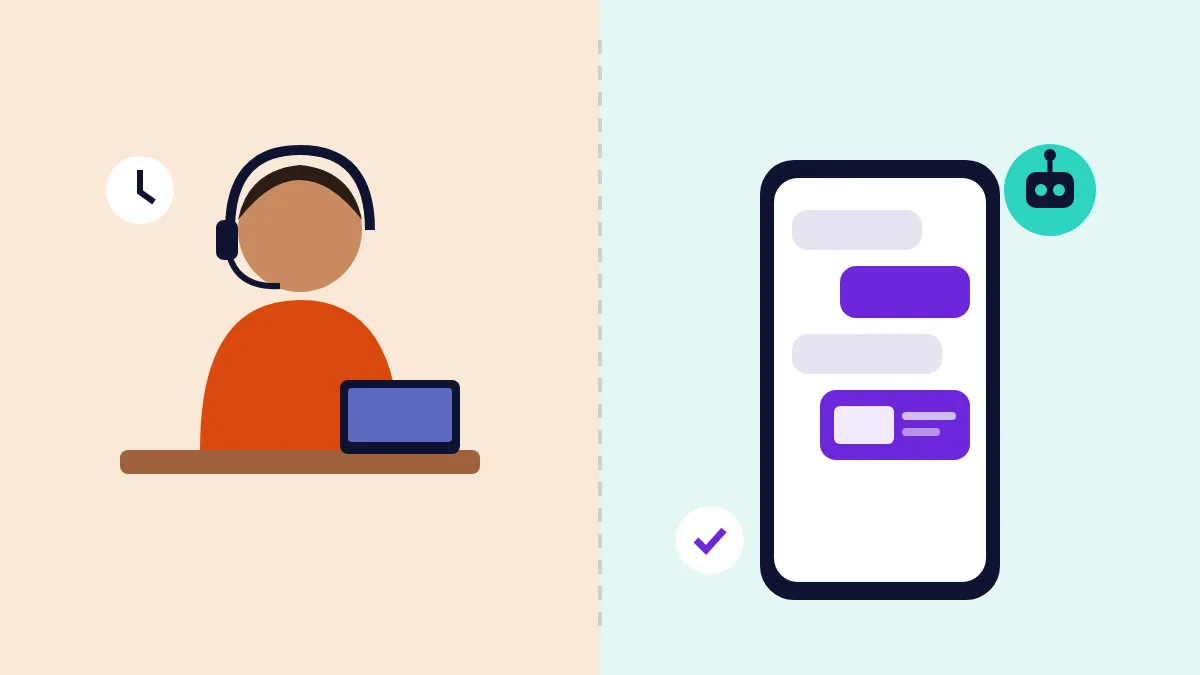
A real estate team that hires an in-house inside sales agent in the US can expect to spend somewhere between about $44,000 and $112,000 a year once pay and benefits are counted. The AI add-ons that promise to do the first part of that job are listed at $60 to $199 a month on top of the CRM you already pay for. That gap is real, but so is the gap in what each one can do.
For most mid-size teams, the AI ISA vs human ISA question has a split answer. An AI ISA is the cheaper way to reply to every new lead within minutes and keep old leads warm for months, while a human ISA (in-house or offshore) is still the better choice for live phone conversations, nervous buyers and anything that needs judgment. Many teams will end up paying for both, with the AI covering the first touch and a person taking over once the lead replies.
Key Takeaways
- Our worked estimate puts a US in-house ISA at roughly $44,000–$112,000 a year with benefits, and a full-time offshore ISA at about $15,000–$29,000.
- Published AI ISA plans annualize to about $600–$2,400 as add-ons, or roughly $5,900–$22,000 once the required platform and setup fees are included.
- The speed-to-lead research behind AI ISAs is old (2007 and 2011) but consistent: replies within minutes beat replies within hours.
- Several AI ISAs are text-only, and vendors themselves tell you to hand replies to a human fast.
- AI voice calls fall under TCPA consent rules, and the FCC changed its opt-out rules again on September 30, 2026. Check with counsel.
How Much Does a Human Real Estate ISA Cost?
There is no government wage category for real estate ISAs, so the most useful figures come from coaches, job postings and salary sites. Real estate coach Brian Icenhower recommends a low base of $24,000–$30,000 plus a bonus at closing, with total pay of $40,000–$65,000 for a new ISA and $60,000–$80,000 for an experienced one. A 2019 Inman column by Dale Archdekin lands on the same ranges and suggests 5%–15% at closing, warning that commission-only pay tends to drive turnover.
The other common structure is a per-appointment bonus of $50–$150. Icenhower is firm that it should be paid for appointments that actually happen, not ones that are merely booked. More recent data points upward: a September 2026 survey of job postings by Jamil Academy found base pay usually between $36,000 and $60,000, with advertised totals from about $31,000 to $130,000. One Charlotte team’s CareerBuilder listing advertises $36,000–$100,000 with bonuses. Salary sites are harder to pin down; The Close reported in late 2024 a ZipRecruiter average base of $44,158 and a Glassdoor median of $86,000 that likely includes commission. We could not check those sites directly, so treat both as reported.
Pay is only part of the bill. Federal Bureau of Labor Statistics data for June 2026 shows benefits make up 28.5% of total compensation for sales and office workers, or about 40 cents for every dollar of wages. Only about 10 cents of that is legally required, which matters because small teams often offer fewer benefits than the average employer.
Offshore and Virtual ISAs
Staffing firms publish much lower hourly rates. HireTalent.ph lists about $7.83 an hour for a Philippines-based ISA, VA Masters lists $8.50–$14.50 with no setup fee, and Stealth Agents quotes $8–$15 in its FAQ (its own page also says “starting at $15/hr,” so ask). MyOutDesk publishes no price and claims savings of up to 70% versus a local hire without showing how it got there.
How Much Does an AI Inside Sales Agent Cost?
Most AI ISAs are sold as add-ons to a real estate CRM or website platform, so the sticker price is only meaningful if you already use that platform. Based on each vendor’s published information:
- Lofty AI Sales Agent: free for 10 leads, then $60, $150 or $199 a month for 200, 500 or 600 leads. The Lofty CRM itself is not publicly priced; Luxury Presence reports about $449–$1,500 a month plus $299–$1,499 setup.
- Sierra Interactive Lead Engage: $199 a month on a 12-month commitment, available on Sierra’s Essential ($399.95) and Growth ($599.95) plans billed annually. Texts are billed by segment, so heavy use can add overages.
- Real Geeks Geek AI Text: $49 a month, or included with a lead package, on a platform that costs $399 a month plus $500 setup.
- Structurely (now rebranded 21X): the official pricing page shows usage rates from $0.07 a voice minute and $0.02 a text, but no plan fees. AI Tools Bakery reports $499 a month plus $2,000 setup (Team) and $999 plus $2,500 (Company), before credits.
- Ylopo AI and Felix by Fello: neither publishes a price for its AI. Ylopo prices by database size; Fello quotes Felix on top of a paid base plan.
AI ISA vs Human ISA: Annual Cost for a Mid-Size Team
We modeled one full-time ISA seat against the published AI plans that suit a team of roughly 2–10 agents. All figures are annual and in US dollars, rounded to the nearest dollar.
| Option | Inputs | Annual cost | Hours covered per week |
|---|---|---|---|
| In-house US ISA, new | $40k–$65k total pay + benefits | $44,046–$90,850 | About 40 |
| In-house US ISA, experienced | $60k–$80k total pay + benefits | $66,069–$111,815 | About 40 |
| In-house US ISA, base + per-appointment bonus | $24k–$30k base + $50–$150 × 120 held appointments + benefits | $33,035–$67,089 | About 40 |
| Offshore/virtual ISA, full-time | $7.83–$15/hr × 160 hrs × 12 | $15,034–$28,800 | About 40 |
| Real Geeks Geek AI Text | $49/mo add-on; with $399/mo platform + $500 setup | $588 add-on; $5,876 with platform | Within set office hours |
| Sierra Lead Engage | $199/mo add-on; with $399.95–$599.95/mo plan | $2,388 add-on; $7,187–$9,587 with plan | 24/7 |
| Lofty AI Sales Agent (Team) | $199/mo add-on; with reported $449–$1,500/mo CRM + $299–$1,499 setup | $2,388 add-on; $8,075–$21,887 with CRM | Not stated |
| Structurely (reported) | $499–$999/mo + $2,000–$2,500 setup, before credits | $7,988–$14,488 + usage | 24/7 |
- Benefits load: low end adds only legally required benefits (BLS $2.63 per $26.00 of wages, about 10.1%); high end adds all average benefits ($10.34 per $26.00, about 39.8%).
- New ISA: $40,000 × 1.101 to $65,000 × 1.398. Experienced: $60,000 × 1.101 to $80,000 × 1.398.
- Per-appointment row: assumes an illustrative 10 held appointments a month (120 a year), so bonuses of $6,000–$18,000. Your volume will differ.
- Offshore: full-time at 160 hours a month, using the lowest and highest published hourly rates above.
- AI plans: monthly fee × 12 plus one-time setup. Sierra’s platform setup is $0 when paid annually up front. Text overages and Structurely credits are excluded.
- Not included anywhere: recruiting, training, dialer and CRM seats for the human options, or lead costs.
Two points stand out. Even the most expensive AI bundle in the table (before usage charges) costs less than the cheapest in-house scenario, and a 40-hour human week covers about 24% of the 168 hours in a week, while most AI tools run around the clock. As a cross-check, a cost calculator from Stealth Agents, which sells virtual ISAs, estimates $90,870 a year all-in for a US hire, inside our range.
Why Speed to Lead Drives the AI Case
The argument for AI ISAs rests on response time, and the evidence is old. The Lead Response Management Study by James Oldroyd with InsideSales.com and MIT, presented in 2007, found that calling within five minutes rather than 30 was linked to 100 times higher odds of reaching the lead and 21 times higher odds of qualifying them. It drew on more than 15,000 leads at six companies.
A 2011 Harvard Business Review article by Oldroyd and colleagues (record at BYU ScholarsArchive) audited 2,241 US companies. As SmartCompany summarized it, only 37% replied within an hour, 23% never replied, and the average response took 42 hours. Firms that made contact within an hour were nearly seven times as likely to qualify the lead as those that waited longer.
These studies are now 19 and 15 years old and were not specific to real estate, so read them as direction rather than precise multipliers. Real estate adds its own pressure: NAR data reported by Nowbam suggests about three-quarters of buyers interview only one agent.
What AI ISAs Can’t Do Yet
The vendors are candid about the limits. Sierra’s own help center says Lead Engage is text-only, its responses can’t be customized, its Spanish replies may be imperfect, and a human should step in as soon as a lead replies. Real Geeks lists Geek AI voice as still coming, Lofty’s agent works by chat, text and email rather than outbound calls, and Fello’s Felix does not currently transfer inbound calls to the team.
Accuracy is the other worry. In a 2024 interview, Roof AI’s CEO described a general-purpose model inventing an MLS and fabricating market statistics, and warned against relying on such tools for live property data or fair housing safeguards. Agents interviewed by Inman in March 2026 said “AI cannot read the room in a heated negotiation,” and that leaning on it too much can cost trust.
When a Human ISA Still Wins
- Phone-first teams: if your model depends on 150–200+ outbound dials a day, as one Atlanta posting expects, most AI ISAs on the market today are text-first.
- Complex or emotional conversations: first-time buyers and sellers in a hard situation, which experts quoted by Florida Realtors say still need local knowledge and relationships.
- Teams without the right CRM: most AI ISAs only work inside one vendor’s platform.
Human ISAs come with their own risk. Icenhower describes unusually high turnover in the role and slow early performance, though we found no published turnover rate for real estate ISAs.
Compliance: What Changed for AI Calls and Texts
This is a summary of public sources, not legal advice. Check with counsel before turning on AI calling or texting.
- February 2024: the FCC’s Declaratory Ruling FCC-24-17 said calls using AI-generated voices are “artificial” voice calls under the TCPA, so they need the called party’s prior express consent (written consent for telemarketing) unless an exemption applies. Cooley notes the vote was unanimous and took effect immediately.
- August 2024: the FCC proposed requiring AI disclosure at the start of each AI call. Our sources found no final adoption.
- January 2025: the Eleventh Circuit vacated the one-to-one consent rule days before its January 27, 2025 start date. The FCC then formally removed it in 2025. Existing written-consent rules still apply.
- April 11, 2025: consumers can revoke consent by any reasonable method. The separate “revoke-all” provision was delayed, most recently to January 31, 2027.
- September 30, 2026: the FCC voted 3-0 to replace revoke-all. Callers may designate exclusive opt-out methods if each call or text clearly discloses them; a telemarketing opt-out still covers all of that caller’s marketing robocalls and texts. The order was released October 1 and takes effect 30 days after Federal Register publication, which had not happened as of early October.
Vendors handle this differently. Ylopo, for example, says it contacts only leads from consented sources, while Fello says the team remains responsible for consent. Ask any vendor how consent and opt-outs are captured before signing.
The Hybrid Model: AI First Touch, Human Handoff
Most AI ISA products are built to pass leads to people rather than replace them. Lofty’s agent hands warm leads to the assigned agent and forwards calls to its number to a live person. Structurely can live-transfer a call with a lead summary, Ylopo hands off by live transfer or inside Follow Up Boss, and Felix offers a live call bridge or a scheduled callback.
In practice, a hybrid setup lets the AI answer every new lead in minutes and work the long-tail database, while one ISA (in-house or offshore) handles the conversations that come back. On our numbers, a $2,400 add-on plus a $15,000–$29,000 offshore ISA still costs less than the cheapest in-house hire. Compare the tools side by side in our best AI agents for real estate roundup, or browse all real estate AI agents.
FAQ
How Much Does a Real Estate ISA Cost per Year?
Coaches put total pay at $40,000–$80,000 depending on experience. Adding benefits, our estimate is roughly $44,000–$112,000 a year for an in-house US hire.
How Much Does an AI Inside Sales Agent Cost?
Published add-ons run $49–$199 a month, but most need a platform subscription. With platform and setup fees, our examples range from about $5,900 to $22,000 a year.
Can an AI ISA Replace a Human ISA?
For first response and long-term text follow-up, often yes. For live calls, negotiation and complex buyers, vendors themselves recommend a quick human handoff.
Is an Offshore ISA Cheaper Than AI?
No. A full-time offshore ISA runs about $15,000–$29,000 a year on published rates, more than most AI bundles we priced, though it buys live phone work that most AI tools lack.
Are AI Voice Calls to Leads Legal?
The FCC treats AI-generated voices as artificial voices under the TCPA, so prior express consent is required unless an exemption applies. Check with counsel for your situation.
