


AI agents are already doing real work inside real companies: Chime sends more than 1 million support calls a month to one, a Houston law firm sends 30% more demand letters with the same staff, and DHL uses agents to call carriers about arrival times. An AI agent is software that takes a goal, works through the steps inside a company’s own systems and hands the hard cases to a person.
This guide walks through 20 real-world AI agent examples across support, sales, finance, logistics, law, healthcare, government and IT. For each one you will see the business problem, how the agent handles one task from start to finish, the results its customers have published and the lesson you can use in your own business. The figures come from vendor case studies, earnings calls and press reports, and we did not test these tools ourselves.
Narrow, High-Volume Jobs Produce the Strongest Agent Results
- The strongest results come from narrow, high-volume jobs: Vic.ai reports 84% of invoices at Diesel Direct processed with no human touch, and HappyRobot says its freight agents resolve more than 70% of interactions.
- Agents that can act in the system of record do far more than agents that only answer. Navan’s Ava rebooks flights and handled about 60% of Navan’s customer interactions in one quarter.
- Every successful example keeps a person in the loop for risky or unusual cases, from lawyers signing off on Harvey’s work to nurses taking escalated calls from Hippocratic AI.
- Published numbers are best cases. Glia says its banking agent can resolve up to 80% of routine inquiries, while its featured credit union reports 37% of calls fully handled.
- Pricing now follows outcomes in many cases: Fin charges $0.99 per resolution and HubSpot $0.50 per resolved conversation, while enterprise agents are sold by quote.
- The best first use case scores high on volume, clear rules, low risk, system access and a number you can measure. A scoring checklist is at the end of this guide.
What Counts as a Real AI Agent Example
Many lists of AI agent examples include Netflix recommendations and self-driving cars, which do not help a business owner decide what to deploy next quarter. In this guide, an AI agent is software that is given a job, plans how to do it and then does it inside other software, with a person on hand for exceptions.
A chatbot answers a question about the refund policy, while an agent issues the refund. For the longer version of that difference, read our guide to AI agents vs AI chatbots. The five steps below are the test we used for every example in this guide, using a simple refund request to show each one.
| Step | What the Agent Does | In a Refund Request |
|---|---|---|
| 1. Take a goal | Understands what the person or system is asking for | A customer writes that they were charged twice |
| 2. Plan the steps | Breaks the job into checks and actions, often following rules the business wrote | Verify the account, find both charges, check the refund policy |
| 3. Use tools and systems | Reads and writes data in the company’s software | Looks up the order in the store or billing system |
| 4. Act and check the result | Completes the task, then confirms it worked or scores its own confidence | Issues the refund and confirms it went through |
| 5. Hand off to a human | Passes unclear, risky or high-value cases to a person with the context attached | Sends a large or disputed refund to a manager for approval |
Use these five steps to judge any vendor demo. A product that cannot act in step 3 or check its work in step 4 is closer to a chatbot, and a product with no step 5 deserves caution, because none of the successful deployments below run without one.
Industry, Job, Results and Pricing for All 20 Agents
We chose these 20 from the 240-plus agents listed on AI Agents Choice because each has named customers and published results. Use the table to jump to the industry closest to yours.
| Example | Industry | Job It Does | What Changed | Pricing Model |
|---|---|---|---|---|
| Fin | Software and SaaS | Resolves support chats, emails and calls | Synthesia saved 1,300+ hours in six months | $0.99 per resolution |
| Decagon | Consumer fintech | Handles refunds, cancellations and card replacements | Chime reports 60% lower support costs | Per conversation or per resolution, by contract |
| Gorgias AI Agent | Ecommerce | Answers order, return and address questions | Dr. Bronner’s automated 45% of interactions | Plans from $10 a month plus per automated interaction |
| Glia Banker | Banking | Answers routine member calls | Service 1st cut call abandonment 96% | Custom quote |
| Navan Ava | Business travel | Rebooks flights and hotels, handles refunds | About 60% of Navan’s customer interactions | Included with Navan Business travel |
| HubSpot Breeze Agents | Sales and service | Resolves tickets and researches leads | 72% of tickets resolved without a human | $0.50 per resolved conversation plus seats |
| Impel | Automotive | Books showroom and service appointments | 65% more showroom appointments in a FordDirect pilot | Quoted per dealer |
| EliseAI | Real estate | Leases apartments and logs maintenance | Landmark signed 8,338 leases through it in 2024 | Custom quote |
| Slang AI | Restaurants | Answers phones and books tables | 25 million+ calls across 2,000+ locations | From $399 per location a month |
| Olivia by Paradox | Hiring | Screens candidates and books interviews | Chipotle cut time to hire to about 3.5 days | Custom quote |
| Ramp Agents | Finance | Checks expenses against policy, codes invoices | Glossier auto-codes 90% of transactions | Free plan; Plus $15 per user a month |
| Vic.ai | Accounting | Codes, matches and posts supplier invoices | Diesel Direct reports 84% no-touch invoices | Custom quote |
| HappyRobot | Logistics | Makes check calls and books freight | DHL runs 10+ live use cases | Enterprise contract |
| Harvey | Legal | Reviews documents and drafts legal work | Used by 80% of Am Law 100 firms | Quote; reported $1,200 per lawyer a month |
| EvenUp | Personal injury law | Drafts demands and chases records | Zaid & Associates sends 30% more demands | Case-based quote |
| Hippocratic AI | Healthcare | Calls patients after discharge and for screenings | 250 million+ patient interactions | Usage-based quote; $9 per agent hour cited |
| Citibot | Government | Answers resident calls and logs requests | Denver saved about $500,000 in 18 months | Annual subscription per channel |
| GitHub Copilot Cloud Agent | Software | Turns issues into pull requests | Agents started 40%+ of GitHub pull requests | Included in Copilot plans from $10 a month |
| Moveworks | IT support | Resolves employee IT and HR requests | Nutanix resolves 54% of IT issues autonomously | Quote; Vendr reports $130,000 median a year |
| Microsoft Security Copilot | Cybersecurity | Triages alerts and summarizes incidents | Avanade resolves incidents up to 80% faster | Included with Microsoft 365 E5 and E7 |
Prices are based on each vendor’s published pricing at the time of writing (October 2026) or, where marked, on reported figures.
Customer Service Agents That Close Tickets
Support is where AI agents went into production first, and it still has the most public evidence. These five agents answer customers and also complete the task behind the question. For more options, browse our customer support AI agents.
1. Fin: Resolves Support Conversations on Any Helpdesk

The problem: Support teams answer the same questions every day, from refund status to double charges, and the queue grows faster than the hiring budget. Software companies also take those questions across chat, email and messaging apps.
How the agent works: Take a customer who writes in about being charged twice. Fin searches the help center and internal documents for the billing policy, then follows the Procedure the support team wrote for duplicate charges: it checks the account in a connected system, waits for the result and pauses for a human approval if the team requires one for refunds. It replies in the channel the customer used and hands the case to a person if the customer asks or the rules run out. Fin works on Intercom or on top of Zendesk, Salesforce, HubSpot or Freshdesk.
What happened: Fin says it resolves more than 2 million conversations a week across more than 30,000 companies. In Anthropic’s customer story, Synthesia resolved more than 6,000 conversations and saved over 1,300 hours in six months, while the average out-of-the-box resolution rate was 51%.
What you can learn: The gap between a 51% start and the best results comes from content and rules, not the model. Clean up your help articles and write down the steps for your most common requests before launch. Also read how the vendor defines a resolution: Fin bills $0.99 when a customer goes quiet for 24 hours after its answer.
Best fit: Software and subscription businesses with a solid help center. Read our full Fin profile.
2. Decagon: Handles Refunds and Card Replacements for Consumer Apps

The problem: Consumer apps get huge contact volumes, much of it by phone. Phone queues are expensive to staff, and callers hang up when the wait gets long.
How the agent works: A customer of a banking app calls to report a lost debit card. Decagon’s voice agent follows an Agent Operating Procedure, a set of plain-language instructions the support team wrote for card replacement, and because it connects to the company’s back-end systems it can process the replacement itself instead of opening a ticket. The same rules apply on chat, email and SMS. Teams test rule changes in simulations and live experiments before launch, and cases that need a person are escalated.
What happened: Decagon’s case study with Chime reports support costs down 60%, a figure from Chime’s S-1 filing, with chat resolution above 70% and voice resolution near 70% on more than 1 million calls a month. Decagon also reports 80% deflection at Duolingo.
What you can learn: An agent pays off when it can do the task, not only explain it. List the account actions customers ask for most, give the agent safe access to each one and write the rules in language your support leads can edit themselves.
Best fit: Consumer brands with very high chat and phone volume. Read our full Decagon profile.
3. Gorgias AI Agent: Answers Order Questions for Shopify Stores
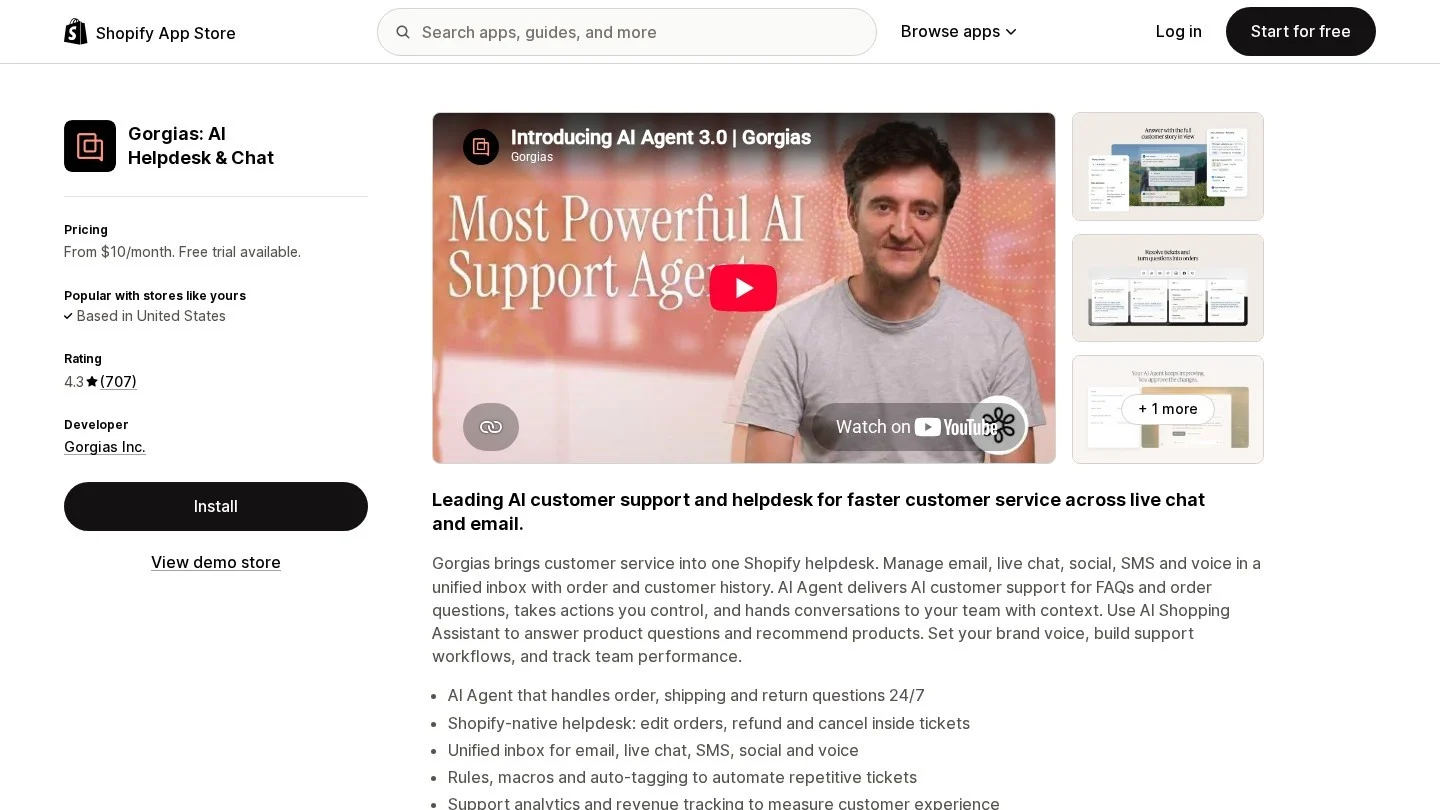
The problem: For an online store, most tickets are about orders: where a package is, how to change an address or how to send something back. These questions spike after every sale.
How the agent works: A shopper emails to change the shipping address on an order placed an hour ago. Gorgias AI Agent first screens the message for spam and for topics the merchant has blocked, then decides whether to answer from the knowledge base or run an Action. Here it runs an Action that updates the address in Shopify and drafts a reply in the brand’s tone. Before the reply goes out, a second AI model scores it against a confidence threshold, and a low score sends the ticket to a person in the same inbox.
What happened: Gorgias customer stories report that Dr. Bronner’s automated 45% of interactions and saves $100,000 a year, and that Orthofeet reached 56% automation in under two months.
What you can learn: Copy the confidence check: any agent that writes to customers should hold back unsure replies for a person. Model your bill as well, because each automated interaction past your plan’s bundle is reported at $1.50. We compare it with Fin in Fin vs Gorgias AI Agent.
Best fit: Shopify brands with heavy order-status and returns volume. Read our full Gorgias AI Agent profile.
4. Glia Banker: Answers Routine Calls for Credit Unions
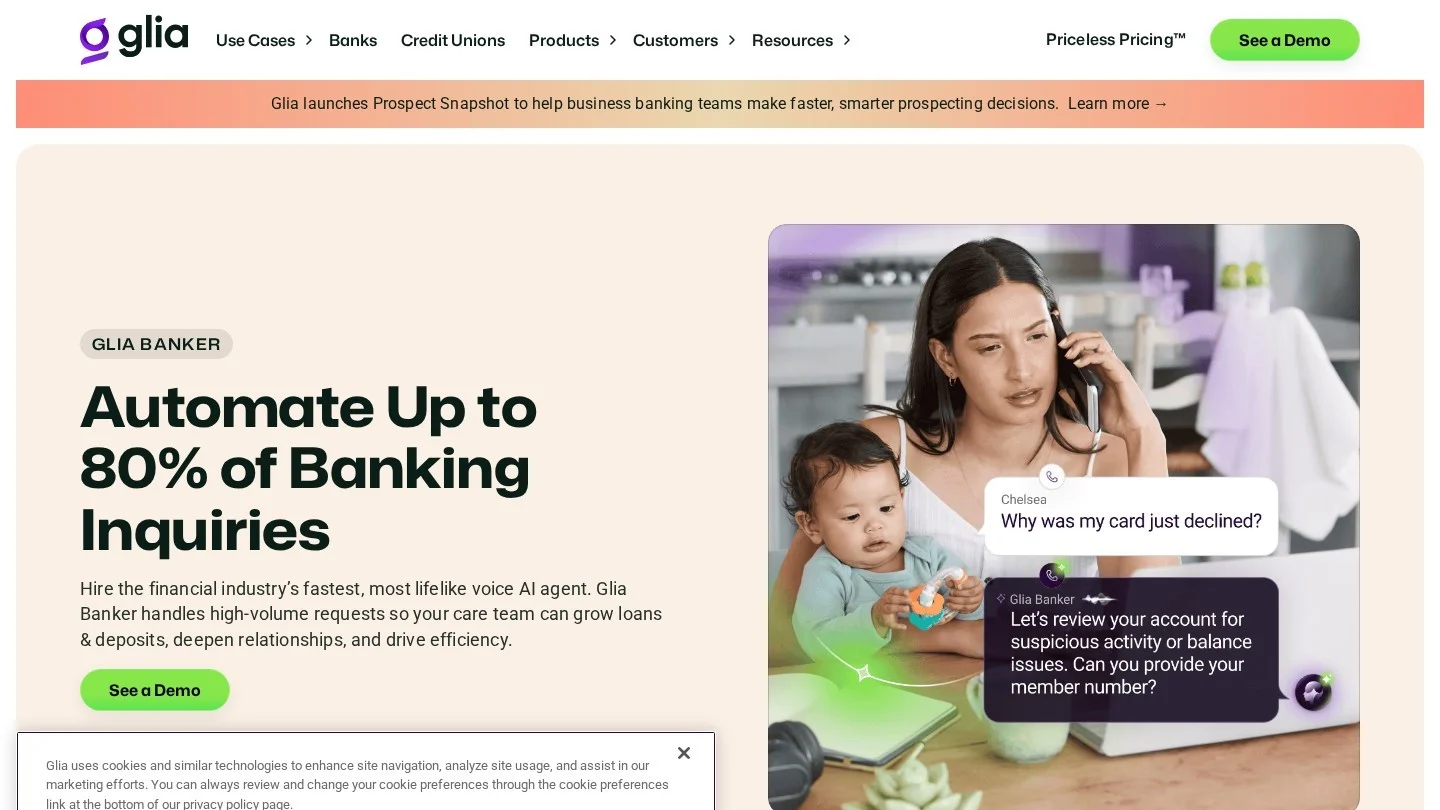
The problem: Credit unions still serve most members by phone, and Glia says phone makes up over 70% of interactions. When volume rises, hold times climb and members hang up.
How the agent works: A member calls to move money from savings to checking. Glia Banker answers with a voice built to handle interruptions, completes the transfer through Glia’s pre-built banking integrations and answers questions only from the institution’s approved documents. If the member then asks about a car loan, it makes a warm transfer to a staff member with a short briefing, so the member does not repeat the story.
What happened: At Service 1st Federal Credit Union, the AI answered every call and fully handled 37% of them, call abandonment fell 96% and staff saved 69 hours a week, according to Glia. More than 700 financial institutions use Glia.
What you can learn: Plan on the realistic number, not the headline. Glia says the agent can resolve up to 80% of routine inquiries, but Service 1st’s 37% is a safer base for a business case, and it still cut abandonment sharply because every call was answered at once.
Best fit: Banks and credit unions with long hold times. Read our full Glia Banker profile.
5. Navan Ava: Rebooks Business Travel When Plans Change
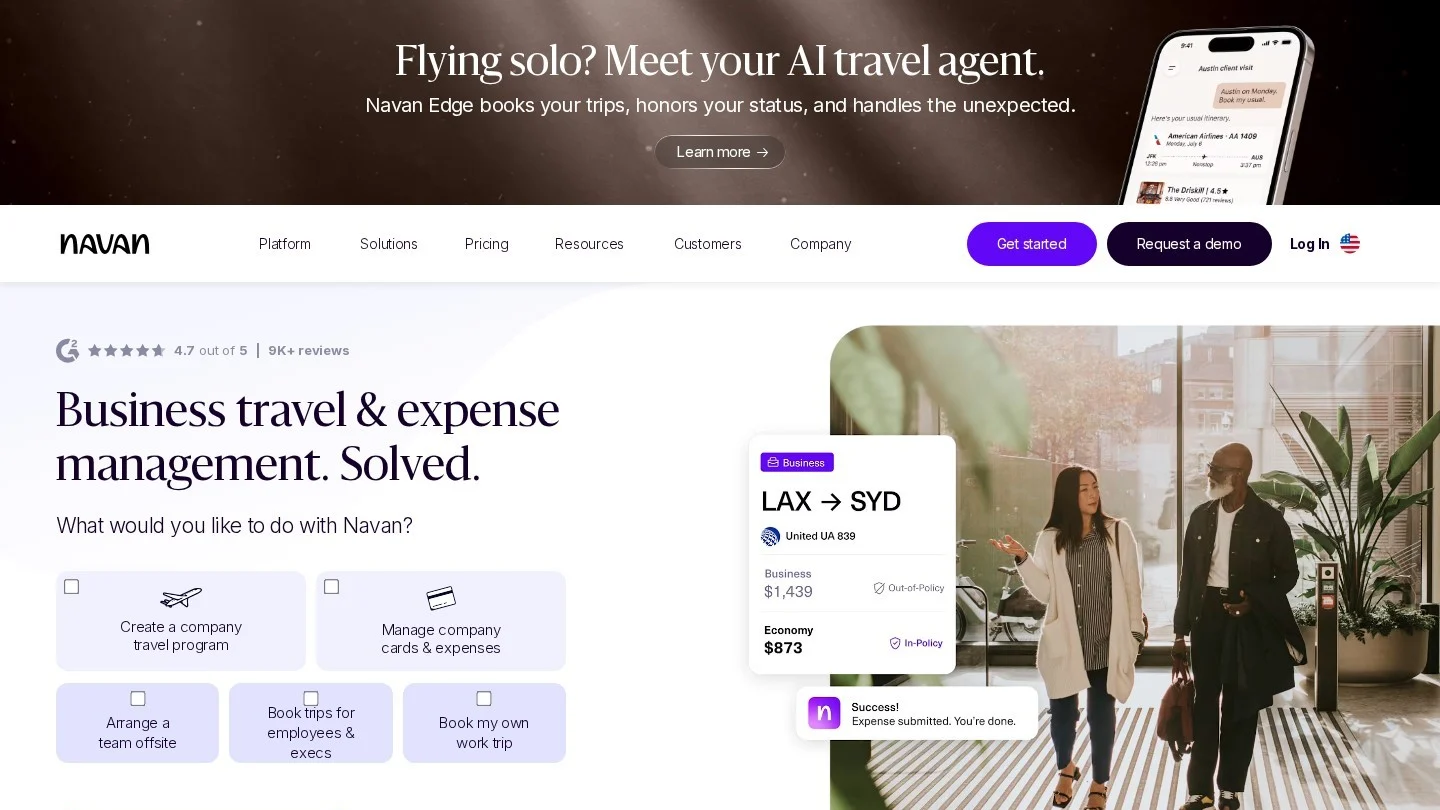
The problem: Flights get canceled and meetings move, and a traveler stuck at an airport needs a new booking in minutes. Each change used to mean a call to a travel agent.
How the agent works: A traveler’s flight home is canceled, so they open the Navan app and ask Ava for the next flight. Ava is connected to Navan’s live reservation and payment systems, so it rebooks the flight within company policy, changes the hotel if the traveler needs another night and answers refund questions on the original ticket. Complex cases go to Navan’s human travel agents, who work around the clock.
What happened: On Navan’s September 2026 earnings call, CEO Ariel Cohen said Ava handled about 60% of customer interactions in the quarter to July 31, 2026, including rebookings, hotel changes and refunds. Navan’s finance chief tied part of the company’s margin gains to the agent.
What you can learn: Agents work best when they sit on the system of record. Ava can change a booking because it is part of the booking platform; an agent that can only read data and open tickets will finish far fewer requests.
Best fit: Companies of up to 300 employees get Ava free with Navan Business travel. Read our full Navan Ava profile.
Sales, Leasing and Hiring Agents That Book the Next Step
These agents sit at the front of a sales or hiring funnel, where speed decides who wins. Their job is to reply fast, qualify the person and book the next step. More examples are in our sales AI agents category.
6. HubSpot Breeze Agents: Resolve Tickets and Research Leads
The problem: Small and mid-size companies often run sales and service from one CRM with too few people on both sides. Support questions wait overnight, and reps spend hours researching accounts before writing a single email.
How the agent works: A customer asks in chat whether their plan includes phone support. Customer Agent answers from the company’s help articles and the customer’s CRM record, and hands the chat to a rep if the visitor asks for a person. On the sales side, Prospecting Agent watches target accounts for buying signals, researches the company and drafts outreach for the rep, while Agent Hub lets managers monitor what each agent does.
What happened: On its Q2 2026 earnings call, HubSpot said Customer Agent had reached more than 10,000 customers and resolves 72% of support tickets without a human. HubSpot also said RevenueWell’s rate of booked meetings rose from 8% to 28%.
What you can learn: If your customer data already sits in one CRM, start with the agent built into it, since it sees each customer’s history without new integrations. Outcome pricing of $0.50 per resolved conversation keeps the first test cheap, but set a spending cap before launch.
Best fit: Companies on HubSpot Professional or Enterprise plans. Read our full HubSpot Breeze Agents profile.
7. Impel: Books Showroom and Service Appointments for Car Dealers

The problem: Car shoppers send questions at night and on weekends, and a dealer that replies the next morning often loses the lead. Service departments leak repair bookings the same way.
How the agent works: A shopper messages a dealer’s website late in the evening about a used SUV. Impel’s Chat AI answers questions about the vehicle, trade-in value and financing, collects a phone number, books a showroom visit and logs the lead in the dealer’s CRM. If the shopper calls the next day, the Voice AI answers with the same context, and after the sale the Service AI books maintenance visits.
What happened: At Elder Ford of Tampa, Chat AI set more than 70 appointments with no staff involvement over three months. In a FordDirect pilot announced at the 2025 NADA Show, dealers saw a 65% lift in showroom appointments from inbound leads and 132 extra service repair orders per dealer per month.
What you can learn: Measure the hours when no one is working. Count how many inquiries arrive at night and on weekends and how long they wait for a reply, because that is the size of the opportunity for any sales agent.
Best fit: Dealer groups and manufacturer programs. Read our full Impel profile.
8. EliseAI: Leases Apartments and Logs Maintenance Requests
The problem: Apartment operators get inquiries from listing sites at all hours, and renters move on if no one replies. The same small onsite teams also field maintenance requests and renewal questions.
How the agent works: A student emails late at night about a two-bedroom for August. EliseAI checks live unit and pricing data in the operator’s property management system, replies with options, suggests similar units if that one is gone and books a tour. If the renter calls the next day, the voice agent picks up with the same context. After move-in, a message about a leaking sink becomes a work order routed to a technician, and anything the AI cannot resolve lands in a staff queue on a mobile app.
What happened: In an EliseAI case study, Landmark Properties signed 8,338 new leases through it in 2024, and 3,182 of them came from inquiries that arrived after hours. Investor Andreessen Horowitz reported that Scion saved $1.3 million in seven months by replacing call centers with EliseAI’s voice agent.
What you can learn: Look for the revenue you lose while the office is closed. About 38% of Landmark’s agent-sourced leases started after hours, and clinics, contractors and law firms have the same overnight gap.
Best fit: Large multifamily operators. Read our full EliseAI profile.
9. Slang AI: Answers Restaurant Phones and Books Tables
The problem: Restaurant phones ring hardest during the dinner rush, exactly when hosts are busy seating guests. Missed calls mean missed reservations, and large-party calls are worth the most.
How the agent works: A guest calls on a busy Friday to book a table for four. Slang’s voice agent checks availability in the reservation system, such as OpenTable, SevenRooms or Resy, books the table, texts a confirmation and logs special requests such as a birthday. If the caller asks about a private dinner for 40, the agent routes the call to the events manager instead of handling it. Staff keep the agent current by updating its prompts when hours or menus change.
What happened: Slang says its agent has handled more than 25 million calls across more than 2,000 restaurant locations. Fearless Restaurants pays about $450 a month per location, and one of its locations handled 250 calls in a single week, as reported by Implicator.
What you can learn: Decide up front which calls the agent should not keep. List the requests where a person adds money or trust, and route those to staff by design. See more in our restaurant AI agents category.
Best fit: Full-service restaurants, with plans from $399 per location a month. Read our full Slang AI profile.
10. Olivia by Paradox: Screens Candidates and Books Interviews
The problem: Hourly hiring is a volume game. Most applicants apply from a phone, many drop out if nobody replies for days and managers lose hours to phone tag.
How the agent works: A job seeker texts a restaurant’s hiring number about a line cook job. Olivia answers questions about pay and shifts, asks knockout questions such as availability and, if the candidate qualifies, books an interview on the manager’s calendar with text reminders. After the manager decides to hire, the offer letter and onboarding forms go out by text. Olivia does not make the hiring decision; in Chipotle’s case, CNBC reported that managers still interview and choose.
What happened: Chipotle told CNBC that its assistant cut time to hire by up to 75%, from as long as 12 days to about 3.5. Workday, which bought Paradox for $1.0 billion, says Olivia scheduled about 32 million interviews in 2025.
What you can learn: Automate the waiting, not the judgment. Also lock down admin access: TechRepublic reported that in 2025 a McDonald’s admin account on the platform used the password 123456, exposing an estimated 64 million chat logs.
Best fit: Large employers hiring hourly staff across many locations. Read our full Olivia by Paradox profile.
Finance and Logistics Agents That Run the Back Office
Back-office work is full of high-volume tasks with clear rules, which makes it a natural fit for agents and makes the results easy to count.
11. Ramp Agents: Check Every Expense Against Company Policy
The problem: Finance teams review hundreds of card charges each month against a written policy, and finding the few bad ones takes hours. Fake receipts, now easy to make with AI, add a new risk.
How the agent works: An employee buys a team lunch on a Ramp card and uploads the receipt. The Policy Agent checks the charge against the company’s written expense policy and approves or flags it, citing the policy text it relied on, and it also checks the receipt for signs of AI-generated fraud. Other agents code incoming invoices and match them to purchase orders, and Ramp says no money moves without a person confirming it.
What happened: Ramp reports that Glossier has 90% of transactions auto-coded and Webflow spends 75% less time on card reconciliation. In October 2025 alone, Ramp says its AI stopped 511,157 out-of-policy transactions worth $290.98 million.
What you can learn: Give the agent your real policy and make it show its reasoning, because a decision that cites the rule is easy to audit. Review a sample of its decisions every week in the first month.
Best fit: Startups and mid-size companies; the Policy Agent comes with the Plus plan at $15 per user a month. Read our full Ramp Agents profile.
12. Vic.ai: Processes Supplier Invoices Without a Human Touch
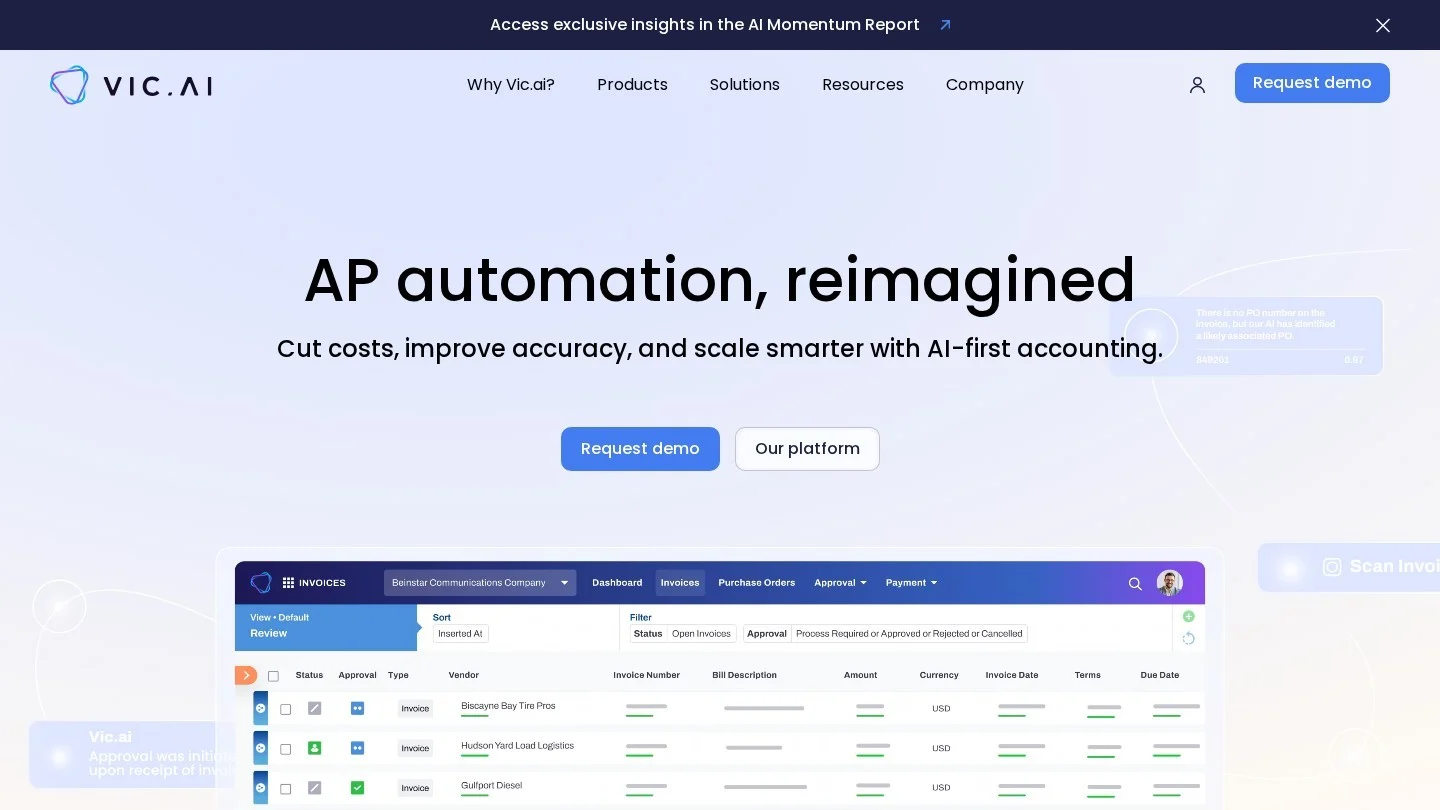
The problem: Accounts payable teams type in invoices that arrive as PDFs, emails and even handwritten pages. Each one needs a ledger code, a purchase order match and an approval, and backlogs delay the month-end close.
How the agent works: A supplier emails a PDF invoice. Vic.ai reads the header and every line item, gives each field a confidence score, codes the invoice using patterns learned from the team’s past corrections and matches it to the purchase order and receipt. If every check scores high, Autopilot posts the bill to the ERP; if anything scores low, the invoice goes to a person, and a coding change reroutes the approval.
What happened: In a Vic.ai customer story, fuel distributor Diesel Direct reports 84% of invoices processed with no human touch, 99% coding accuracy by month six and 65% less processing time. Swedish housing cooperative HSB reports 72% no-touch processing on 1.5 million invoices a year.
What you can learn: Confidence scores are what make autonomy safe, so let the agent post only what it is sure about. Expect a learning curve too, and judge a pilot on its trend rather than its first few weeks.
Best fit: Finance teams handling thousands of invoices a month. Read our full Vic.ai profile.
13. HappyRobot: Makes Freight Calls for Brokers and Shippers
The problem: Freight still runs on phone calls. Brokers call carriers about arrival times, carriers call in to book loads and coordinators can spend most of the day on the phone.
How the agent works: A load is due at a warehouse in a few hours. HappyRobot’s agent calls the carrier for a status update and writes the arrival time back into the transportation management system. When a carrier calls about a posted load, another agent negotiates the rate within the broker’s rules, and a temperature alert from a sensor on a refrigerated load is escalated to staff. Customers set each agent’s goals and rules and can test and audit its behavior.
What happened: HappyRobot names DHL, Uber Freight and Kuehne+Nagel among more than 150 enterprise customers. DHL went from its first use cases in 2025 to more than 10 live ones across three divisions, and the company says its agents resolve more than 70% of interactions without a person.
What you can learn: Start with one call type and grow from there. Pick the call your team makes most, prove the agent on it, then add the next one, as DHL did.
Best fit: Large brokers, logistics providers and shippers with heavy call volume. Read our full HappyRobot profile.
Legal, Healthcare and Government Agents in High-Stakes Work
Mistakes cost more in these fields, so these agents lean hard on approved sources, testing and human sign-off. See our legal AI agents and healthcare AI agents for more.
14. Harvey: Reviews Documents and Drafts for Law Firms
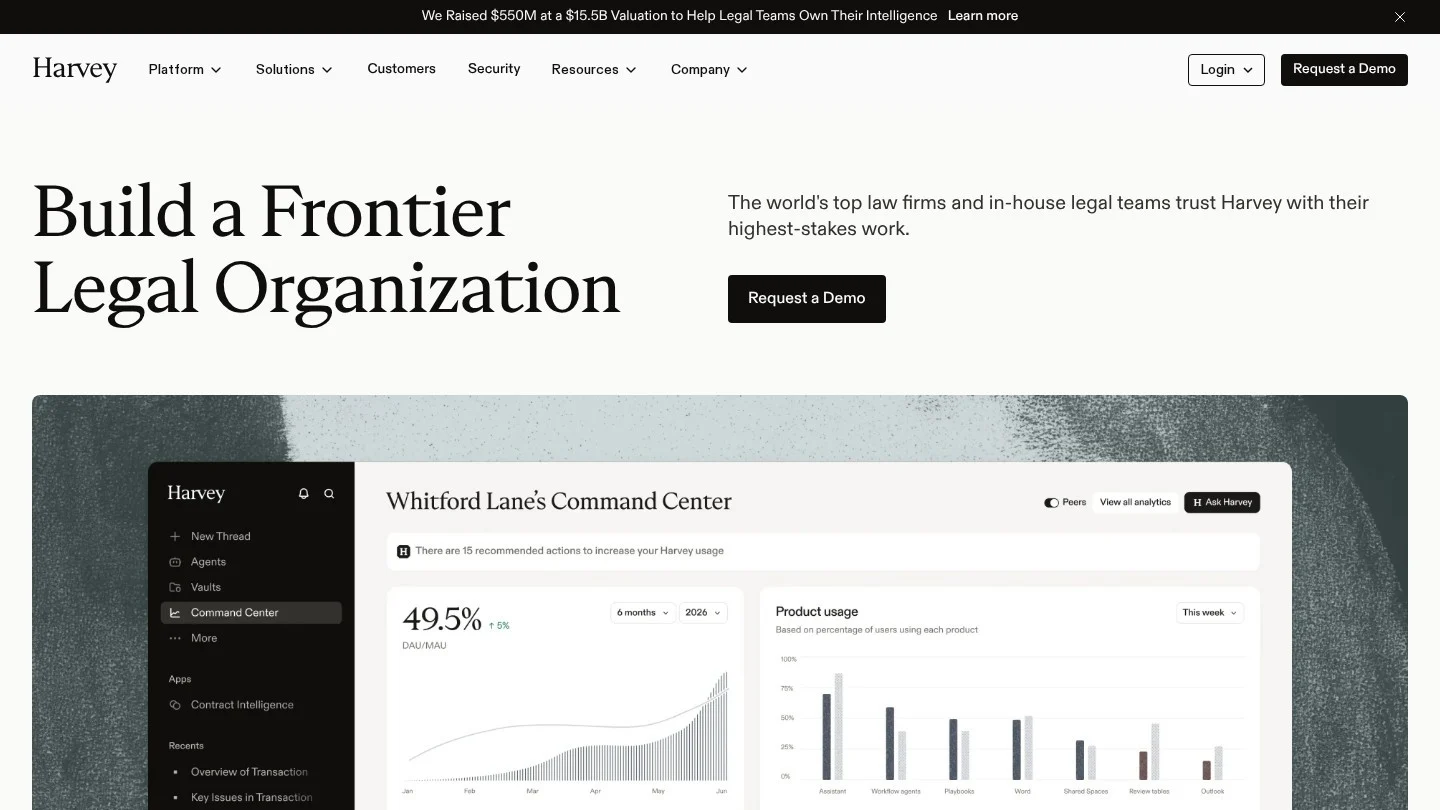
The problem: A merger can mean thousands of contracts to read, and junior lawyers spend weeks pulling the same clauses into spreadsheets.
How the agent works: A deal team needs to find change-of-control clauses in a large set of supplier contracts. They upload the documents to Harvey’s Vault and run a review table, and Harvey fills in an answer for every contract with links back to the source text. A practice group can save its due diligence checklist as a custom agent so any associate can run the partners’ playbook, and research draws on LexisNexis case law with Shepard’s citation checks. Lawyers check the findings and sign off.
What happened: Harvey is used by 80% of Am Law 100 firms and by the in-house legal teams of five Fortune 10 companies. More than 25,000 custom agents ran on the platform by March 2026.
What you can learn: In high-stakes work, use the agent for reading and first drafts and keep sign-off with a professional. Turning your best people’s checklists into reusable agents spreads their method across the team.
Best fit: Large firms and legal departments; Sacra reports about $1,200 per lawyer a month. Read our full Harvey profile.
15. EvenUp: Drafts Demand Letters and Chases Records for Injury Firms
The problem: An injury case takes about two years on average, EvenUp CEO Rami Karabibar told Fortune, and much of that is waiting for records, bills and callbacks from adjusters.
How the agent works: A firm opens a new car accident case in its case management system, such as Litify or CASEpeer. EvenUp’s Communication Agents call and text providers to request records and verify balances, and they open the claim with the insurer. When records arrive, EvenUp builds a medical chronology and drafts the demand letter in the firm’s own style, and the attorney reviews it before it goes out.
What happened: EvenUp says 30% of the top 100 US personal injury firms use it. Zaid & Associates, a 180-person Houston firm, reports 30% more demands a month without adding staff, and EvenUp says early Communication Agent deployments reclaim more than nine hours per case.
What you can learn: Look for the waiting time inside your process, not only the working time. Most service businesses have the same chase work, from collecting documents to confirming appointments.
Best fit: Plaintiff personal injury firms with steady case volume. Read our full EvenUp profile.
16. Hippocratic AI: Calls Patients After Discharge
The problem: Hospitals want to call every discharged patient about medicines and warning signs, because missed problems lead to readmissions. Nurses rarely have time for all of those calls.
How the agent works: A patient goes home after a hospital stay. A readmission orchestrator decides which patients to call, which agent makes the call, what it covers and when to bring in a nurse. The voice agent calls in English or Spanish, asks about symptoms and medicines and escalates to a nurse if an answer raises a concern, with results flowing back through health record integrations such as Epic.
What happened: The company reports more than 250 million patient interactions across more than 300 live clinical use cases as of August 2026. Before release, more than 7,000 US-licensed clinicians tested its agents, according to Contrary Research.
What you can learn: In regulated work, design the escalation path first. Test with real experts before launch and measure an outcome that matters, such as readmissions, rather than the number of calls.
Best fit: Health systems, health plans and pharma companies; the company has cited $9 per agent hour. Read our full Hippocratic AI profile.
17. Citibot: Answers City Hall Phones and Logs Service Requests
The problem: Residents call city hall about trash pickup, potholes and water bills. Lines are busy, offices close in the evening and many callers speak languages other than English.
How the agent works: A resident calls the city’s regular number in the evening to report a missed trash pickup. Citibot’s voice agent uses GIS data to give an answer specific to that address, logs a service request in the city’s 311 or CRM system and gives the resident a confirmation number. It answers only from content the agency has approved, in more than 75 languages.
What happened: Denver’s AI phone assistant, built on Citibot and nicknamed Sunny, handled more than 25% of the city’s inbound calls while keeping resident satisfaction above 90%. It saved about $500,000 over 18 months, according to Citibot.
What you can learn: Keep the agent on approved sources. Any organization with legal or safety exposure should limit its agent to answers someone has signed off.
Best fit: City and county governments. Read our full Citibot profile.
Software, IT and Security Agents for Technical Teams
Technical teams adopted agents early because their work already lives in tickets, code and logs. Our roundup of the best agentic AI coding tools covers coding in depth, and our coding AI agents category lists alternatives such as Devin.
18. GitHub Copilot Cloud Agent: Turns Issues Into Pull Requests
The problem: Every software team has a backlog of small, well-defined tasks such as bug fixes and missing tests. They matter, but they pull senior engineers away from bigger work.
How the agent works: A developer writes a GitHub issue for a bug fix and assigns it to Copilot. The cloud agent starts its own environment powered by GitHub Actions, reads the repository, plans the change, writes the fix and runs the tests until they pass. It then opens a pull request, and a developer reviews the code before anything is merged.
What happened: GitHub said at its Universe conference in October 2026 that agents started more than 40% of pull requests on GitHub in September, up from 17% in March. GitHub says 140,000 organizations use Copilot.
What you can learn: Write tasks for an agent the way you would for a new hire, with a clear goal, a test that proves success and a named reviewer. Plan reviewer time, because review becomes the bottleneck.
Best fit: Teams on GitHub; paid Copilot plans start at $10 a month. Read our full GitHub Copilot Cloud Agent profile.
19. Moveworks: Resolves Employee IT Requests in Slack and Teams
The problem: IT help desks are buried in locked accounts, password resets and access requests. Each ticket is quick to fix, but employees can wait hours for help.
How the agent works: An employee types in Microsoft Teams that they are locked out of their account. Moveworks identifies the request and the system involved, here the identity provider, and restores access to the account within the company’s permissions. Requests that need approval are routed to the right person, and anything it cannot handle goes to the service desk as a ticket.
What happened: In Moveworks customer stories, Nutanix went live in under seven weeks and now has 54% of IT issues resolved autonomously, while Hearst resolves 57% and restores about 300 locked accounts a month. ServiceNow bought Moveworks for $2.85 billion.
What you can learn: Budget for knowledge work. Reviewers report reformatting many help articles so the assistant could use them, so name an owner who keeps content current.
Best fit: Large companies with busy IT and HR service desks. Read our full Moveworks AI Assistant profile.
20. Microsoft Security Copilot: Triages Phishing and Security Alerts
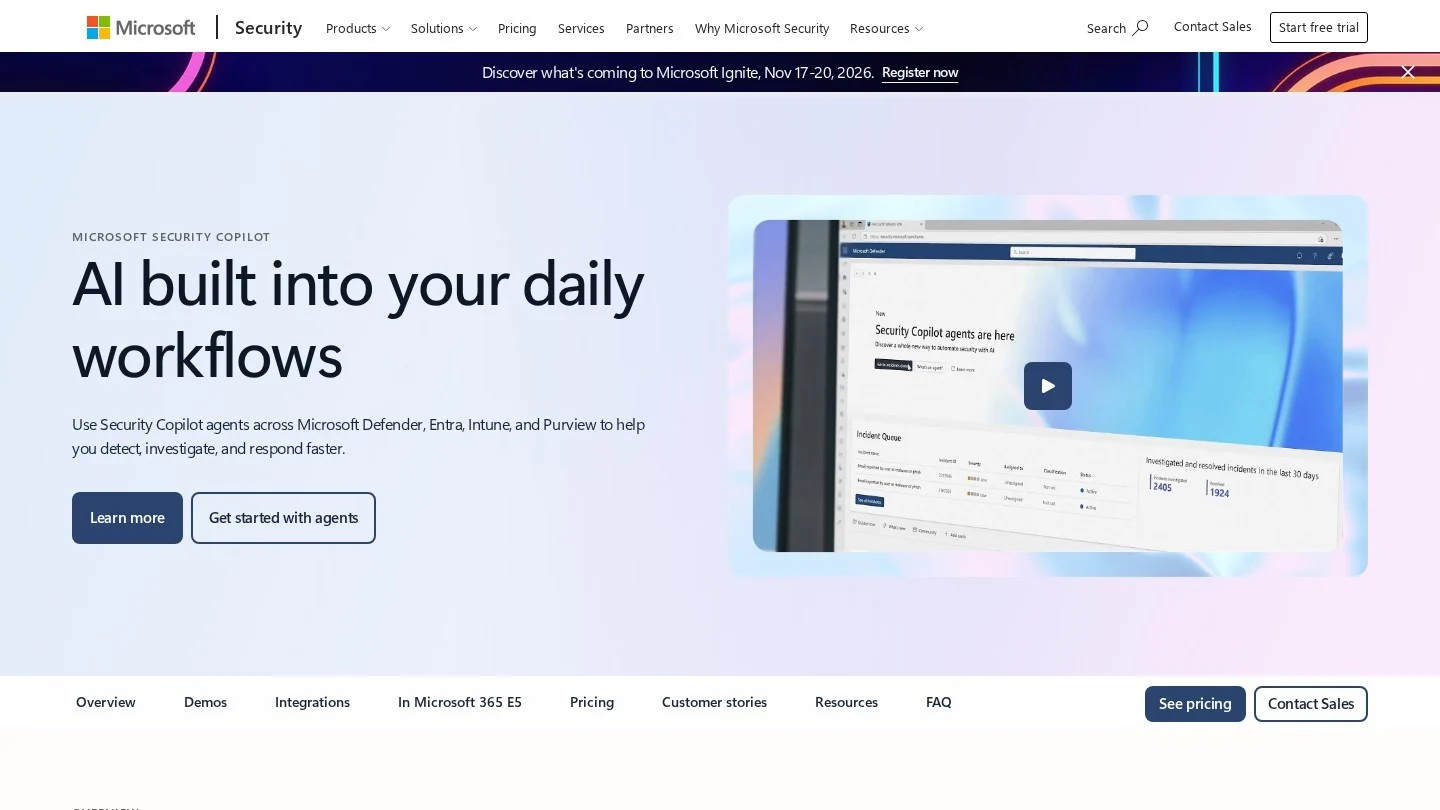
The problem: Security teams get more alerts than they can investigate. Many are harmless phishing reports, but each needs a look, and real threats hide in the pile.
How the agent works: An employee reports a suspicious email. In Microsoft Defender, the Security Alert Triage Agent sorts the report and adds its findings to the alert. When an analyst opens an incident, Security Copilot summarizes it in plain language, explains suspicious scripts and suggests next steps, and the analyst decides on the response.
What happened: In a Microsoft customer story, Avanade cut incident resolution time from 10 to 12 minutes down to 2 to 3 minutes. A study by Microsoft researchers covering 95,522 incidents found a 30.13% drop in mean time to resolve within three months of adoption.
What you can learn: Record your time to resolve before you start, since before-and-after times are the clearest proof for a security agent. Microsoft 365 E5 and E7 already include Security Copilot capacity.
Best fit: Organizations running Microsoft’s security tools. Read our full Microsoft Security Copilot profile.
Patterns Behind the Agents That Work
Read the 20 examples side by side and the same habits keep showing up. None of them depends on a secret model; they depend on how the job was chosen and set up.
One narrow job, done many times a day. HappyRobot started with check calls, Vic.ai with invoices and Olivia with interview scheduling. Each job happens thousands of times, follows clear rules and has an obvious finish line.
Access to the system of record. Navan’s Ava rebooks flights in Navan’s own booking system, Gorgias updates orders in Shopify and Decagon processes refunds and card replacements in its customers’ back-end systems. Agents that can only read data finish far fewer requests.
A confidence gate and a clean handoff. Gorgias scores every reply with a second model, Vic.ai posts only high-confidence invoices and Glia passes calls to staff with a briefing. That is what lets a business trust an agent with real customers.
Rules written by the business. Decagon’s operating procedures, Fin’s Procedures and Ramp’s expense policy are owned by the people who know the work, so a policy change can reach the agent the same day.
One number agreed before launch. Resolution rate for Fin and HubSpot, no-touch rate for Vic.ai, time to hire for Chipotle and time to resolve for Security Copilot were all measured before and after.
Small start, steady growth. DHL grew from a few use cases to more than ten, and Nutanix had Moveworks live in under seven weeks. A pilot on one task beats a program that tries to automate a whole department.
One caution applies to all of them. Most figures come from vendors or vendor-run customer stories, so they show strong deployments rather than typical ones. Glia’s gap between “up to 80%” and Service 1st’s 37% is a good reason to plan on a lower figure and test on your own data.
How to Pick Your First Agent Use Case
The patterns above turn into a simple test. List three to five tasks your team repeats every week, then score each one from 1 (poor fit) to 5 (strong fit) on the five factors below. Score risk in reverse, so a low-risk task gets a 5.
| Factor | Question to Ask | Scores High When | Scores Low When |
|---|---|---|---|
| Volume | How often does this task happen? | Hundreds of times a month or more | A few times a month |
| Rules clarity | Could you write the steps on one page? | Clear policy and an obvious finish line | Every case needs judgment |
| Risk | What happens if the agent gets one wrong? | Easy to spot and reverse | Legal, financial or safety harm |
| Systems access | Can the agent read and change the data it needs? | Data sits in one system with an integration | Data is spread across email and spreadsheets |
| Measurable outcome | Can you count success before and after? | Resolution rate, time saved or no-touch rate | Success is a matter of opinion |
A task that scores 20 or more out of 25 is a strong first candidate. Between 13 and 19, narrow the task until it scores higher, and below 13, leave it with people for now.
A Worked Example: An Online Store With Two Ideas
Picture a 40-person online store choosing its first agent. One idea is answering “where is my order” emails, and the other is negotiating terms with suppliers.
Order emails arrive hundreds of times a week (volume 5), the steps are clear (rules 5), a wrong answer is easy to fix (risk 4), the data sits in Shopify (systems 5) and resolution rate is easy to count (outcome 5). The total is 24 out of 25. Supplier talks happen a few times a quarter (volume 1), every deal differs (rules 2), a bad deal costs real money (risk 1), terms live in emails and contracts (systems 2) and success is hard to measure (outcome 2), for a total of 8. The store should start with order emails, using a product such as Gorgias AI Agent or Fin, and keep negotiation with a person.
If no ready-made agent fits your task, you can build one. Our guide to no-code AI agent builders covers tools that need no programming, how to build an AI agent from scratch walks through the code and our comparison of the best AI agent frameworks helps developers choose a toolkit.
Is ChatGPT an Agent? Plus Types, Costs and Small Business Use
What Is an Example of an AI Agent?
Decagon is a clear example. Its agents complete account tasks such as refunds and card replacements, and at Chime they take more than 1 million calls a month with chat resolution above 70%, according to Decagon’s case study.
What Are the 5 Types of AI Agents?
Textbooks list simple reflex, model-based reflex, goal-based, utility-based and learning agents. Most business agents in this guide mix several types, because they work toward a goal, follow rules and improve as staff correct them.
Is ChatGPT an AI Agent?
Standard ChatGPT is an assistant that answers questions, while its agent mode can take actions such as browsing websites and filling in forms. The business agents in this guide are narrower, since each one connects to a company’s own systems and rules.
Which Industries Use AI Agents the Most?
Customer service has the most deployments and published results. Finance, logistics, law, healthcare, real estate, restaurants, hiring and IT all have agents running at scale, as the examples above show.
How Much Does an AI Agent Cost?
Some agents charge per outcome, such as Fin at $0.99 per resolution. Others charge per user or location, such as Ramp Plus at $15 per user a month and Slang AI from $399 per location a month, while enterprise agents such as Harvey and Moveworks are sold by quote.
Can Small Businesses Use AI Agents?
Yes. Gorgias helpdesk plans start at $10 a month, Ramp has a free plan and Navan Business travel, which includes Ava, is free for companies of up to 300 employees. Start with one high-volume task and measure it for a month before adding a second.
