


LangGraph Is the CrewAI Alternative Most Teams Should Try First
The best CrewAI alternative for most teams is LangGraph. It gives you an explicit graph of steps, so you can see and control what each agent does. But .NET shops are better off with Microsoft Agent Framework, and TypeScript teams with Mastra.
We researched nine frameworks on their official docs and package pages. Then we mapped each one to the same job a CrewAI crew usually does. In our original research we found that every pick is open source. So the real cost sits in hosting, tracing and model calls.
Also, CrewAI itself is in good shape. It is MIT licensed, and its latest release came out on November 7, 2026. So treat this list as a guide for teams whose needs have moved. Each pick names the stack it matches.
Nine Frameworks That Can Replace a CrewAI Crew
We compiled each row from the project’s own repository, package page or product page. CrewAI sits in the first row so you can compare.
| Framework | Languages | Licence | How agents work together | Paid hosting or tooling |
|---|---|---|---|---|
| CrewAI (baseline) | Python 3.10 to 3.13 | MIT | Role-based Crews, plus event-driven Flows | CrewAI AMP Suite, cloud or on-premise |
| LangGraph | Python, plus LangGraph.js | MIT | Nodes and edges in a stateful graph | LangSmith, from $0; Plus at $39 per seat a month |
| Microsoft Agent Framework | Python and .NET | MIT | Sequential, concurrent, handoff, group chat and Magentic-One patterns | Microsoft Foundry hosted agents, in preview |
| Google ADK | Python, Go, TypeScript, Java and Kotlin | Apache 2.0 | Graph workflows in Go and TypeScript, plus A2A calls | Google Cloud runtimes |
| OpenAI Agents SDK | Python, plus a JS/TS version | MIT | Handoffs and agents used as tools | You pay your model provider |
| Pydantic AI | Python 3.11 or newer | Open source | Typed agent loop, with Pydantic Graph for flows | Pydantic AI Gateway and Logfire |
| smolagents | Python | Apache 2.0 | Agents that write code, in multi-agent hierarchies | Bring your own sandbox |
| LlamaIndex | Python 3.10 or newer | MIT | AgentWorkflow handoffs or an orchestrator agent | LlamaParse for documents |
| Agno | Python | Apache 2.0 | Teams and workflows served by AgentOS | Control Plane UI for AgentOS |
| Mastra | TypeScript | Apache 2.0 | Workflows and supervisor agents | Free to self-host; Enterprise is custom |
For a wider view of the field, our guide to the best AI agent frameworks covers more options. Also, the agent frameworks category lists every framework in our directory.
Graph-First Picks for Stateful Production Agents
These three tools give you the most control over how state moves between agents. So they matter most when a crew runs for hours or has to recover after a crash.
1. LangGraph for Durable, Inspectable Agent Graphs
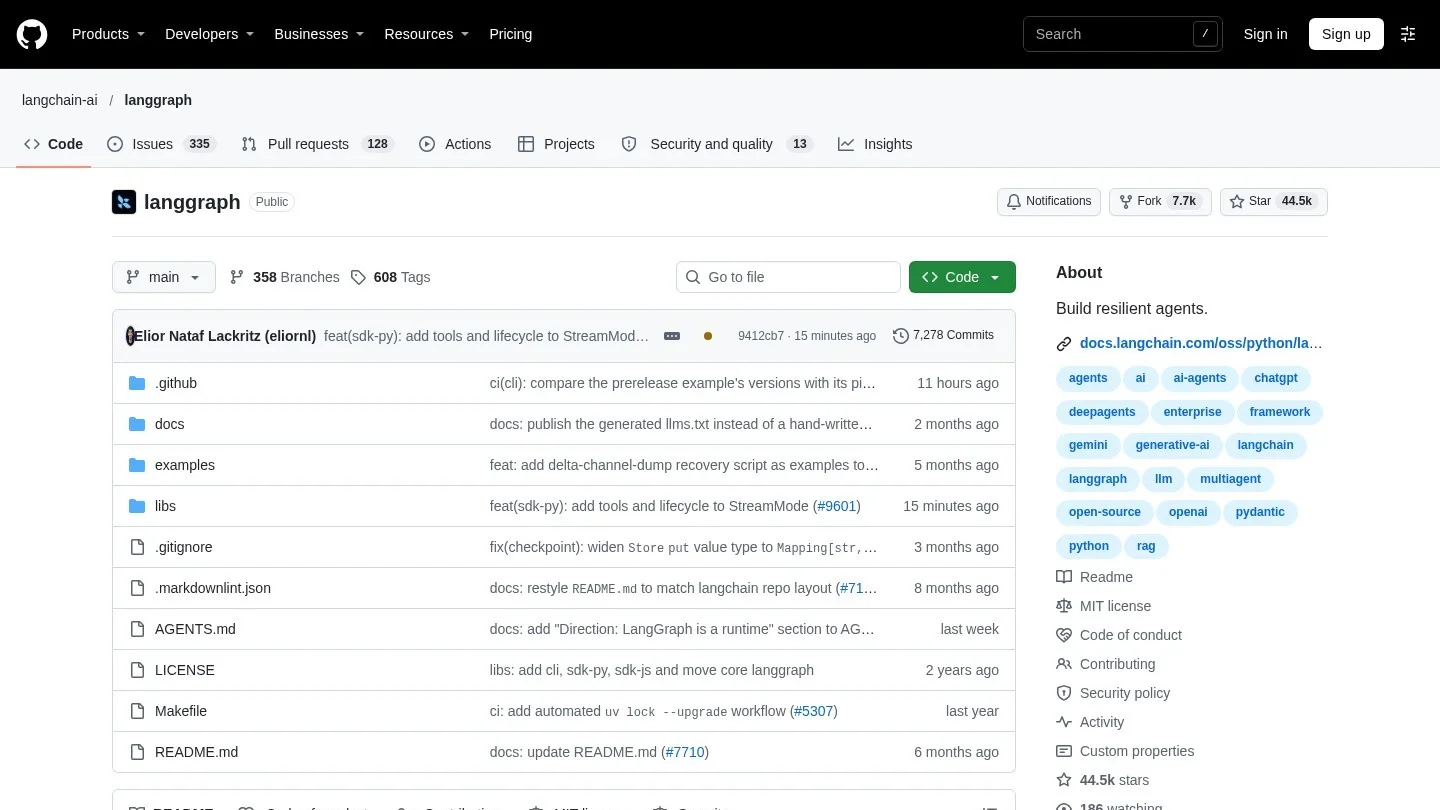
LangGraph calls itself a low-level orchestration framework for stateful agents. In practice, you draw your crew as nodes and edges. Each node reads and writes shared state, so nothing happens out of sight.
Also, LangGraph adds durable execution. A run can resume after a failure instead of starting over. People can also inspect and edit the agent’s state mid-run, which is the human-in-the-loop step many crews lack.
The library is MIT licensed and installs with pip. A separate LangGraph.js library covers JavaScript and TypeScript. Klarna, Replit and Elastic are named on the project page as users.
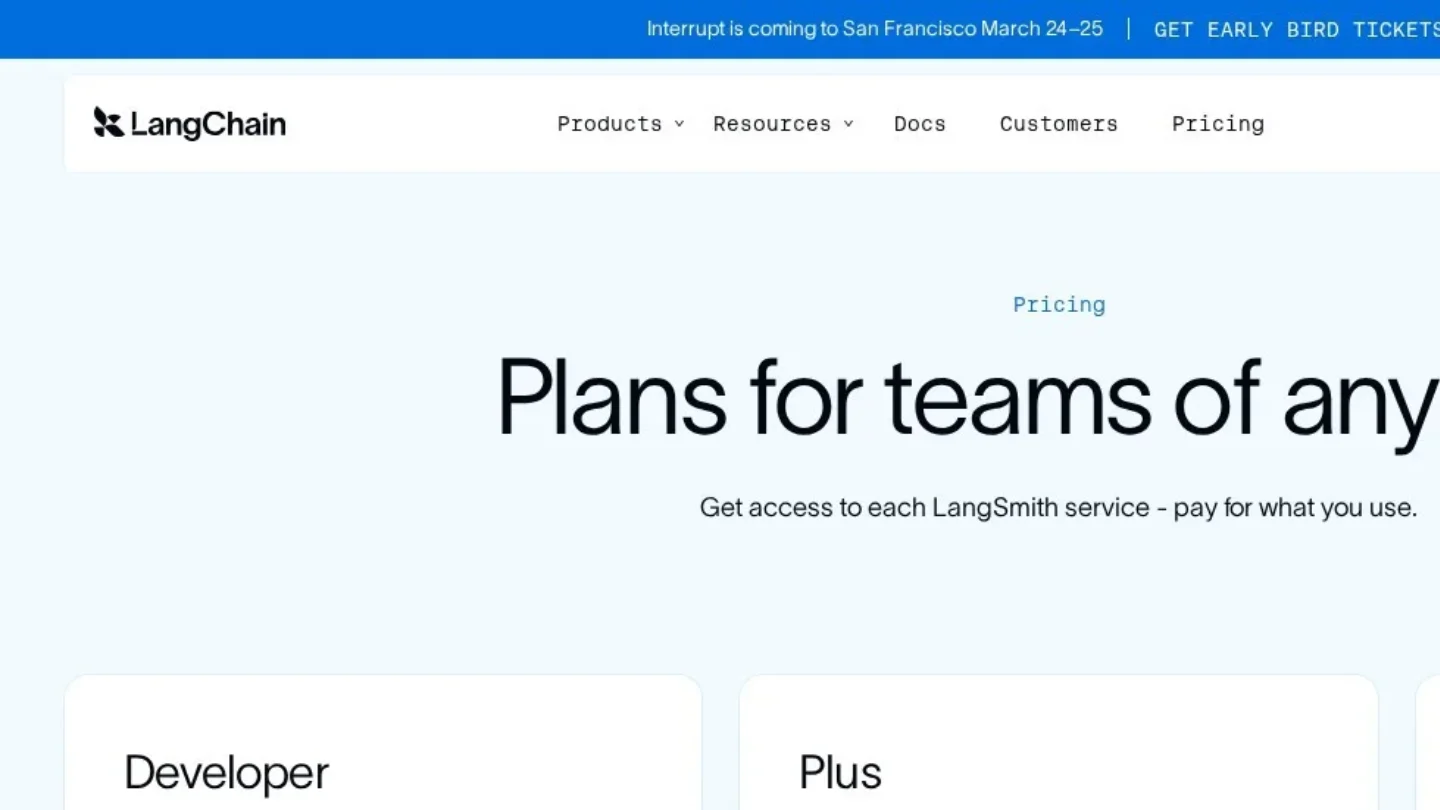
For tracing and hosting, LangChain sells LangSmith. The Developer plan is $0 for one seat and up to 5,000 base traces a month. Plus costs $39 per seat a month, includes 10,000 base traces, and adds one free small serverless deployment.
We would pick LangGraph for a team that already found CrewAI’s agent roles too loose for production. However, expect more code up front, because you define every edge yourself. Our LangGraph listing has more detail, and our CrewAI vs LangGraph comparison goes deeper on the trade-offs.
2. Microsoft Agent Framework for .NET and Azure Shops
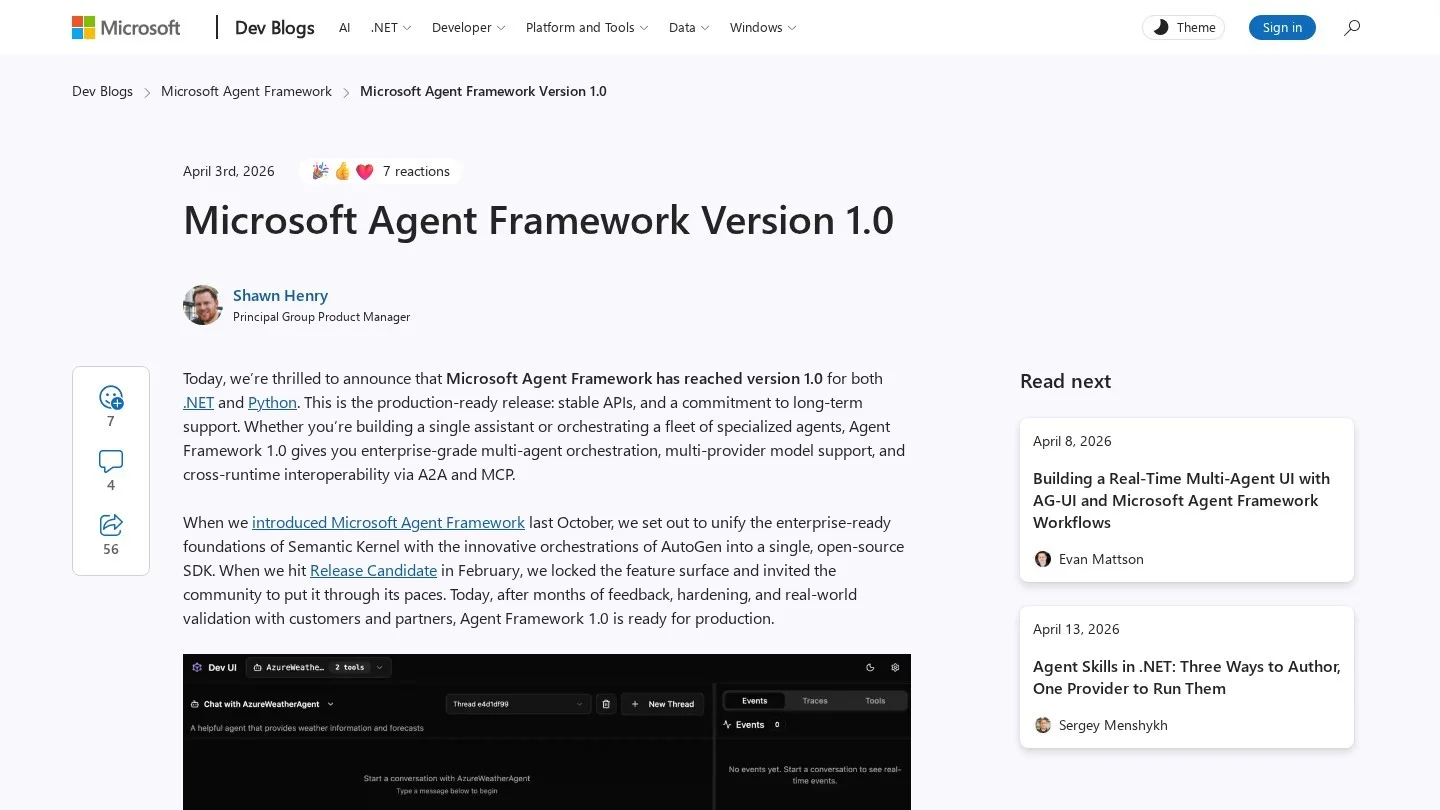
Microsoft Agent Framework reached version 1.0 on April 3, 2026. Microsoft describes it as the production release, with stable APIs and long-term support. It merges the enterprise base of Semantic Kernel with the orchestration ideas of AutoGen.
So if your team used AutoGen for multi-agent chat, this is where Microsoft now points you. Migration guides exist for both older projects, in .NET and Python.
In fact, the multi-agent patterns map closely to a crew. You get sequential, concurrent, handoff and group chat orchestration, plus Magentic-One. Graph workflows add branching, parallel steps and checkpoints for long jobs.
The framework connects to Microsoft Foundry, Azure OpenAI, OpenAI, Anthropic Claude, Amazon Bedrock, Google Gemini and Ollama. It also supports MCP for tools and A2A for agents built in other frameworks.
We would pick it for a C# team or any company that runs on Azure. On the other hand, a Python-only startup with no Microsoft stack may find the setup heavier than it needs. See our Microsoft Agent Framework listing for more.
3. Google ADK for Polyglot Teams on Google Cloud
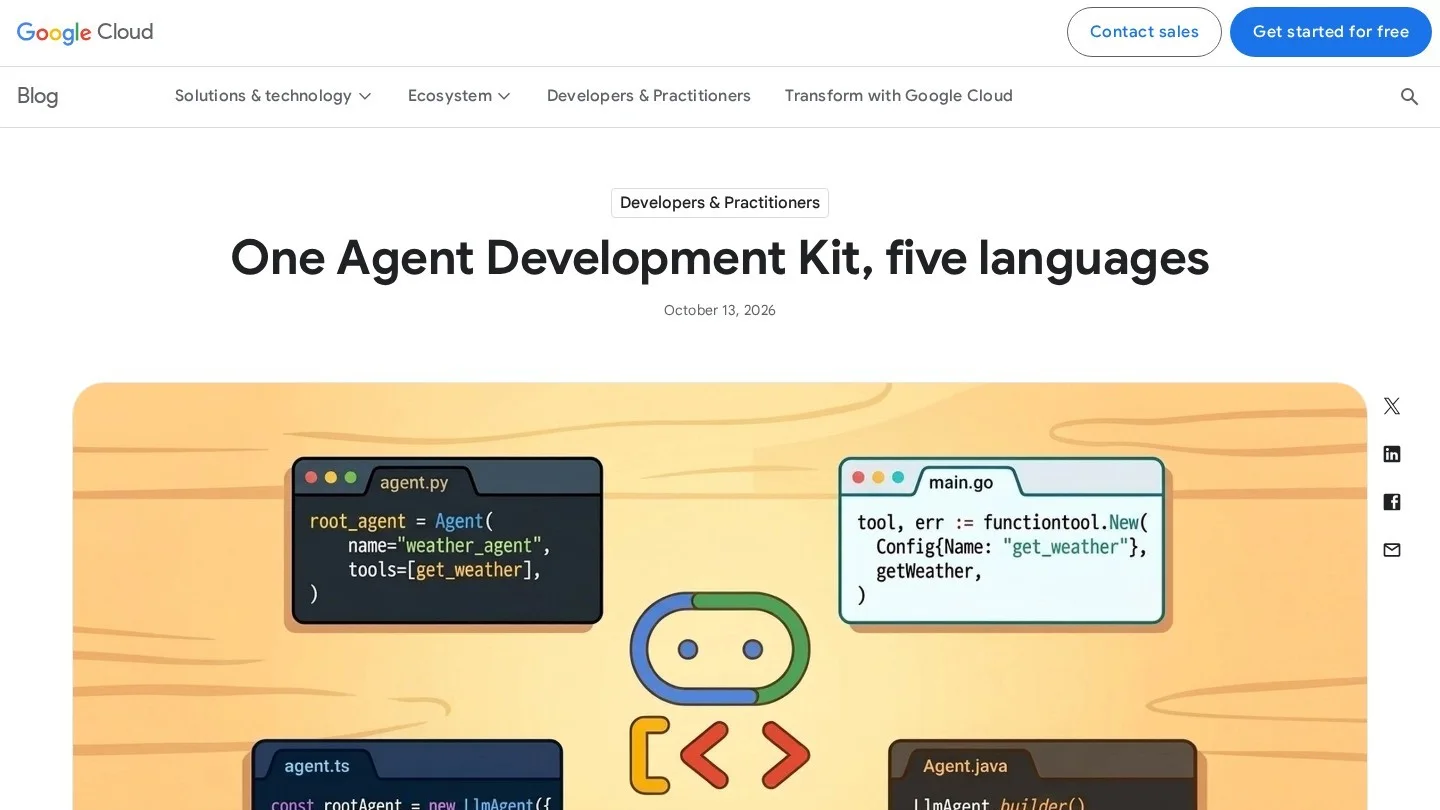
Google’s Agent Development Kit now ships in five languages. They are Python, Go, TypeScript, Java and Kotlin. Each one is built for its own runtime, and all of them speak MCP and A2A.
ADK is Apache 2.0 licensed. Its package page says it is tuned for Gemini but stays model-agnostic and deployment-agnostic. For example, the Python version has adapters for Anthropic, OpenAI and LiteLLM as well as Gemini.
Next, ADK 2.0 adds a graph workflow in Go and TypeScript. It wires agents and plain functions into a directed graph with routing and parallel steps. Then A2A lets one agent call a remote agent over HTTP, even one written in another language.
We would pick ADK for a team that deploys to Cloud Run or GKE, or one that mixes Go and Python services. Even so, the ADK 2.0 graph workflow is in Go and TypeScript, so check that the pattern you need exists in your language. Our Google ADK listing tracks updates.
Read also: CrewAI vs LangGraph: Roles or Graphs for Your Python Agents
Lightweight SDKs When a Crew Feels Too Heavy
Some teams leave CrewAI because they need fewer moving parts. These three libraries keep the agent loop small and let plain Python do the rest.
4. OpenAI Agents SDK for Handoff-Based Assistants
The OpenAI Agents SDK rests on a few ideas. Agents carry instructions and tools. Handoffs pass the work to another agent. Guardrails check input and output. Sessions keep the conversation history, and tracing records each run for debugging.
Also, it is not tied to OpenAI models. The project page says it works with the Responses and Chat Completions APIs and with more than 100 other LLMs. It is MIT licensed, and a separate JS/TS version exists.
We would pick it for support or sales assistants where one agent triages and others take over. However, its building blocks center on handoffs. So jobs that need saved checkpoints may be easier in LangGraph. Read more on our OpenAI Agents SDK listing.
5. Pydantic AI for Typed Python Agents
Pydantic AI calls itself a typed, extensible agent loop where every model is a string swap away. Outputs and tools are typed with Pydantic models, and so are dependencies. So if an answer fails validation, the agent is asked to try again.
For longer jobs, Pydantic Graph adds typed control flow. In addition, the docs list nine durable execution engines, including Temporal, DBOS, Prefect and Restate. Tracing runs on OpenTelemetry, with Logfire as the built-in option.
It needs Python 3.11 or newer. You can install the full package or a slim one with only the model extras you use.
We would pick Pydantic AI for teams that care about clean data coming out of every step. For instance, a crew that fills database rows gains a lot from strict output types. Still, it leaves multi-agent design to you more than CrewAI does.
6. smolagents for Agents That Act in Code
smolagents is Hugging Face’s barebones library for agents that think in code. Its CodeAgent writes each action as a Python snippet instead of a JSON tool call. The core agent logic is under 1,000 lines.
It works with almost any model, including local transformers and Ollama. It also reaches OpenAI and Anthropic models through LiteLLM. Multi-agent hierarchies are supported too.
However, running model-written code needs care. The project warns that its local Python executor is not a security sandbox. So for real work, use one of the listed sandboxes, which are Blaxel, E2B, Modal and Docker.
We would pick smolagents for research teams and anyone running open models on their own hardware. The library is Apache 2.0 licensed.
Platforms With Data and Runtime Built In
These last three bring more than an agent loop. For example, LlamaIndex adds document handling, and Agno adds a service runtime. Mastra moves the whole stack to TypeScript.
7. LlamaIndex for Agents Grounded in Your Documents
LlamaIndex describes itself as the interface between LLMs and your data. So it is the natural move when your crew spends most of its time reading files.
For multi-agent work, it offers AgentWorkflow. You pass a list of agents, name a root agent, and set which agents each one can hand off to. If you need tighter control, you can wrap specialists as tools under one orchestrator agent instead.
The core package is MIT licensed and needs Python 3.10 or newer. Also, the docs link to LlamaParse for parsing documents.
We would pick LlamaIndex when retrieval quality matters more than agent roles. For example, a contract review crew or a support crew that answers from manuals.
8. Agno for Running Agents as Services
Agno calls itself the self-improving agent platform. Its open-source framework builds agents, teams and workflows. Then AgentOS runs them as services with a built-in API and an MCP server.
AgentOS adds the parts a crew needs in production. For example, it handles authentication, role-based access, human approvals and scheduling. It also stores sessions and memory in PostgreSQL and offers durable execution.
Workflows support routing, branching, loops and parallel steps. A separate Control Plane UI shows runs and sessions. The framework is Apache 2.0 licensed.
We would pick Agno for a team that wants to ship an agent as an internal API this month. On the other hand, it brings its own runtime choices, so check that your team can run PostgreSQL.
9. Mastra for TypeScript Teams
Mastra is an open-source TypeScript framework for agents and workflows. It bundles memory, tools, evals and tracing in one package. Its model router reaches more than 1,000 models.
Workflows can run steps in sequence, in parallel, on conditions or in loops. They can also pause for a human. Supervisor agents and tool approval cover the crew-style use case.
Mastra is Apache 2.0 licensed and free to self-host. An Enterprise plan with SSO and role-based access is priced on request. Replit, SoftBank and PayPal are among the teams it names.
We would pick Mastra for any team whose product already runs on Node or Next.js, since CrewAI ships as a Python package. See our Mastra listing for more.
Porting a Two-Agent CrewAI Crew to Each Framework
We took a common CrewAI setup to test the mapping on paper. It has a researcher agent that searches the web and a writer agent that turns the notes into a brief. In CrewAI, each agent gets a role and a goal, and a Crew runs their tasks in order.
In LangGraph, each agent becomes a node, and the notes live in shared state. Then you add an edge from researcher to writer. Also, you can pause the run before the writer, so an editor approves the notes first.
In Microsoft Agent Framework, the same job is a sequential orchestration. And if the brief must survive a restart, a graph workflow with checkpoints holds it.
In the OpenAI Agents SDK, the researcher hands off to the writer. Next, an output guardrail can block a brief that misses your format. Tracing then shows both steps in one run.
In LlamaIndex, the researcher is the root agent in an AgentWorkflow, and the writer sits in its hand-off list. In Pydantic AI, the writer returns a typed Brief model, so a malformed brief triggers a retry.
Finally, in Mastra, the two agents become workflow steps, with a suspend step if a person must sign off. So none of these ports needs a new design. The main work is rewriting prompts and tool wrappers.
For a broader build walkthrough, see our guide to building an AI agent from scratch. And if your agents must talk across frameworks, read our explainer on agent-to-agent communication.
Good Reasons to Keep CrewAI Instead
CrewAI is still a sound choice for many teams. It is fully independent of LangChain. In our view, its role-based Crews are also quick to read, even for people who are new to agents.
Besides, Flows add event-driven workflows with precise control. So you can mix free-form crews with fixed steps in one project. The CrewAI AMP Suite adds a control plane, with cloud or on-premise deployment.
So stay if your crews work and your team writes Python. Move when you need another language or a graph you can checkpoint. Our CrewAI listing covers the current feature set.
Where Our Nine Picks Came From
We started from the frameworks developers most often compare with CrewAI. Then we opened each project’s repository, package page or official announcement. We kept only active, open-source projects that support more than one agent working together.
Next, we recorded language support and licence. We also noted how agents hand work to each other. We left out star counts, because they change every week. Also, we kept paid tiers to the prices shown on official pricing pages.
Finally, we ranked by how much of a crew’s job each tool covers without extra glue code. Costs also depend on model calls, so our guide on how to control AI agent costs is the next read.
What Developers Ask When Leaving CrewAI
What Replaced AutoGen as a CrewAI Alternative?
Microsoft Agent Framework did. Microsoft built it to merge AutoGen’s orchestration patterns with Semantic Kernel, and version 1.0 shipped on April 3, 2026. Migration guides exist for both projects.
Is There a CrewAI Alternative for TypeScript?
Yes. Mastra is a TypeScript-first framework under Apache 2.0. Also, LangGraph.js, Google ADK and the OpenAI Agents SDK all offer TypeScript versions.
Which CrewAI Alternative Works With Local Models?
smolagents supports local transformers and Ollama directly. Microsoft Agent Framework also lists an Ollama connector, so both run without a cloud model.
Are CrewAI Alternatives Free?
The frameworks on this list are open source and free to use. However, hosting and tracing can cost money. For example, LangSmith Plus is $39 per seat a month, while Mastra is free to self-host.
Related AI Agents


Read also: Vessla AI Alternatives for Property and Facility Operations
Explore Agent Categories
Related Articles
 GuidesCrewAI vs LangGraph: Roles or Graphs for Your Python Agents
 Guides10 Best AI Agent Frameworks
 Guides10 Best Ahron AI Alternatives
 GuidesBest CAMEL AI Alternatives and What They Cost
 GuidesBest Rows AI Alternatives for AI Spreadsheet Work
 GuidesBest Harness AI Alternatives for CI/CD and DevOps Teams
