

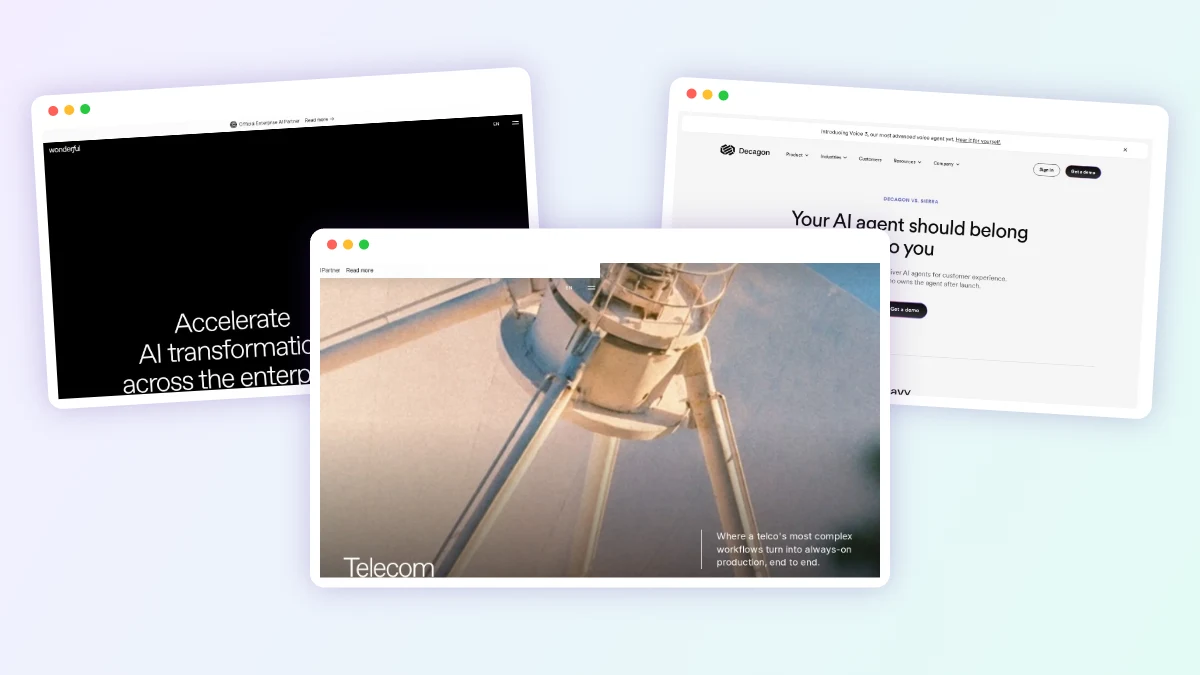
Wonderful raised $550 million at a $5 billion valuation, and it still has no public price list. Every deal runs through its sales team and a local deployment crew. That works for a large telco or bank. But a support team that wants to compare costs, or start this quarter, needs other options. The nearest Wonderful AI alternative for big enterprises is Sierra, which also pairs software with hands-on deployment. Decagon is the other one to shortlist. And if you want a price you can calculate today, Intercom’s Fin charges $0.99 per resolved conversation.
We went through the product and pricing material of Wonderful and eight rival platforms. Where prices exist, we ran one support workload through each model, so you can see how the bills differ.
What Wonderful Sells and Who Buys It

Wonderful is an enterprise AI agent company based in Amsterdam. Roey Lalazar is co-founder and CEO, and Bar Winkler is the other co-founder. Its Series C was led by Insight Partners, with Salesforce, Index Ventures, IVP and Bessemer also investing.
The product has three layers. The AI OS is the platform where companies build agents. Wonderful Agents handle customer, employee and back-office work across voice, chat, email and video. The AI Gateway routes each request to a suitable model, sending hard prompts to frontier models and simple ones to smaller models. Teams also get project folders, version control with rollback and A/B tests between agent versions.
Deployment is the part that sets it apart. Wonderful puts local, forward-deployed teams on the ground in each market. Its agents are tuned to local languages, norms and rules. The company targets banking, telecom, healthcare, utilities, insurance, retail and airlines.

Telecom shows how this looks in practice. TIM, Bezeq and Telefónica appear as telco customers. The agents authenticate subscribers, diagnose faults and fix them remotely. They also send outage notices before people call, and they negotiate overdue payments over voice, WhatsApp and SMS.
Reasons Teams Compare Wonderful Alternatives
Wonderful is built for large, regulated companies in many countries. So the reasons to look elsewhere usually come down to size, budget and the systems you already run.
- No public pricing. Every contract is a custom quote. Finance teams that want a number up front have to wait for sales talks.
- A heavy rollout model. Local deployment teams help big programs, but a 20-seat support desk may want a self-serve trial.
- You already own a helpdesk or CRM. Zendesk and Salesforce both sell native AI agents with published prices, which can be simpler to approve.
- Voice-only projects. Some contact centers need a voice agent first, and voice specialists sell by the minute.
Wonderful AI Alternatives Compared by Pricing Model
Most enterprise vendors quote privately, and Wonderful is no exception. We filled in the pricing model for each and the published rate where one exists.
| Platform | Pricing model | Published price | Channels |
|---|---|---|---|
| Wonderful | Custom contract | Custom quote | Voice, chat, email, video |
| Sierra | Outcome-based | Custom quote | Chat, voice, email, SMS, WhatsApp |
| Decagon | Per conversation or per resolution | Custom quote | Chat, voice, email, SMS, WhatsApp |
| Fin (Intercom) | Per resolution | $0.99 per resolution | Chat, email, voice and more |
| Ada | Mainly per conversation | Custom quote | Voice, chat, email, messaging apps |
| Parloa | Platform contract | Custom quote | Voice, 140+ languages |
| PolyAI | Per minute (API) | 2 cents per connected minute | Voice, chat, messaging |
| Zendesk AI agents | Per automated resolution | $1.50 committed, $2 pay as you go | Inside Zendesk Suite |
| Salesforce Agentforce | Per action, conversation or user | $0.10 per action, $2 per conversation | Runs across Salesforce clouds |
Read also: AI Customer Support Agent Cost Reduction Statistics
Eight Wonderful Alternatives for Customer Service
Each entry covers how the platform works, how it bills and one trade-off a buyer should test.
Sierra for Outcome-Based Enterprise Agents
Sierra is the closest match to Wonderful in scale and style. Its Agent OS runs agents over chat, voice, email, SMS and WhatsApp, plus websites and apps. Agent Studio lets teams write goals and guardrails in plain language. The Agent Data Platform joins past calls, chats and emails with customer records, so agents remember earlier conversations.
Pricing is outcome-based. Sierra gets paid when the agent completes an agreed task, such as a resolved conversation, a saved cancellation or an upsell. Unresolved and escalated cases are generally not charged. For simple routing or greeter calls, it may bill per conversation instead.
Outcome pricing needs tight definitions. So agree in writing on what counts as a resolution before you sign.
Decagon for Agents Built on Plain-Language Procedures
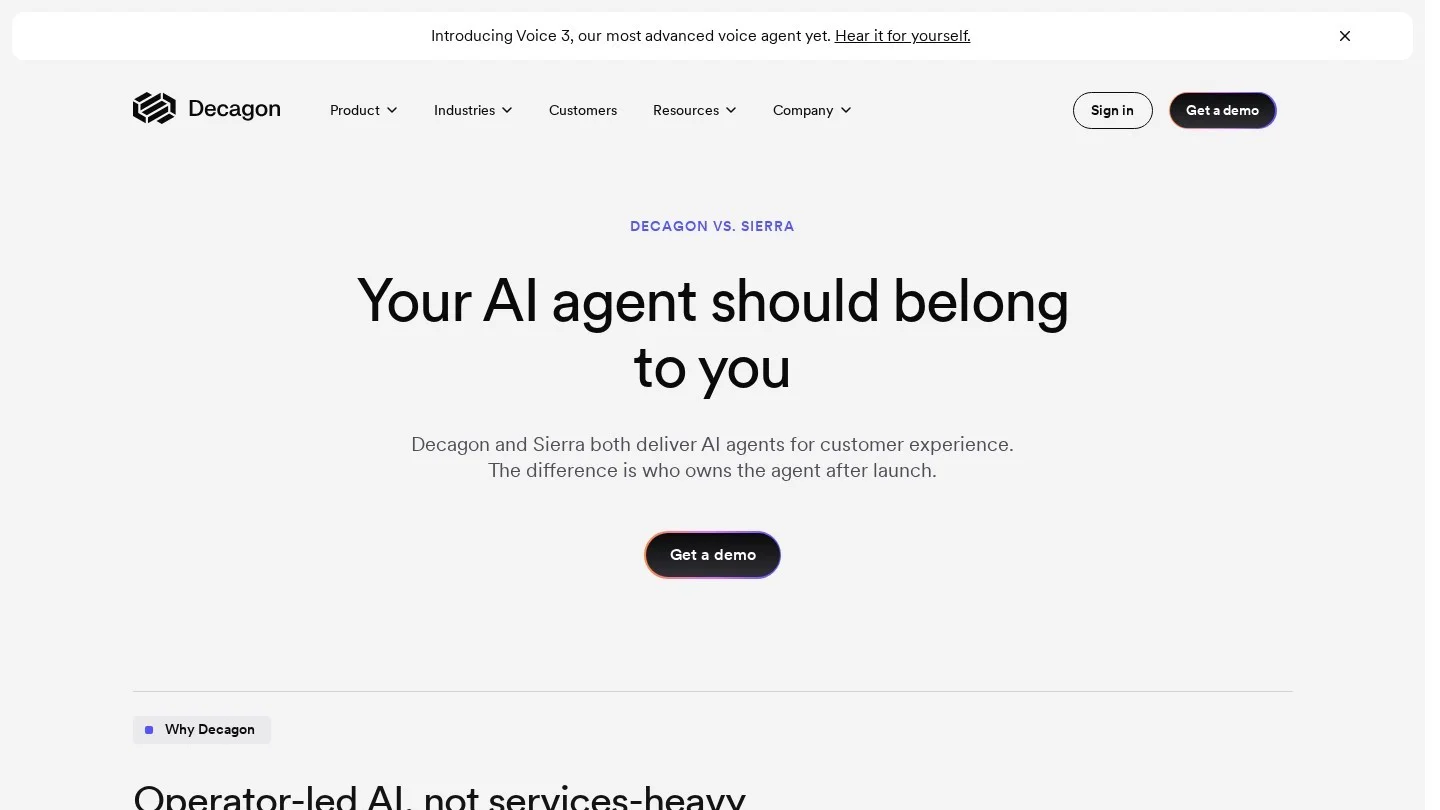
Decagon writes all agent logic as Agent Operating Procedures in natural language. So support leads can read and edit how the agent behaves without an SDK. It covers chat, voice, email, SMS and WhatsApp in more than 70 languages. Testing includes git-based versions, scheduled simulations and live A/B tests.
Buyers choose between two models. Per-conversation pricing charges a fixed rate for each incoming conversation, and most customers pick it. Per-resolution pricing charges a higher rate only for fully resolved conversations. Exact rates come in a quote.
Chime, Duolingo and Curology are among its named customers. See our Decagon profile for its refund and cancellation actions.
Fin by Intercom for a Price You Can Calculate Today

Fin is the easiest Wonderful alternative to cost out. It charges $0.99 for each conversation it resolves end to end. Escalated chats cost nothing. Fin also works on top of other helpdesks, including Salesforce, Zendesk, Freshdesk and HubSpot, with no platform or setup fee in that case.
There are no tiers, so every feature comes with the per-resolution price. A 14-day free trial lets you test it on real tickets. Intercom’s own helpdesk is optional and starts at $29 a seat a month.
At high volume, though, a per-resolution bill grows with success. Model your monthly resolutions before you commit. Our Fin AI Agent profile and our Fin vs Gorgias comparison go deeper.
Ada for Omnichannel Support With Simulations
Ada runs agents across voice, email, chat, WhatsApp, SMS, Instagram and in-app channels from one Reasoning Engine. It connects to Zendesk, Salesforce, Genesys, Amazon Connect, ServiceNow and Twilio Flex. It also offers open APIs, SDKs and an MCP server. Simulations let you test changes before they go live.
Conversation-based pricing is its main model, and a resolution-based option exists for specific needs. Rates are quoted. Pinterest, monday.com, Sky and Grab appear among its customers.
Ada fits a team that runs many messaging channels at once. However, compare its per-conversation quote against Fin’s per-resolution rate, because the two reward different results.
Parloa for Voice-First Contact Centers
Parloa sells an AI Agent Management Platform for enterprise service teams. Its voice layer designs calls in more than 140 languages. Performance Lab simulates agents for every update or model change, and Parloa Lens monitors them in production. Parloa Zones keep data in chosen regions.
Parloa selects and tunes the models itself and carries the token cost, so pricing stays steady when models change. Contracts are quoted. Its named customers include BER Airport, the retailer OBI and AUTO1 Group.
The platform’s focus is voice. So a team whose volume sits mostly in chat or email may want a broader tool.
PolyAI for Voice Agents With Self-Serve API Pricing
PolyAI builds voice agents for contact centers, and it runs voice, chat and messaging on the same agents. Unlike most names here, it has a self-serve API. You sign up in its studio and get a key.
Ongoing voice use is priced per minute. The API rate is 2 cents per connected minute. Text tokens cost $2 per million input and $5 per million output. Ten concurrent calls are included once you add a card.
Telephony and orchestration are not part of API billing, though. Add your phone carrier costs before you compare it with a full platform quote.
Zendesk AI Agents for Teams Already on Zendesk

Zendesk bills its AI agents by automated resolution, and some resolutions come with each plan. Suite Team costs $55 per agent a month on yearly billing and includes 5 automated resolutions per agent. Suite Professional costs $115 and includes 10.
Extra resolutions cost $1.50 each on a commitment or $2 each pay as you go. So the AI cost sits next to your existing seats on one invoice.
The included allowance is small, however. A 20-agent team on Professional gets 200 resolutions a month, and real AI volume will quickly run past that.
Salesforce Agentforce for Service on Salesforce Data
Agentforce runs AI agents on your Salesforce CRM data, across service, sales and field service. It has three ways to pay. Flex Credits cost $500 per 100,000 credits, and one action uses 20 credits, or $0.10. Each conversation costs $2. Per-user add-ons for Sales, Service or Field Service cost $125 a user a month.
That choice helps finance teams. Agents that take few actions per chat are cheaper on Flex Credits. Long, open-ended chats are easier to budget per conversation.
Agentforce makes most sense if your service data already lives in Salesforce. See our Agentforce profile for the agent types it ships.
What 10,000 Support Conversations a Month Cost
Published rates let us price three of these platforms on one workload. We assumed 10,000 conversations a month, with the AI fully resolving 6,000. For Zendesk we assumed 20 human agents on Suite Professional, and for Agentforce three actions per conversation. These inputs are ours, so swap in your own.
| Platform | Math | AI cost a month |
|---|---|---|
| Fin | 6,000 resolutions x $0.99 | $5,940 |
| Zendesk AI agents | 6,000 minus 200 included, x $1.50 committed | $8,700, plus $2,300 in seats |
| Agentforce, Flex Credits | 10,000 conversations x 3 actions x $0.10 | $3,000 |
| Agentforce, per conversation | 10,000 x $2 | $20,000 |
| PolyAI API, voice | 10,000 calls x 4 minutes x $0.02 | $800, plus tokens and telephony |
The spread is wide, and the models reward different things. Fin and Zendesk charge only for resolutions, so poor answers cost less. Agentforce per conversation charges for every chat, resolved or not. PolyAI’s API price covers connected minutes only, so it is a floor for building your own voice agent.
Wonderful, Sierra, Decagon, Ada and Parloa all quote privately. Ask each one to price this same workload. Then you can line their quotes up against the table.
Choosing Between Wonderful and Its Rivals
The deciding factors are scale, channel mix and the stack you already pay for. We would sort the options like this.
- Global enterprise, many countries and languages, hands-on rollout: Wonderful or Sierra, with Decagon as the third bid.
- A team that wants to read and edit agent logic itself: Decagon, for its plain-language procedures.
- A known price per result and a fast trial: Fin.
- Mostly phone calls: Parloa for an enterprise platform, or PolyAI if your developers want an API.
- Already on Zendesk or Salesforce: price the native agents first, then compare them with Fin on top.
- Many messaging apps at once: Ada.
Whatever you pick, run a pilot on one queue with a written resolution definition. We would also put the same four questions to every vendor before the pilot starts.
- What counts as a resolution? Ask if a customer who comes back within 24 hours still counts as resolved.
- Who pays for model changes? Parloa carries the token cost itself, but other contracts may pass it on to you.
- How do you test a change? Decagon, Ada and Parloa all run simulations before release, so ask to see one on your own tickets.
- What happens at the handoff? Check that the human agent sees the full chat and the actions the AI already took.
The answers tell you more than a demo does, because they show how the vendor bills and how it fixes mistakes. For broader numbers on what AI support saves, see the cost reduction statistics for AI customer support we compiled. You can also browse customer support AI agents, voice AI agents and AI agents for telecom.
Buyer Questions About Wonderful and Its Competitors
How Much Does Wonderful AI Cost?
Wonderful prices every deal as a custom enterprise contract. It has no self-serve plan, so you get a quote after talks with its sales team.
What Is the Closest Alternative to Wonderful?
Sierra is the closest. Both sell enterprise agents across voice and digital channels with hands-on deployment help. Sierra bills by outcomes, such as resolved conversations or saved cancellations.
Which Customer Service AI Agent Has Public Pricing?
Fin charges $0.99 per resolution. Zendesk charges $1.50 or $2 per automated resolution, and Agentforce charges $0.10 per action or $2 per conversation. PolyAI publishes 2 cents per connected minute for its voice API.
Does Wonderful Support Voice Agents?
Yes. Wonderful agents handle voice, chat, email and video. Its telecom agents also run payment recovery over WhatsApp and SMS.
Related AI Agents


Read also: AI Agent Security Risks in Enterprise Applications
Explore Agent Categories
Related Articles
 GuidesAI Customer Support Agent Cost Reduction Statistics
 GuidesAI Agent Security Risks in Enterprise Applications
 GuidesHow AI Agents Automate Enterprise Workflows
 GuidesAI Agents for Enterprise Knowledge Management
 GuidesEnterprise AI Agent Adoption Statistics by Size, Stage and Region
 GuidesBest CAMEL AI Alternatives and What They Cost
