


Smart AI agents for travel expense auditing read every receipt against your written policy. Then they send only the risky claims to a person. The best one for most growing companies is Ramp’s Policy Agent. It comes inside a plan with a public price, and Ramp has published results from real finance teams.
For large enterprises with staff in many countries, AppZen is our pick. It runs every expense submission through its agents and audits in 42 languages across 97 countries. Six more products also have documented audit agents, and some of them publish prices.
We researched eight expense platforms and opened each vendor’s own product and pricing pages. In our original research, we found that most vendors now sell the same promise. A machine checks 100% of claims, and humans only see the exceptions. The details differ a lot, though, and those details decide which tool you should buy.
Checks an Audit Agent Runs on Every Travel Claim
Traditional expense controls mostly check fixed rules, such as whether a receipt is attached or an amount is over a limit. Agents change that, because they read the receipt image and the policy text the way a person would. These are the five checks that came up again and again in our research.
Missing or Wrong Receipt Details
First, the agent reads the receipt itself. SAP Concur’s Receipt Analysis Agent fills in missing details such as the vendor or expense type from clues and past claims. It even totals line items when the receipt total is unreadable. Emburse Assurance flags receipts with missing tax or payment details, or with no itemized list, before the employee hits submit.
Your Written Travel Policy
Next, the agent compares each claim with your policy in plain language. Ramp’s Policy Agent reads the written policy, then recommends whether to approve each expense or send it for review. It also shows which rule it used. So when it flags a seat upgrade the policy never mentions, the controller can see the gap and fix the policy.
Duplicates Across People and Months
Duplicate claims are the classic leak. For example, AppZen matches receipts with card data and invoices. It looks across different employees and different reporting periods. That catches the same dinner claimed by two colleagues, or one hotel bill filed twice a month apart.
Fake or Edited Receipt Images
Also, agents now look for receipts that were made up or changed. AppZen names AI-generated fake receipts and expenses split to slip under approval limits. Rydoo’s audit agent checks for altered receipts too.
Per Diem and Country Rules
Finally, travel claims depend on where the trip happened. Rydoo keeps official per diem and mileage rules for more than 45 countries. AppZen flags reports where costs do not line up, such as meals claimed on top of a per diem. Those checks matter most for teams that travel across borders.
Tracing One Chicago Hotel Claim Step by Step
Rules on a page feel abstract, so we traced a made-up claim through the checks the vendors describe. Say a sales rep files a hotel bill for three nights in Chicago after a client visit. The numbers here are only an illustration.
First, the agent reads the receipt image and pulls out the stay dates and the tax lines. If the folio has no itemized list, a tool such as Emburse Assurance asks the rep for the full bill before submission. Next, the agent matches the bill to the card charge and to the trip booked in the travel tool. A hotel stay with no matching booking or card swipe gets flagged for a person.
Then the policy check runs. Suppose the written policy caps Chicago hotels at a set nightly rate, and the room cost more. A policy agent like Ramp’s would cite the exact rule and send the claim for review. However, if the rep’s manager approved the higher rate for a conference, a hidden note can tell the agent to allow it.
After that, the duplicate check looks back across months and across colleagues. If a teammate filed the same folio number last week, both claims go to finance. Finally, a claim that passes every check can be approved on its own, so finance never opens it. You can compare more travel tools on our AI agents for travel page.
Fake Receipts Made With AI Raised the Stakes
Image tools now produce a believable receipt in seconds. So AppZen and Emburse now name fake receipts on their audit pages, and Expensify says its AI detects them.
Emburse surveyed 1,000 employed adults in the US and 1,000 in the UK in May 2026. In that survey, 34% admitted using AI to make a fake receipt, with 40% in the US and 29% in the UK. Also, 19% said they used AI receipts to claim more than they spent. Since these are self-reported answers from a vendor survey, treat them as a warning sign and keep your own data as the real test.

Still, a fake receipt has to beat more than the image check. A good agent also matches the claim to the card swipe and to the trip that was booked. For instance, Navan’s Reconciliation Agent links receipts and payments to the bookings made in Navan. So a made-up hotel bill would have no booking to match.
Read also: How AI Agents Are Changing Travel Booking
Ramp, AppZen and Six More Platforms Compared
We list the products in the order we would shortlist them for a typical company with a corporate card program. Each section covers what the agent does and how it is sold, along with any results the vendor has published.
Ramp Policy Agent
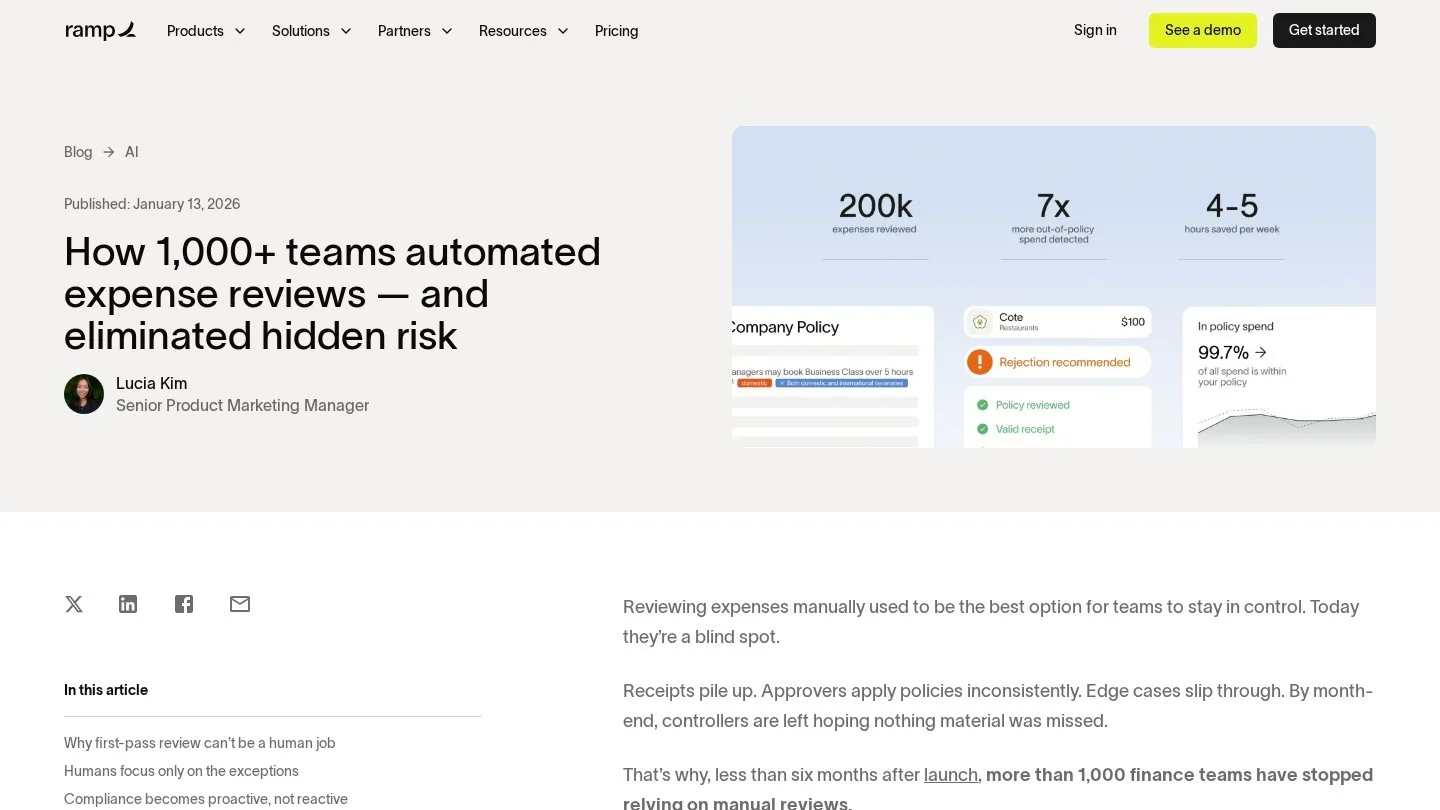
Ramp made its Policy Agent available to all Ramp Plus customers in January 2026. The agent reviews every transaction against the written policy and can auto-approve the clearly in-policy ones you choose. Controllers can add hidden notes that guide its decisions without showing them to employees.
Ramp says more than 1,000 finance teams used it within six months of launch. Those teams report saving four to five hours a week and catching seven times more out-of-policy spend. Reviewers then focus on the 10% to 15% of transactions that need judgment. At Glia, a software company, the agent catches duplicate receipts. Ramp Plus costs $15 per user per month plus a platform fee, and annual billing saves 20%. Our Ramp Agents profile covers its invoice and fraud agents too.
AppZen Expense Audit
AppZen sends 100% of expense submissions through its AI agents. The checks cover policy compliance, duplicate spend and receipt authenticity, along with merchant and regulatory checks. It also flags personal expenses dressed up as business spend.
AppZen says more than 1,500 enterprises use it, and it names Spectrum and Databricks among its customers. Spectrum credits it with finding duplicates its own team could not catch.
Navan Audit Agent
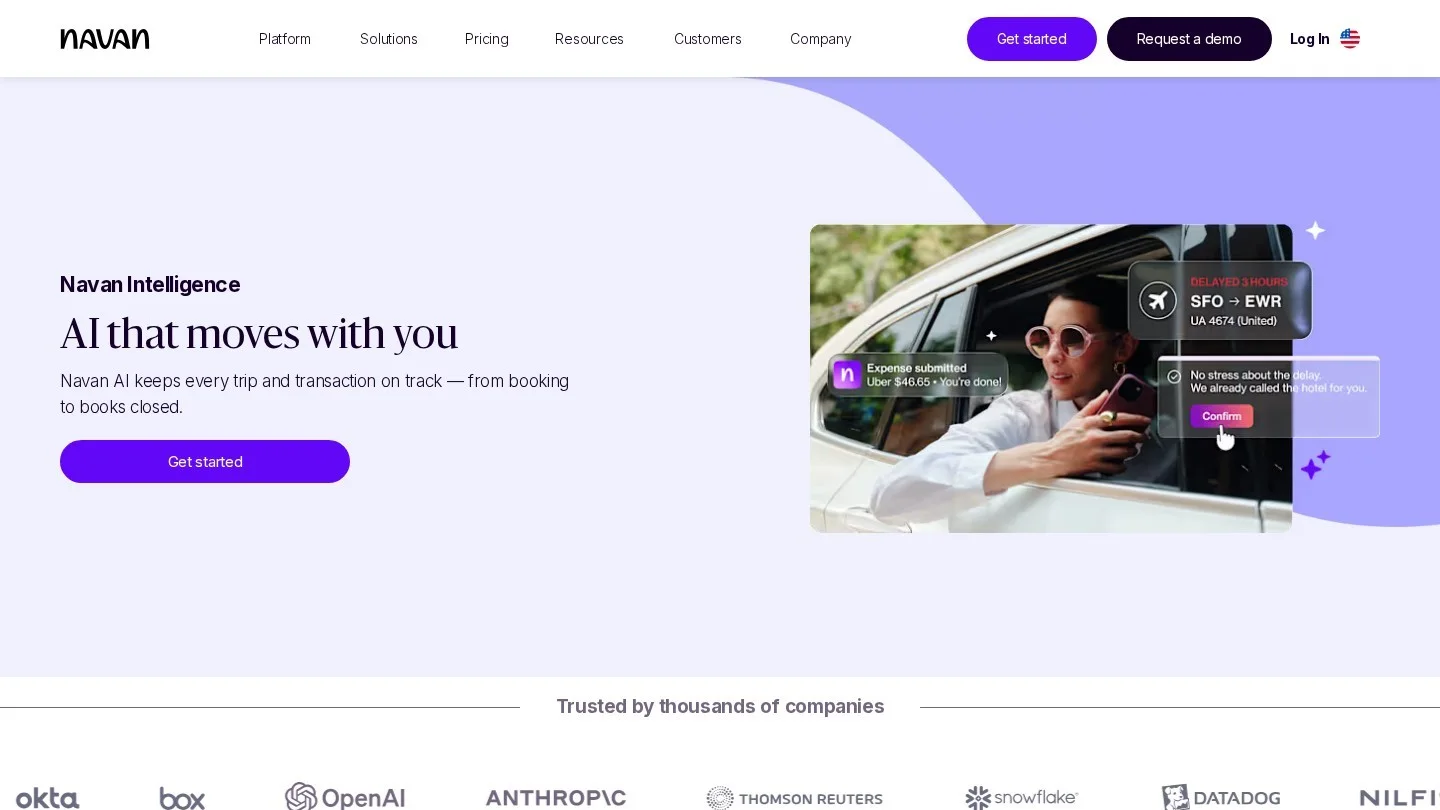
Navan runs an Audit Agent with more than 45 rules you can configure. Navan says 73% of expenses it processes are approved and reconciled without a person touching them. Its Expense Agent fills in categories and GL codes, so claims arrive clean.
Navan Expense is free for the first five monthly expensing users, then $15 per user per month. Because Navan also books the travel, its audit can check claims against the actual trip. Read our Navan Ava profile for the support side of the platform.
SAP Concur With Joule Agents
SAP Concur adds agents through Joule, SAP’s AI assistant. The Expense Report Validation Agent flags missing or incomplete expenses and policy alerts before an employee submits. SAP lists it as included with Joule Base at no extra cost. The Receipt Analysis Agent in ExpenseIt fills gaps in receipt data, as we covered earlier.
So Concur’s agents work on the employee’s side before submission. SAP pitches the validation agent as a way to cut the back-and-forth over rejected reports.
Brex Audit and Review Agents
Brex splits the job between two agents. The Audit Agent watches company spend against internal rules and sorts possible violations by risk. Then the Review Agent auto-approves low-risk expenses and escalates the exceptions. Brex says customers reach a 98% compliance rate without manual enforcement.
Brex’s AI also reads meaning, so it can flag vodka on a receipt even when the word alcohol never appears.
Emburse Assurance
Emburse launched Assurance on February 11, 2026. It checks every receipt before submission and asks the employee to fix problems right away. After submission, each expense gets a risk score, so human auditors work from the top of the list. Emburse says early adopters gave the pre-submission checks over 90% positive feedback.
Assurance is an add-on to Emburse Expense Enterprise, and it reached Emburse Professional and Emburse Spend on March 31, 2026. Emburse also runs a managed audit service where its software flags spend and Emburse’s own human auditors review it.
Expensify Concierge
Expensify’s Concierge AI catches policy breaks as they happen and follows up with the employee. Expensify says its SmartScan receipt reader is 99% accurate, with duplicate and fraud checks built in. Managers can also flag every expense above an amount they set.
Expensify Collect costs $5 per member per month. Control costs $18 per member per month on an annual plan, or $36 pay-per-use. With heavy Expensify Card use, it drops to as low as $9.
Rydoo Intelligence
Rydoo runs four specialized agents. Its audit agent checks every expense against your policy, looking for duplicates and altered receipts among other issues. Then it escalates findings to finance. A policy assistant answers employee questions by quoting your own policy.
Rydoo Intelligence sits in the Enterprise plan, which is priced per customer from 50 active users. Rydoo’s lower plans begin at $9 per user per month billed annually, with a five-user minimum.
What Each Expense Plan Costs
Pricing is public for only some of these tools. We compiled what each vendor shows on its own pages. For more on how agent vendors price seats and usage, see our guide to AI tool pricing models.
| Product | Plan we priced | Published price |
|---|---|---|
| Ramp | Plus, which includes the Policy Agent | $15 per user per month plus a platform fee |
| Navan | Navan Expense | Free for 5 monthly users, then $15 per user per month |
| Expensify | Collect or Control | Collect $5; Control $18 annual or $36 pay-per-use, per member per month |
| Rydoo | Enterprise, which includes Rydoo Intelligence | Quoted per customer, from 50 active users |
| SAP Concur | Joule Base | Validation agent included at no extra cost |
| Emburse | Emburse Expense Enterprise | Assurance sold as an add-on |
Keep in mind that seat price is only one cost. The bigger line is often the finance hours you stop spending on routine review. Our guide on how to control AI agent costs shows how to model that before you sign.
Our Audit Agent Pick for Each Company Size
Your card program usually decides the shortlist before features do. In our view, these agents see the most when spend runs through the vendor’s own cards or booking tool. Then every charge has a match.
- Startups and growing firms on corporate cards. Pick Ramp, since the Policy Agent comes inside Plus with a public price.
- Companies that want travel and expenses in one tool. Pick Navan, because its audit can check claims against the trip it booked.
- Large firms already on SAP Concur. Turn on Concur’s Joule agents if you hold Joule Base, and compare them with AppZen for deeper audit.
- Teams that travel across many countries. Look at Rydoo for per diem rules in 45+ countries, or AppZen for 42 languages.
- Small teams with reimbursements only. Look at Expensify, whose Collect plan costs $5 per member per month.
If your team books trips through AI assistants, Perk is worth a look too. Employees can submit receipts from Claude or ChatGPT and match them to a trip. Managers can also approve claims under a set amount from their own assistant. Our Perk profile has more, and our piece on how AI agents are changing travel booking covers the booking side.
A Six-Week Rollout for Your First Audit Agent
The software is the quick part. The slow part is getting your policy and your people ready, so plan the rollout in stages.
Weeks One and Two, Rewrite the Policy in Plain Sentences
Agents read policy text, so vague rules produce vague decisions. Replace phrases like “reasonable meal costs” with real limits by city or by trip type. Also, write down the exceptions your approvers already allow, since Ramp lets you feed those in as hidden notes.
Weeks Three and Four, Run the Agent in Shadow Mode
Next, let the agent review live claims while humans still approve them. Compare its calls with your approvers’ calls every week. Where they disagree, fix the policy text or add a note, and keep a log of each change.
Week Five, Turn On Auto-Approval for Low-Risk Claims
Then allow auto-approval only for small, clearly in-policy items, such as a taxi under your limit. Ramp, for example, lets controllers choose which in-policy expenses the agent approves on its own. Raise that line slowly while the error log stays quiet.
Week Six, Tell Employees What Gets Checked
Finally, tell staff that every receipt is now read and cross-checked. Pre-submission tools like Emburse Assurance and Concur’s validation agent prompt employees to fix claims early. As a result, fewer reports bounce back, and plain mistakes get fixed before they look like fraud.
Claims a Controller Should Still Sign Off On
Even the vendors keep people in the loop. Ramp says reviewers still handle the 10% to 15% of transactions that need judgment. Also, Emburse runs human auditors behind its software. So plan for a person on these cases.
- Claims where fraud looks likely and an employee could face discipline.
- Policy gaps the agent flags, since only finance should rewrite the rule.
- Large or unusual trips, such as client events or relocation costs.
- Tax questions that cross borders, where the per diem rule and local law differ.
Also, keep a sample audit of auto-approved claims each month. Hidden notes and policy text steer the agent, so an old bad habit written into a note will repeat on every claim. For more finance agents beyond expenses, browse our list of AI agents for accounting, including the invoice agent Vic.ai. Our agentic AI statistics page covers wider adoption numbers.
Related AI Agents


Read also: What Is an AI Agent Playbook?
Explore Agent Categories
Related Articles
 GuidesHow AI Agents Are Changing Travel Booking
 GuidesSynthesia AI Video Usage Among Corporate Training Teams
 GuidesBest CAMEL AI Alternatives and What They Cost
 Guides100 AI Agent Statistics for Retail Companies
 GuidesLLM or AI Agent? AI Search Engines and What They Actually Are
 GuidesCan You Trust an AI Agent?
