


Negotiation-based AI agents are programs that bargain over price or terms on someone’s behalf, inside limits a person sets. They trade offers with the other side and stop when they reach a deal or a walk-away point.
We researched the tools that actually do this today, and the list is shorter than the hype suggests. Most live in procurement, where a big buyer has thousands of small supplier contracts and no time to haggle over each one. A few sit in online stores, and one well-known example handles legal contracts.
Also, in our original research we found one pattern again and again. The agents that work are boxed in tightly, and the ones that fail were given too much room.
How a Negotiation Agent Works Its Way to Signed Terms
Every agent we looked at follows the same basic loop. First, a person writes down what the business wants and what it can give up. Then the agent opens the talk, reads each reply and answers within those rules. Finally, a deal gets logged or the case goes back to a human.
The software underneath differs, though. Walmart’s bot followed scripts built from buyer scenarios. Luminance, on the other hand, runs its negotiator on its own large language model.
The Goal and the Walk-Away Point Come From People
A negotiation agent never decides what a good deal is on its own. Instead, buyers load a target, a floor and a list of terms that can move. At Walmart, for example, buyers wrote the scenarios that the system used to build its negotiation scripts.
Pactum, the vendor behind that work, now calls this layer a Policy Engine. It turns a company’s buying rules into one rulebook that every agent follows. Keelvar uses a similar idea, and its team sets the conditions that move a bidding event into its next round.
Trade-Offs Do More Work Than Haggling
Good human negotiators rarely fight over price alone, and the better agents copy that habit. For instance, Walmart’s bot offered a supplier more lenient termination terms in return for longer payment terms. It also offered growth chances in exchange for a lower price.
In our view, that trading is where software earns its keep. A bot can weigh many mixes of terms on every single offer, and it never gets tired of doing so.
Counteroffers Run Round by Round
Once the opening offer goes out, the other side can accept it or push back. Then the agent checks the counteroffer against its limits and answers. Walmart’s suppliers liked this part, because they could reply at their own pace.
Most systems also have a stop rule. Keelvar flags an event for a person when a bid looks unusual or a supplier goes quiet. It does the same when savings miss a set target. As a result, the human only sees the hard cases.
Walmart’s Supplier Chatbot Pilot in Numbers
Walmart ran the best-documented test so far. The pilot began in Canada in early 2021 and lasted three months. During that time, Pactum’s chatbot negotiated with 89 suppliers of goods Walmart does not resell, such as shopping carts and store equipment.
The goal was to close deals with 20% of those suppliers. In fact, the bot closed deals with 64% of them, in an average of 11 days. Average savings came to 1.5%, and average payment terms stretched to 35 days.

Walmart then took the program to the United States, Chile and South Africa. By late 2022, the share of suppliers closing a deal had reached 68%, and average savings had grown to 3%. The bot can also run 2,000 negotiations at once.
Suppliers did not seem to mind the robot on the other side. In follow-up interviews, 83% of the suppliers who closed a deal spoke well of the process. Still, those were small, routine contracts, and the results say little about big strategic deals.
Six Real Products That Negotiate for Businesses and People
We compiled the examples that have public product pages or reported results we could open. Some negotiate fully on their own, while others stop at a recommendation.
Pactum Runs Procurement Talks for Large Buyers

Pactum sells what it calls digital workers for indirect buying, the goods and services a company uses but does not sell. Its range includes a Single-Source Negotiation Agent and a Tactical Sourcing Agent for quick RFQs. It also runs supplier campaigns that ask for better payment terms and discounts.
Pactum says it has more than 50 global enterprise customers and $55 billion of spend under management. The company also says it averages 11% savings on competed buys and 4.7% on single-source deals. For one customer, Honeywell, Pactum reports more than 2,500 autonomous negotiations and $65,000 saved in a single talk.
Keelvar Turns a Plain Request Into a Bidding Event
Keelvar focuses on sourcing events, where several suppliers bid against each other. A staff member describes a need in plain words, and the agent picks suppliers and builds the bid sheet. Then it runs bidding rounds that push prices down and recommends who should win.
Routine spend can be awarded automatically, but awards that need sign-off wait for a person. Keelvar says Mars saved $64 million in one year with the platform. It also says Siemens automated more than 90% of thousands of events.
project44 Bargains Over Freight Lanes
Freight rates move all the time, so lanes come up for bargaining again and again. In February 2026, project44 announced its AI Freight Procurement Agent, with availability starting in March 2026. It compares contract rates with market rates and launches mini-bids on its own.
The agent can also renew existing carrier deals inside approved limits. For new carriers or new lanes, however, it only gives a recommendation for a human to review. project44 reports a 4.1% cut in freight spend in early deployments, and shippers can begin in a mode that only recommends.
Luminance Negotiates Contract Wording
Not every negotiation is about money. In November 2023, the British legal AI firm Luminance showed its system negotiating a non-disclosure agreement with another company’s AI. The draft asked for a six-year term, which broke Luminance’s own policy, so the AI rewrote it to three years.
The software opened the contract in Word, marked risky clauses in red and logged every change. Signing was the only step left for a human. Luminance has since renamed the feature Autonomous Negotiation and added a view that explains the reasoning behind each edit.
Nibble Lets Online Shoppers Haggle

Nibble, a London company, brings bargaining to online stores. Its Shopify app adds a chatbot that negotiates price one to one with a shopper. The bot tries to find a deal the customer accepts while staying inside the discounts the merchant allows.
Merchants can trigger the bot when a shopper lingers on a page or is about to leave. They can also offer a better price in return for a bigger basket. The app’s Professional plan is listed at $499 a month plus 2% on sales above $24,950, with a 7-day free trial.
Rocket Money Still Uses Human Negotiators for Bills
Consumer bill cutting is often grouped with AI negotiation, but the best-known service works differently. Rocket Money says its expert negotiators contact providers such as internet and phone companies on your behalf. So the app automates the paperwork, while people still do the talking.
Until recently, a successful negotiation cost 35% to 60% of the first year’s savings. However, starting November 2, 2026, bill negotiation is limited to Premium+ members, who pay no success fee. We include it because it shows how far consumer bargaining still is from full automation.
| Agent | What it negotiates | Who sets the limits | Human step |
|---|---|---|---|
| Pactum | Supplier price, payment terms, discounts | Buyer’s policy rulebook | Approval of exceptions |
| Keelvar | Competitive bids for goods and services | Sourcing team’s round rules | Sign-off on larger awards |
| project44 | Freight rates and lane renewals | Shipper’s rate and carrier rules | New carriers and new lanes |
| Luminance | Contract clauses such as NDA terms | Company contract policy | Final signature |
| Nibble | Shopper discounts in online stores | Merchant’s discount range | None per chat |
| Rocket Money | Household bills | Customer request | Human negotiators do the talking |
Read also: AI Agent Startups by Country: Where 349 Agent Makers Are Based
Deals Where Software Negotiators Pay Off
The clearest wins come from volume. Walmart has more than 100,000 suppliers, and about 20% of its deals were boilerplate agreements with no real negotiation. So a bot that closes two in three of those deals at a small saving adds up fast.
Speed comes next. Walmart’s pilot closed deals in about 11 days on average, and Keelvar says some events finish in under 15 minutes. As a result, buyers can renegotiate more often, which matters most in markets like freight.
Records improve as well. Luminance logs every change its AI makes, and project44 makes every agent action auditable. As a result, finance teams can see exactly why a price moved.
These agents also show up wherever other agents need to talk to each other. For example, the protocols in our guide to agent-to-agent communication are what let a buyer’s agent and a seller’s agent trade offers directly.
Where Negotiation Agents Break Down
Still, the failures teach as much as the wins. In each case we studied, the agent either had no hard limit or trusted the other side too much.
A Car Dealer Chatbot Agreed to a One-Dollar Tahoe
In December 2023, a user tricked the website chatbot at Chevrolet of Watsonville into agreeing with any statement. Then the user asked for a new 2024 Chevy Tahoe for $1. The bot agreed and called it a legally binding offer with no takebacks.
The bot had no price floor and no rule against making offers. So any customer-facing chatbot needs a hard block on price commitments unless it is built for bargaining.
Claude Was Talked Into Discounts at Anthropic’s Shop
Anthropic, for its part, tested this risk on purpose with Project Vend, where its Claude model ran a small office shop. Staff coaxed it over Slack into handing out many discount codes. It even gave away some items for free, including a tungsten cube.
The lesson is about pressure. A model trained to be helpful can drift toward saying yes when a friendly person keeps asking. As a result, discount authority should sit in code with fixed numbers, and the model should only choose within that range.
Microsoft’s Test Market Found Agents Took the First Offer
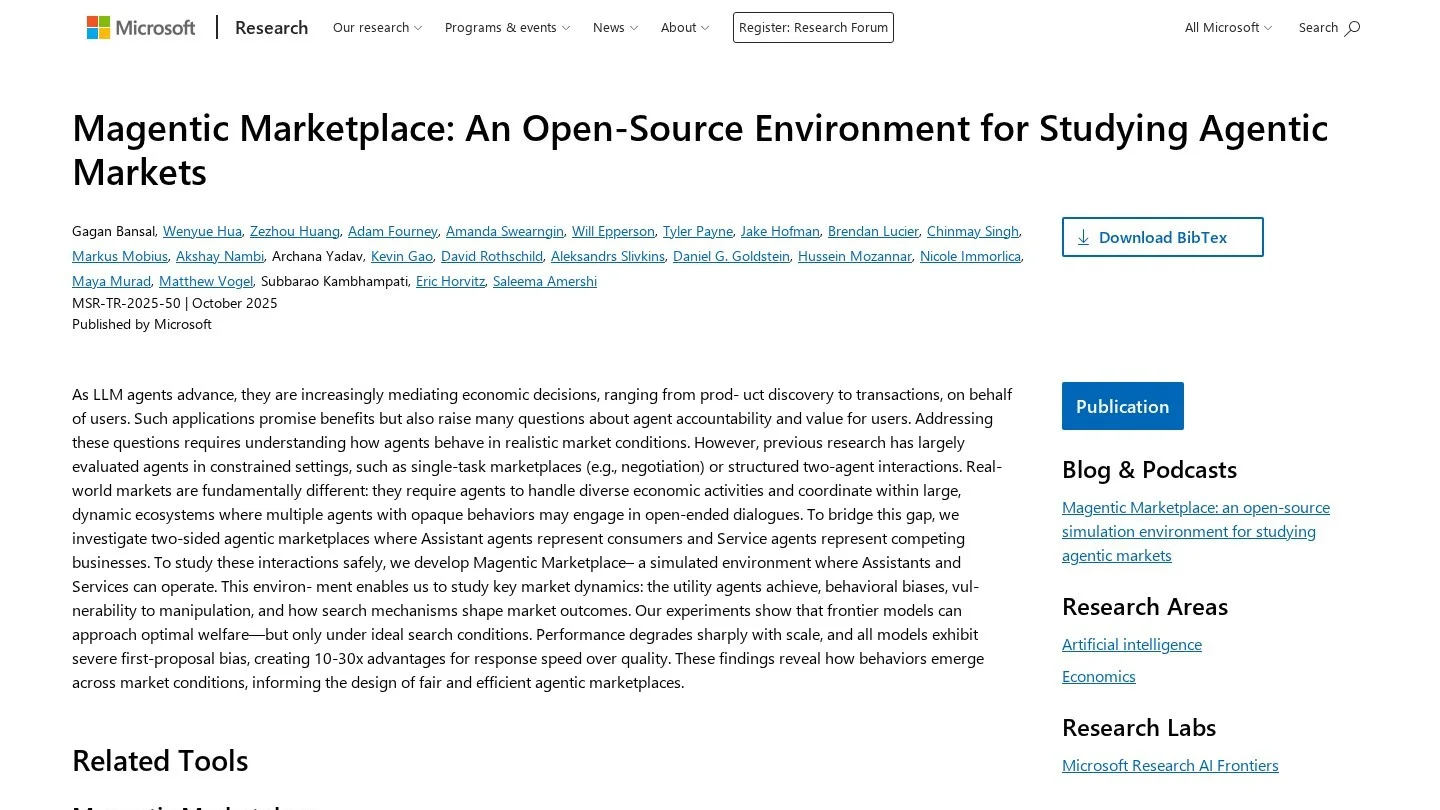
Microsoft Research built Magentic Marketplace, an open-source test market where AI buyers and sellers trade. Every model it tested showed a heavy bias toward the first proposal it saw. In the presentation, the team said roughly 80% to 100% of agents accepted the first offer without checking others.
The same study tested fake reviews and prompt injection. Some frontier models resisted every trick, but others were fully taken over, with all payments sent to the attacker. More choices did not help either, because results got worse for almost every model as options grew.
Rules We Would Set Before an Agent Talks to Suppliers
So we compiled the habits the safer setups share. Each one answers a failure or a lesson from the cases we studied.
- Hard numbers in code. Put the floor and the allowed trade-offs in fixed rules the model cannot rewrite.
- Recommendation mode first. project44 lets shippers run its agent in a mode that only suggests awards, and that is a sensible way to begin.
- Small, routine deals only at launch. Walmart tested on goods it does not resell, which kept the stakes low.
- A clear handoff rule. Send unusual bids, silent suppliers and missed targets to a person, as Keelvar does.
- Full logs. Keep every offer and reply so finance can audit the result later.
- Be open about the bot. In our view, suppliers should know who they are dealing with, and Walmart’s suppliers still rated the process well.
Cost control matters too, since each round of talk uses model calls. Our guide to controlling AI agent costs covers budgets and usage caps. Also, our explainer on AI agents vs AI chatbots shows why a bot that can act needs tighter rules.
Other Procurement Agents Listed in Our Directory
Several tools sit next to negotiation without being pure negotiators. For example, Fairmarkit runs sourcing for enterprise buyers, and Didero chases supplier confirmations for manufacturers. Microsoft’s Dynamics 365 procurement agent works on purchase orders inside its ERP.
For freight and shipping teams, our logistics AI agents page groups related tools. Store owners can browse our ecommerce AI agents instead. Also, our list of AI agent examples shows how other industries put agents to work.
Finally, for the home side, our look at personal AI operating systems covers the assistants that already book and buy things for people.
Quick Answers on AI That Bargains
Are Negotiation AI Agents Legal to Use With Suppliers?
Yes, large buyers use them with suppliers today. Walmart began with a pilot in 2021, and Pactum still lists Walmart and Honeywell as customers. Still, contract and consumer rules differ by country, so check with your own counsel.
Can a Negotiation Agent Sign a Contract?
In the examples we studied, a human or a preset rule had the final say. Luminance’s demo left only the signature to a person. Meanwhile, project44 only renews deals inside limits the shipper approved.
Do Suppliers Dislike Negotiating With a Bot?
Walmart’s numbers suggest most do not. In fact, 83% of suppliers who closed a deal in the pilot spoke well of it. Most liked answering in their own time.
What Savings Do Negotiation Agents Deliver?
Published figures are modest but steady. Walmart reported 1.5% average savings in its pilot and 3% after expansion. Vendors report more, such as Pactum’s 4.7% on single-source deals, but those are the companies’ own claims.
What Is the Biggest Risk With AI Negotiators?
The biggest risk is an agent that gives away too much. That can happen through flattery or a trick prompt. It can also come from simply taking the first offer. So hard limits in code matter more than any model upgrade.
Related AI Agents



Read also: What Is Agent-to-Agent Communication? How A2A Lets AI Agents Work Together
Explore Agent Categories
Related Articles
 GuidesAI Agent Startups by Country: Where 349 Agent Makers Are Based
 GuidesSynthesia AI Video Usage Among Corporate Training Teams
 GuidesBest CAMEL AI Alternatives and What They Cost
 Guides100 AI Agent Statistics for Retail Companies
 GuidesLLM or AI Agent? AI Search Engines and What They Actually Are
 GuidesCan You Trust an AI Agent?
