


AI agents are reshaping IT jobs more than they are erasing them. In US Bureau of Labor Statistics (BLS) projections, computer and IT jobs grow faster than the average for all jobs through 2035. The group has about 280,000 openings a year. The median wage in the group is $109,470. That is more than twice the $50,980 median for all workers.
Inside that total, though, the mix is shifting fast. Programmer jobs are set to shrink 7.3% by 2035, and help desk jobs are shrinking too. Meanwhile, security analyst jobs grow 21% and data scientist jobs grow 34.6%. The tasks agents do well get cut first. The jobs that check, guard and direct those agents keep growing.
So yes, AI agents are part of the future of IT jobs. They take over the most repeatable work and leave people with the judgment calls, the security and the systems design.
IT Jobs Data: Which Roles Grow and Which Shrink
The BLS projections cover the ten years to 2035. The table has the latest job count for each IT role and the count expected in 2035. It also has the latest median pay.
| IT occupation | Latest jobs | Jobs in 2035 | Change to 2035 | Median pay |
|---|---|---|---|---|
| Data scientists | 275,600 | 371,000 | +34.6% | $120,230 |
| Computer and information research scientists | 38,600 | 47,000 | +21.8% | $140,300 |
| Information security analysts | 192,900 | 233,400 | +21.0% | $129,180 |
| Computer and information systems managers | 685,800 | 793,900 | +15.8% | $175,140 |
| Software developers | 1,717,800 | 1,892,600 | +10.2% | $135,980 |
| Database architects | 69,500 | 76,000 | +9.4% | $139,500 |
| Computer systems analysts | 544,400 | 587,200 | +7.9% | $105,850 |
| Software QA analysts and testers | 187,600 | 198,200 | +5.7% | $104,300 |
| Web developers | 87,400 | 90,600 | +3.8% | $92,650 |
| Computer network support specialists | 152,500 | 154,400 | +1.2% | $76,220 |
| Database administrators | 75,000 | 74,900 | -0.1% | $104,620 |
| Computer user support specialists | 750,600 | 724,400 | -3.5% | $61,860 |
| Network and computer systems administrators | 323,600 | 310,400 | -4.1% | $99,130 |
| Computer programmers | 110,800 | 102,700 | -7.3% | $100,390 |
Look at the pairs. Database architects grow 9.4%. Database admins stay flat. Software developers add about 175,000 jobs. Programmers lose about 8,000. In each pair, the role that plans and decides is growing. The role that runs routine steps is not.
The reasons fit that pattern. Programmer jobs shrink as many firms use AI to automate repetitive programming tasks, and the harder work moves to developers. Help desk jobs shrink as firms adopt tools such as chatbots for troubleshooting. The people who stay handle the hard cases. Developer jobs, by contrast, grow 10%, partly because firms keep building software for AI.
Global Forecasts for Tech Jobs and AI
US data is only one view. Global forecasts point the same way, with more churn than net loss.
| Source | Forecast period | Main figures |
|---|---|---|
| Gartner jobs forecast, November 2026 | To 2030 | AI creates 10.6 million jobs and removes 8.9 million, a net gain of 1.7 million |
| Same Gartner forecast, tech sector | To 2030 | 1.9 million tech jobs created and 0.4 million lost |
| World Economic Forum, latest Future of Jobs Report | To 2030 | 170 million jobs created and 92 million displaced, a net gain of 78 million |
| LinkedIn data via the World Economic Forum, January 2026 | Past two years | 1.3 million new AI-related roles |
In the same Gartner forecast, nearly 70% of tech workers have high AI exposure. For 2026 alone, the forecast has 2.2 million jobs lost against 1.6 million gained. So the near term is rougher than the 2030 picture.
The World Economic Forum’s latest Future of Jobs Report points the same way. Big data experts and AI and machine learning experts are among the fastest-growing jobs. So are software and app developers. Security managers rank in the top five, and security analysts sit in the top 15.
Gartner’s survey of more than 700 CIOs, released last November, adds a view from inside IT. By 2030, those CIOs expect no IT work to be done by people without AI. They expect 75% to be done by people working with AI and 25% by AI alone.
Tech Layoffs and Hiring in 2026
Layoffs show the short-term pain. Technology led all sectors in announced US job cuts from January to October 2026, with 171,501 cuts, or 28% of the total. In October, tech cuts fell to 5,576, the lowest month of the year.
AI as a stated reason is fading, too. Employers tied 1,265 October cuts to AI, under 3% of the month’s total. For the year, market and economic conditions have overtaken AI as the top reason, at 130,531 cuts.
On the hiring side, AI roles keep growing. New titles include AI engineers, forward-deployed engineers and data annotators. In the US, jobs that ask for AI literacy grew 70% in a year. Even so, global hiring sits nearly 20% under its level before the pandemic. So job hunting is hard for many IT workers right now.
Read also: The Future of Personal AI Operating Systems
How Developers Use AI Agents at Work
Developers are the first IT group to work beside agents every day. Stack Overflow ran a pulse survey of 1,100 developers and tech workers in April 2026. In it, 59% use AI agents at work, up from 31% in the previous year’s Developer Survey. Also, 37% use them daily.
However, developers keep agents on a short leash. In the same survey, 63% rarely or never let agents run on autopilot. Also, 60% block agents from changing systems without approval. And 47% strongly agree that accuracy still holds them back.
That is the job shift in one survey. The agent writes and runs more of the code. The person sets the limits, reviews the output and owns the result.
IT Tasks AI Agents Are Taking Over
Agents take the parts of IT work that repeat, follow a known playbook and can be checked. Three areas show it most.
Level 1 Help Desk Tickets
Password resets, access requests and how-to questions follow scripts. That makes them easy work for agents. Help desk jobs are set to fall as these tools spread. The staff who remain focus on the hard cases. Agents in our IT help desk category handle this first line of tickets.
For a support specialist, the work moves up a level. Instead of closing 40 password tickets, you handle the 5 cases the agent could not solve. You also fix the knowledge articles it learns from.
Routine Code, Fixes and Tests
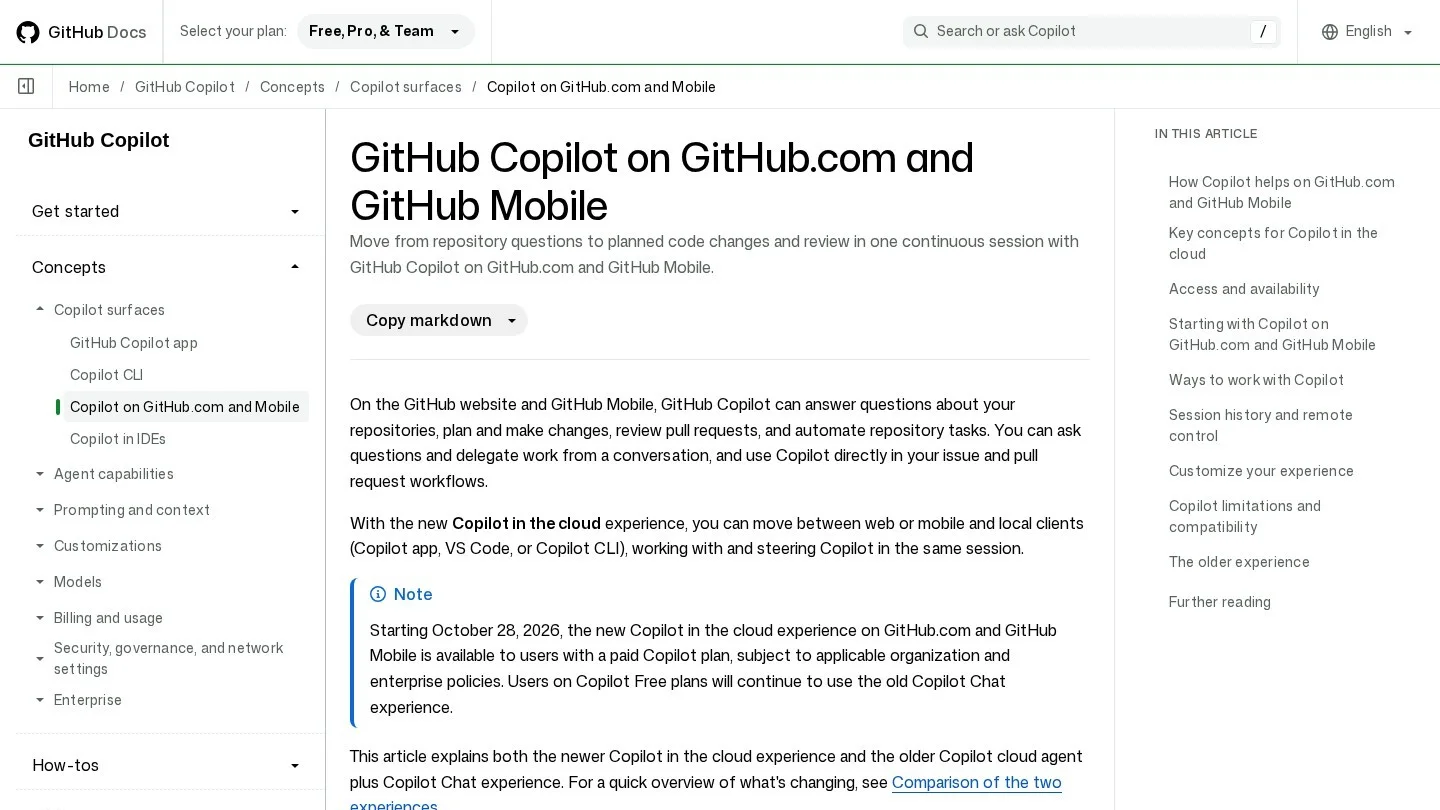
Coding agents now take tickets end to end. GitHub Copilot’s cloud agent can research a repository, plan changes, edit files and run tests and linters in the background. Each GitHub Actions session has a hard limit of 59 minutes. A session works on one branch and opens one pull request per task. Copilot output can still be wrong or insecure, so it needs review and testing before it reaches production.
That is why QA work is changing more than vanishing. QA analyst and tester jobs still grow 5.7% to 2035, slower than developers. Writing and running basic tests is now agent work. Deciding what to test, and judging if a passing test proves anything, stays with people. Our test automation category covers agents built for this.
Incident Triage and Routine Operations
Operations work is next. When an alert fires, Azure SRE Agent checks the monitoring tools and links signals across systems. Then it names a likely root cause and proposes a fix. In one example, it ties a memory spike to a GitHub deploy from two hours earlier. Next, it suggests restarting the pod or changing the memory limit.
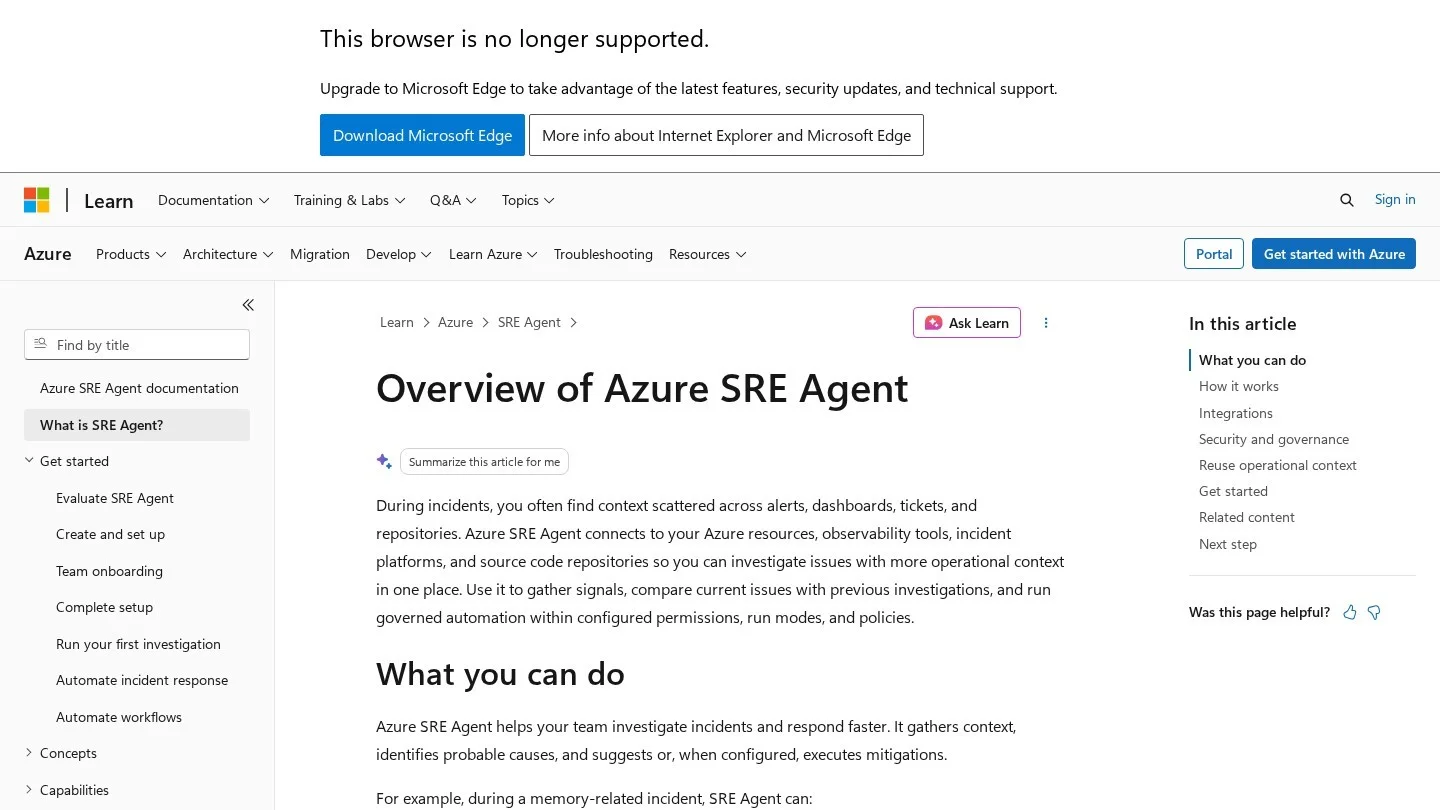
Every tool the agent can use is set to allow, ask or deny. Admins set global guardrails, team leads adjust each agent, and users approve tools in their own chats. So the SRE role shifts from running each step to deciding which steps an agent may run alone. This fits the BLS outlook too, since network and systems administrator jobs are projected to fall 4.1%. See our incident response category for more agents in this area.
IT Work That Grows as Agents Spread
Agents create work as well as remove it. Someone has to secure them, feed them clean data and decide where they run.
- Security: Every agent is a new login with access to your systems. Security analyst jobs grow 21% to 2035. Security roles also rank among the fastest-growing jobs worldwide.
- Data work: Agents are only as good as the data they read. Data scientist jobs grow 34.6%, the fastest rate in the table, and database architects grow 9.4%.
- Systems design and architecture: Network architects grow 7.7% and systems analysts grow 7.9%. These roles decide how agents plug into the rest of the stack.
- IT management: Computer and information systems managers add more than 108,000 jobs. Someone has to set agent policy, budgets and approval rules.
- AI engineering: AI engineers and forward-deployed engineers are among the 1.3 million new AI roles of the past two years. These people build agents and fit them into a customer’s systems.
New IT Roles Built Around AI Agents
Some job titles are brand new. Others are old roles with new duties.
AI engineers build and tune agent systems. Forward-deployed engineers work inside a client’s company. They hook AI products up to the client’s real systems. Data annotators label and check the data that models learn from. Heads of AI now sit on many leadership teams, too.
Existing IT roles pick up agent duties as well. A help desk lead now writes the playbooks agents follow. A DevOps engineer sets the allow, ask and deny rules for an ops agent. A security analyst reviews what each agent can reach and watches for prompt injection.
Skills to Learn for an IT Career Next to AI Agents
The safest path is to move toward the work agents create. Each skill here maps to a role the data shows growing.
- Learn to direct coding agents: Write precise tickets, break work into small tasks and review pull requests line by line. Review is where a developer adds the most value once an agent writes the first draft.
- Learn security for AI systems: Study prompt injection, least-privilege access and audit logs. The OWASP Top 10 for LLM applications is a free place to begin.
- Learn data and SQL well: Agents fail on messy data. People who can model, clean and govern data stay in demand.
- Learn cloud and observability tools: Ops agents work through monitoring and incident tools. Knowing those tools lets you set safe rules for what an agent may do.
- Learn to build a small agent: Build one agent with two tools, a test set and approval steps. Our tutorial on building an AI agent with LangChain walks through one. For guided study, our list of agentic AI courses for beginners covers free and paid options.
- Keep the people skills: Explaining trade-offs, gathering requirements and owning an outage are hard to hand to an agent.
IT Career Questions About AI Agents
Will AI Agents Replace IT Help Desk Jobs?
They will take part of the work and some of the jobs. User support jobs are set to fall 3.5% by 2035, partly because of chatbots that fix common problems. Still, computer support specialists as a group keep about 48,700 openings a year from retirements and job changes. The remaining roles handle harder cases and manage the agents.
Is Software Development Still a Good Career With AI Agents?
Yes, by the numbers. Software developer jobs are projected to grow 10.2% to 2035, with a median wage of $135,980. Pure programming roles are shrinking, though. So the career rewards people who design systems and review agent output, more than people who only write routine code.
Which IT Jobs Are Safest From AI Agents?
Roles that mix judgment with blame for the result look safest. Data scientists, security analysts, research scientists and IT managers all grow by more than 15% to 2035. These people set direction or carry risk. Agents do neither.
Do AI Agents Mean Fewer Entry-Level IT Jobs?
For now, yes, in the most routine roles. Gartner advises CIOs to slow new hiring, mainly for low-complexity tasks, and to move current staff toward work that earns money. Programmer jobs show the effect. They still have about 4,400 openings a year, but every one of those comes from people who retire or switch jobs. None comes from growth.
So a new IT worker should aim at entry roles that grow. Junior security, data and cloud jobs are better bets than pure coding or ticket work. It also helps to show, in a portfolio, that you can set up and check an agent.
Should IT Workers Learn to Build AI Agents?
Yes, at least at a basic level. Knowing how agents call tools, where they fail and how to limit them makes you the person who can deploy them safely. That skill now matters in support, DevOps, security and development alike.
Related AI Agents


Read also: How Much Does an AI Receptionist Cost for a Dental Practice?
Explore Agent Categories
Related Articles
 GuidesThe Future of Personal AI Operating Systems
 GuidesAgentic AI Statistics: Adoption, ROI, Jobs and Pricing Data
 GuidesSynthesia AI Video Usage Among Corporate Training Teams
 GuidesBest CAMEL AI Alternatives and What They Cost
 Guides100 AI Agent Statistics for Retail Companies
 GuidesLLM or AI Agent? AI Search Engines and What They Actually Are
