

The AI tool niches with the most demand right now are coding agents, customer support agents, healthcare documentation, legal work, voice agents and agent platforms, followed by IT help desks, accounting, security operations, AI search visibility, ecommerce shopping assistants and email assistants. Each one has a buyer who already spends real money on the problem, and each has fresh funding or spending data behind it. This guide ranks 12 niches by that evidence and shows where a new builder still has room.
The money is moving fast. Menlo Ventures estimates that companies spent $37 billion on generative AI in 2025, up from $11.5 billion in 2024, and $19 billion of that went to applications rather than models or chips. Consumers moved too: Sensor Tower counted about 3.8 billion AI app downloads in 2025, double the year before. Demand is not the hard part anymore. Picking a niche where you can win is.
Where Buyers Are Spending on AI Tools
- Coding is the largest application niche by far: Menlo Ventures puts 2025 enterprise spend at $4.0 billion, or 55% of all departmental AI spend.
- Healthcare is the biggest vertical at about $1.5 billion, and ambient scribes alone reached $600 million, according to the same report.
- Customer support and voice agents have strong demand but heavy competition: our directory lists 70 customer support agents and 67 voice agents.
- Accounting, security operations and AI search visibility drew large 2026 rounds, yet our directory lists only 14 to 16 agents in each.
- The best openings sit inside a crowded niche: a specific buyer, a specific workflow and a price model that matches the value delivered.
How We Picked These AI Tool Niches
We used three kinds of evidence for each niche. The first is spending or funding data from a named source, such as the Menlo Ventures 2025 State of Generative AI in the Enterprise report, Gartner forecasts, Adobe Analytics or Sensor Tower. The second is a recent funding round that shows investors expect the niche to grow. The third is a supply signal from our own directory of AI agents, which tells you how many products already compete for the same buyer.
Our directory count is a rough guide, not a census of the whole market. It does show where builders have already crowded in. A niche with big spending and a short list of tools is more open than one with big spending and a long list. Category counts overlap, since one agent can sit in several categories.

The chart shows the scale gap. Coding spend is more than double the next category. Below it, a cluster of niches sits between roughly $350 million and $750 million each, and that middle band is where most new tools will compete.
1. AI Coding Agents
Coding is the clearest demand signal in AI. Menlo Ventures reports that enterprises spent $4.0 billion on coding tools in 2025, up from $550 million in 2024. That is 55% of all departmental AI spend, and code completion alone took $2.3 billion. Developers adopt fast because the output is easy to check: the code runs or it does not.
Engineering leaders pay, often per seat, and the budget comes from teams that already buy developer tools. Competition is fierce. Large platforms and well-funded startups fight for the same developers, so a general coding assistant is a hard place to start. Our directory lists 10 coding agents, which understates the wider market.
The gap is in narrow jobs around the code. Think test generation for one framework, migration of legacy code, security fixes, or code review for regulated industries. Devin shows the autonomous end of the niche, where an agent takes a ticket and opens a pull request on its own.
2. Customer Support AI Agents
Support is the classic agent use case because the work is high volume and much of it repeats. Gartner predicted in March 2025 that agentic AI will resolve 80% of common customer service issues without human help by 2029. Menlo Ventures puts 2025 spend on customer success tools at $630 million. Investors agree: Decagon raised $250 million at a $4.5 billion valuation in January 2026.
Heads of support and operations pay, and many now buy on outcomes, such as a fee per resolved conversation. This is one of the most crowded niches we track. Our directory lists 70 customer support agents, from helpdesk add-ons to standalone platforms such as Decagon.
The opening lies in industries where a wrong answer is costly. Insurance claims, utilities, banking and healthcare billing all need agents that follow strict policies and log every step. A tool that owns one of those workflows can beat a general bot on trust.
3. Healthcare Documentation and Admin
Healthcare is the largest vertical in Menlo’s data, with about $1.5 billion in 2025 spend, up from $450 million. Menlo says healthcare outspends the next four verticals combined. Ambient scribes, which listen to a visit and draft the clinical note, reached $600 million on their own, up 2.4 times from the year before.
Health systems and practice groups pay, usually after a long security and compliance review. That slows sales but also protects vendors once they are in. Our directory lists 22 healthcare agents, plus 13 built for dental practices.
Scribes are now crowded at the large-hospital end. The gaps sit in the back office: prior authorization calls, insurance checks, patient intake and follow-up. Hippocratic AI works on that side, with agents built for patient-facing tasks that are not diagnosis.
4. Legal AI
Legal work is text-heavy, billed by the hour and full of repeat tasks, which makes it a natural fit for language models. Menlo Ventures puts 2025 legal AI spend at $650 million. Harvey, the best-known vendor, raised $550 million at a $15.5 billion valuation in September 2026. Its cofounder said annual recurring revenue had crossed $400 million, and the company counts more than 3,000 customers.
Law firms and in-house legal teams pay. Large firms buy broad platforms, while smaller firms buy narrow tools for one task. Our directory lists 17 legal agents and 11 built for law firms, and Harvey sets the bar at the top of the market.
The large-firm segment is tough to enter. Small firms, solo lawyers and single practice areas are less served. Personal injury, immigration, family law and contract review for small businesses each have their own forms and workflows that a focused tool can learn.
Read also: 10 Best Agentic AI Tools for Coding
5. Voice AI Agents
Voice agents answer and place phone calls, which matters for any business that still runs on the phone. Funding shows how hot the layer is. ElevenLabs, which supplies voice models to many agent builders, raised $500 million at an $11 billion valuation in February 2026, more than triple its value a year earlier.
Buyers range from call centers to single-location businesses such as clinics, restaurants and home services. Many pay per minute. This niche is crowded: our directory lists 67 voice agents, and you can browse them on our voice AI agents page.
Developer platforms such as Retell AI already sell the building blocks. The open space is vertical: a receptionist that knows how a veterinary clinic books visits, or an outbound agent that follows debt collection rules. Those tools win on setup time and domain knowledge, not on the voice itself.
6. AI Agent Platforms and Builders
Agent platforms let companies build their own agents instead of buying one tool per task. Menlo Ventures puts 2025 spend at $750 million, naming Salesforce Agentforce, Writer and Glean as leaders. Gartner predicted in August 2025 that 40% of enterprise apps will include task-specific AI agents by the end of 2026, up from less than 5% in 2025.
IT and operations teams pay, often through large platform contracts. Our directory lists 20 agent builders, from enterprise suites to no-code tools such as Relevance AI. We compare the no-code options in our guide to no-code AI agent builders.
A warning applies here. Gartner also predicted in June 2025 that more than 40% of agentic AI projects will be canceled by the end of 2027, citing cost, unclear value and weak risk controls. That points to a gap: testing, monitoring, cost control and governance tools for teams that already run agents.
7. IT Help Desk and Operations Agents
Employees file the same IT tickets every day: password resets, access requests, software installs and “how do I” questions. Menlo Ventures reports $700 million in 2025 spend on IT tools, the second-largest department after coding. The work suits agents because it follows clear rules and lives inside systems with APIs.
CIOs and IT service managers pay, usually per employee or per seat. Our directory lists 17 IT and DevOps agents. Moveworks is an established example, built to resolve employee requests across IT, HR and finance.
Large enterprises are well served. Mid-sized firms with a small IT team are not, and they need tools that plug into common help desks in a day. Incident response for engineering teams, where an agent reads logs and suggests a fix, is another growing branch.
8. Accounting and Finance Agents
Accounting firms face heavy workloads and rely on repeatable steps, which makes them strong agent buyers. Basis, which builds agents for accounting firms, raised $100 million at a $1.15 billion valuation in February 2026. The pitch is end-to-end work across accounting, tax and audit rather than a chat assistant.
Firm partners and finance leaders pay, and they judge tools by hours saved per client. Our directory lists 16 accounting agents and 14 built for accounting firms, including Basis. That is a short list for a market where every business needs bookkeeping.
The gaps are in specific tasks. Month-end close for one industry, sales tax filings, accounts payable for construction firms, or audit prep for nonprofits each need deep rules knowledge. A narrow tool can earn trust faster than a broad one.
9. Security Operations (AI SOC) Agents
Security teams receive more alerts than people can review, so many get closed without a real look. AI SOC agents triage and investigate those alerts like a junior analyst. Dropzone AI raised a $37 million Series B in July 2025. Its CEO described demand as hockey-stick growth and said the product lets a two- or three-person team work like a team of five to ten.
Security leaders and managed security service providers pay. Buyers are cautious and expect proof in their own environment before they sign. Our directory lists 16 cybersecurity agents, including Dropzone AI.
The open angle is the mid-market. Smaller firms cannot staff a 24-hour security team, and managed providers need tools priced for many small clients. Agents for cloud security posture and identity alerts are also less crowded than general alert triage.
10. AI Search Visibility (GEO and AEO) Tools
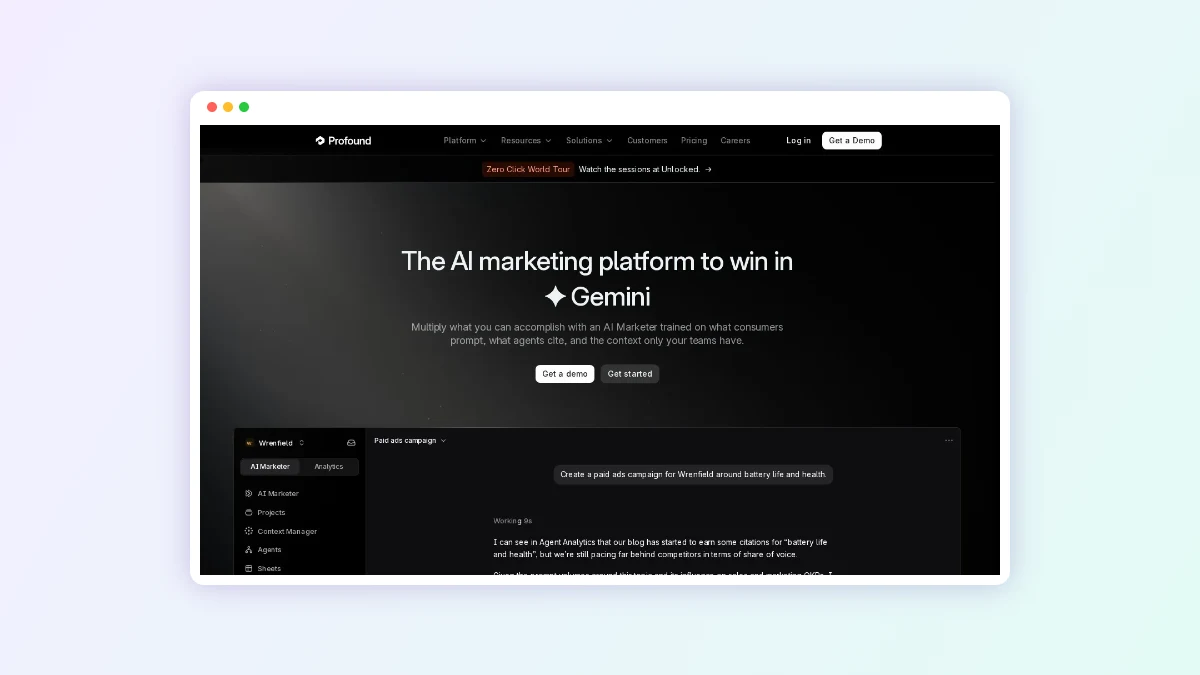
Shoppers and buyers now ask chatbots for advice, and brands want to know what those chatbots say about them. That created a new category, often called generative engine optimization (GEO) or answer engine optimization (AEO). Profound, a leader in the space, raised a $96 million Series C at a $1 billion valuation in February 2026.

Marketing and SEO teams pay, often moving budget from traditional SEO tools. Our directory lists 14 SEO agents, including Profound. Demand will grow as more traffic comes from AI tools, and Adobe’s retail data below shows how fast that shift is moving.
Tracking is crowded already. The gap is action: tools that fix the content, product data and reviews that shape AI answers, especially for small businesses and local services that cannot afford enterprise platforms.
11. Ecommerce Shopping Assistants
Adobe Analytics reported that traffic from generative AI tools to US retail sites rose 693.4% in the 2025 holiday season compared with the year before. Over the same period, consumers spent $257.8 billion online. Shoppers who arrive from a chatbot expect the store to answer questions the same way.
Store owners pay, usually through app store plans tied to message volume. Our directory lists 22 ecommerce agents, from support tools to sales assistants such as Zipchat AI, which chats with shoppers on Shopify stores.
Support bots for online stores are common. Fewer tools act as true product advisors for complex goods such as furniture, auto parts or skincare, where the right answer depends on fit and compatibility. Agents that help stores appear in third-party AI shopping tools are another open area.
12. Email and Personal Productivity Assistants
Inbox overload is a near-universal pain, and individuals can buy a fix without a long procurement process. Menlo Ventures puts 2025 spend on personal productivity tools at $450 million and names Granola and Fyxer as examples. The niche benefits from fast word of mouth inside teams.
Individual professionals and small teams pay, usually per person per month. Our directory lists 20 email agents, including Fyxer AI, which sorts the inbox, drafts replies and takes meeting notes.
General email assistants face pressure from built-in features in large email suites. The gap is in roles with special inbox needs, such as recruiters, real estate agents, executive assistants or support leads, where a tool can learn the role’s templates and follow-up rules.
AI Tool Niches Compared
This summary pulls the evidence for each niche into one place. Competition reflects both our directory count and how many large players already sell into the niche.
| Niche | Demand Evidence | Who Pays | Our Directory Lists | Competition | Underserved Angle |
|---|---|---|---|---|---|
| Coding agents | $4.0B 2025 spend (Menlo Ventures) | Engineering leaders | 10 | Very high | Tests, migrations, regulated code review |
| Customer support | $630M spend; Gartner 80% resolution forecast for 2029 | Support and ops leaders | 70 | Very high | Regulated industries |
| Healthcare admin | About $1.5B spend; scribes $600M (Menlo) | Health systems, practices | 22 | High | Prior auth, intake, small practices |
| Legal | $650M spend; Harvey at $15.5B valuation | Law firms, in-house teams | 17 | High at the top | Small firms, single practice areas |
| Voice agents | ElevenLabs $500M round at $11B | Call centers, local businesses | 67 | Very high | Vertical receptionists |
| Agent platforms | $750M spend; Gartner 40% of apps by 2026 | IT and operations | 20 | High | Testing, monitoring, governance |
| IT help desk | $700M spend (Menlo) | CIOs, IT managers | 17 | Medium | Mid-sized firms, incident response |
| Accounting | Basis $100M round at $1.15B | Firm partners, CFOs | 16 | Medium | Industry-specific close and tax |
| Security operations | Dropzone AI $37M Series B | Security leaders, MSSPs | 16 | Medium | Mid-market, MSSP pricing |
| AI search visibility | Profound $96M at $1B valuation | Marketing and SEO teams | 14 | Medium | Fixing content, local businesses |
| Ecommerce assistants | 693.4% rise in AI traffic to retail (Adobe) | Store owners | 22 | Medium | Advisors for complex products |
| Email assistants | $450M personal productivity spend | Professionals, small teams | 20 | Medium | Role-specific inbox tools |
How to Choose Your AI Tool Niche
Demand data tells you where money flows. It does not tell you where you can win. Use the niches above as a starting list, then narrow with a few practical tests.
Start With a Buyer Who Already Pays
The strongest niches replace a cost that already exists, such as an outsourced call center, billable hours or a hire the company keeps postponing. If you can name the budget line your tool replaces, sales get much easier. If the buyer has never paid for the task, you will spend months creating the habit.
Go Narrow Inside a Big Niche
A crowded niche is not a closed one. Customer support has 70 tools in our directory, yet few focus on a single regulated industry. Pick one buyer, one workflow and one set of systems to connect to. A tool that does one job well can charge more and win faster than a broad assistant.
Check Data Access and Risk Early
Many good ideas stall on access. Ask whether you can reach the data the agent needs through an API, and whether a mistake could cause legal or financial harm. High-risk niches such as healthcare and finance pay well, but they need audit logs, human review and compliance work from day one.
Match the Price Model to the Value
Buyers now expect AI tools to price by usage or results, not only by seat. Support tools charge per resolution and voice tools charge per minute. Our guide to AI tools pricing models explains each model and how to pick one that fits your niche.
Before you build, talk to ten people in your chosen niche. Ask how they handle the task today, what it costs them and what they tried before. If several of them would pay for a fix this quarter, you have a niche worth building for.
Questions Founders Ask When Picking an AI Niche
What AI Tools Are in Highest Demand in 2026?
Coding tools lead by spending, with $4.0 billion in 2025 enterprise spend according to Menlo Ventures. Healthcare documentation, agent platforms, IT help desk tools, marketing tools, legal AI and customer support agents follow, each in the hundreds of millions of dollars.
Which AI Niche Is Most Profitable?
Profit depends on your costs and price, so no niche guarantees it. Niches where buyers already pay high rates for the work, such as legal, accounting and healthcare admin, tend to support higher prices. They also bring longer sales cycles and stricter compliance needs.
Is It Too Late to Start an AI Tool Business?
No. Enterprise AI spend more than tripled between 2024 and 2025 in Menlo’s estimates, and many verticals still have short lists of tools. The window is narrowing for broad assistants, so new builders do better with focused tools for one buyer.
Which AI Niche Has the Least Competition?
Among the niches here, accounting, security operations and AI search visibility have fewer tools in our directory, with 14 to 16 each, while drawing large funding rounds. Narrow branches of crowded niches, such as voice agents for one trade, can also be open.
How Do I Validate an AI Tool Idea?
Interview potential buyers, ask what they spend on the problem today and try to pre-sell a pilot. A paid pilot from a few customers is stronger proof than survey answers or search interest.
Read also: Creatify AI Alternatives for Video Ads: 8 Tools Compared
Related AI Agents


Explore Agent Categories
Related Articles
 GuidesCreatify AI Alternatives for Video Ads: 8 Tools Compared
 Guides10 Best Tools for Building AI Agents Without Coding
 GuidesBest AI Agents for Document Processing: 5 Tools With Real Prices
 GuidesAI Tools Pricing Models Explained: A Guide for Buyers and Builders
 Guides10 Best Agentic AI Tools for Coding
 GuidesSynthesia AI Video Usage Among Corporate Training Teams
