


Run One Agent Service for One Kind of Buyer
You build a one-person AI agent company by choosing one job that businesses already pay staff to do. Then you sell an agent that does that job for a monthly fee, and you let other agents run your own back office.
We researched five founders who built AI products alone or close to alone and wrote openly about it. We also compiled official prices for the tools a solo operator needs. Then we ran the monthly math in Python, so every unit cost in this piece comes from a vendor price list.
The best first product for most solo founders is a phone or inbox agent for one trade, sold on a monthly plan. That is because the owner can compare your fee with a wage they already pay. For more ideas with proven demand, see our ranking of profitable AI agent business ideas.
Copy What Five Solo Founders Did First
In our original research we found that all five kept their teams tiny while the product grew. Pieter Levels told Lex Fridman that he does everything himself. The other four added only a handful of people around them.
So the lesson sits in the order of moves. Levels and Postma both handled the work alone before adding code or people. Dinh, in turn, kept his staff to one full-time employee even at about $45,000 a month.
Ship Plain Code the Way Pieter Levels Does

Pieter Levels built Photo AI with PHP and jQuery on top of a SQLite database. On the Lex Fridman Podcast he said he takes no venture funding and does everything himself, down to the logo. He also said his Interior AI tool still made “40K, 50K a month” at that point.
Photo AI also began by hand. In fact, Levels kept the prompt in a text file and ran jobs manually until demand forced him to code the steps. He said the image models run through Replicate, and Google Vision checks every photo for nudity before a user sees it.
So do not wait for a perfect setup. Run your first ten client jobs by hand, then automate the steps you repeat most.
Hire Late the Way Tony Dinh Did
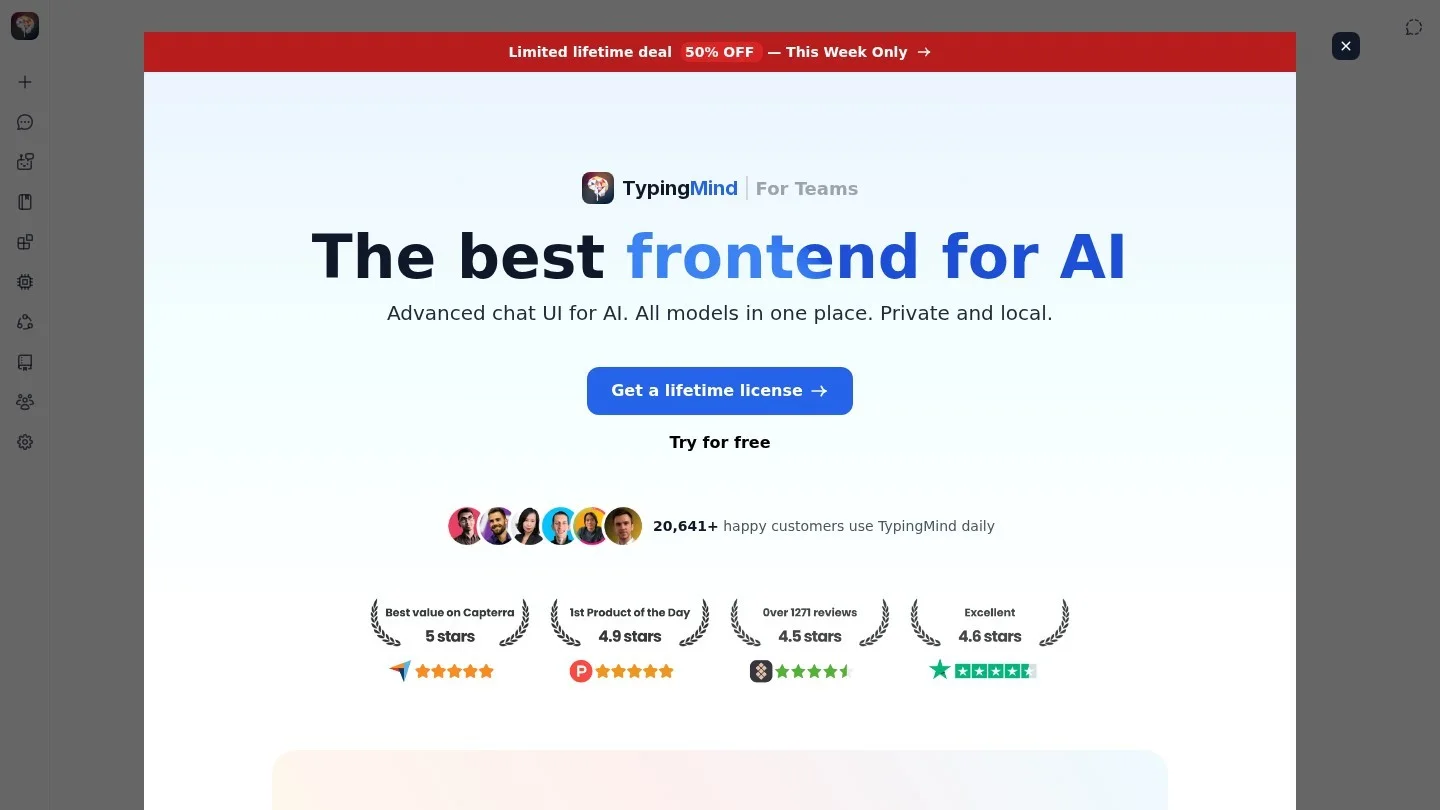
Tony Dinh released Typing Mind, a chat interface built on the OpenAI API, on March 6, 2023. It earned $22,000 in license revenue in its first seven days. By his two-year recap that September, it averaged about $30,000 a month, and all his products together made about $45,000 a month.
Typing Mind sold as a $39 license, and it also has a version for businesses. Even at that revenue level, he had hired just one full-time employee for marketing and support work. He also used three freelance developers for the coding he found less interesting. Even so, he wrote that he worked only about four hours a day, mostly on features he enjoyed.
His audience did much of the selling, too. He grew to 97,000 Twitter followers by building in public, so each launch had buyers waiting.
Sell Before You Scale the Way Base44 Did

Maor Shlomo started Base44 as a side project, a tool that builds apps from text prompts. Six months later, in June of last year, Wix bought the still-bootstrapped company for $80 million in cash. Base44 had eight employees at the time, and Wix set aside $25 million for them as a retention bonus.
The numbers before the sale matter more for you, though. Base44 reached 10,000 users in its first three weeks. Also, Shlomo’s own posts put May profit at $189,000 after paying for LLM tokens.
He picked Anthropic’s Claude through AWS mainly on cost and performance. So model choice was a margin decision from the first month.
Automate the Pipeline the Way Danny Postma Did
Danny Postma runs HeadshotPro, which turns 15 to 17 user photos into business headshots. He has said that fear of hiring pushed him to automate as much as he could on his own. Later, he said he could no longer manage everything alone, and he built a small team.
His pipeline shows where the real work sits. Besides the main image model, HeadshotPro runs dozens of extra open-source and custom models. For example, LLaVa filters uploads and removes unsafe images, while Codeformer cleans AI artifacts from faces.
That is why quality checks deserve as much of your build time as the agent itself. Customers judge the output, and they never see which model made it.
Mix Cloud and Open Models the Way Arvid Kahl Does
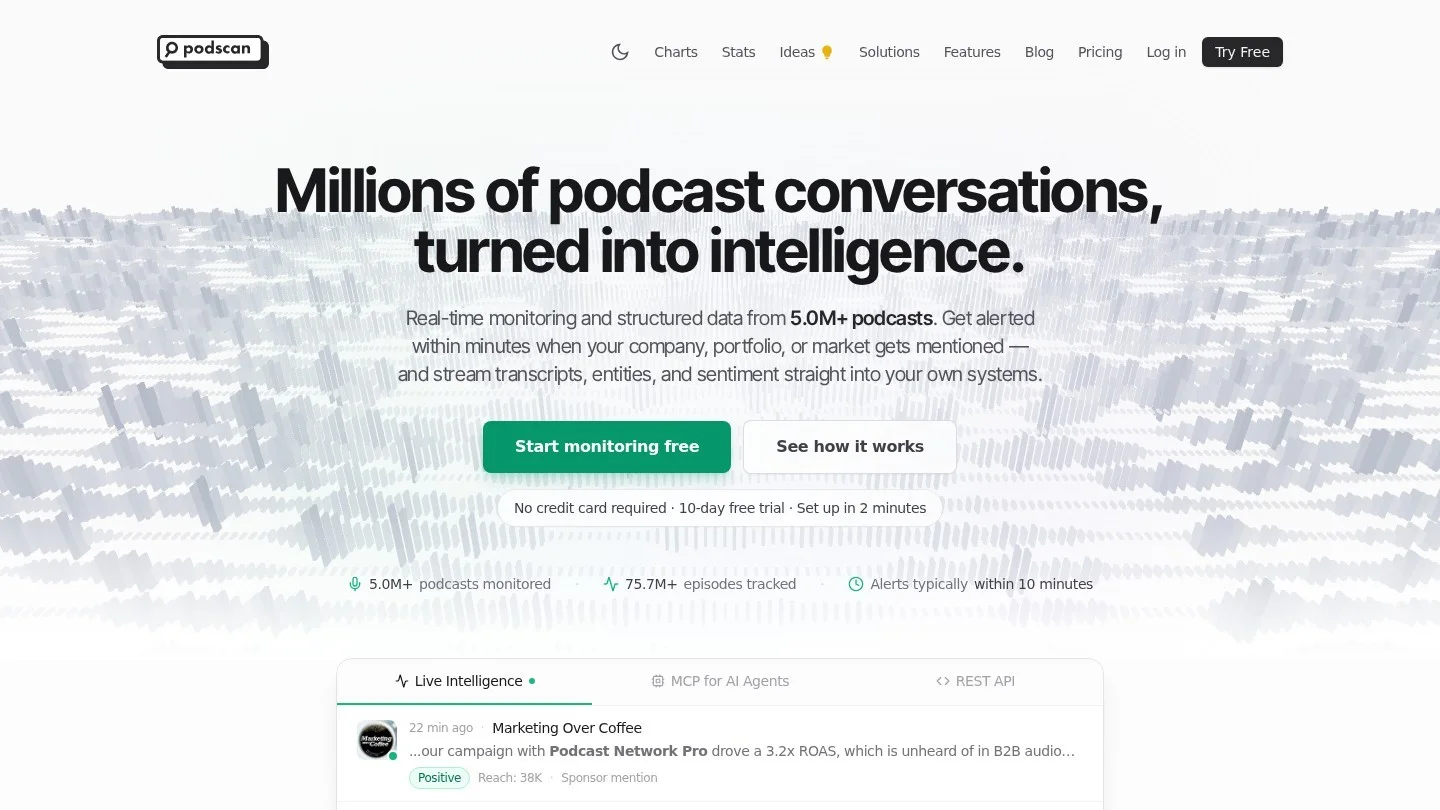
Arvid Kahl built Podscan, a podcast alerting and data platform. In his 2024 year-in-review, he wrote that it processes over 50,000 podcast episodes a day. It transcribes audio with OpenAI’s Whisper, then uses open models such as Llama and Mistral next to cloud models from OpenAI and Anthropic.
Still, he did not stay fully alone. He brought on a designer and outreach lead named Nick, whom he calls almost a co-founder. He also wrote that AI models now help write the code that talks to other AI systems.
Choose a Job Your Buyer Already Pays Staff to Do
First, list jobs that local or mid-size firms pay a person to do every day. Phone answering and lead follow-up are two common ones. Then pick one trade whose vocabulary you know, because your agent’s prompts depend on it.
Next, test demand before you build anything. Call 20 owners in that trade and ask what the job costs them each month. If at least five say they would pay to remove it, you have a market worth a pilot.
Also check how crowded the niche is. Our directory of AI agents for small business shows the vendors already selling there. For niches that still have room, read our list of high-demand AI tool niches.
Besides, look for jobs with a clear unit of work, such as a call or a booking. A clear unit lets you price per use and prove results with a count. Support work is another common pick, because firms already track what each ticket costs. Our AI customer support cost statistics show how buyers measure that saving.
However, skip jobs where one mistake causes legal or medical harm. A solo founder has no team to catch errors in those fields.
Assemble the Stack From Five Price Lists
We compiled the stack a solo agent business needs from five official price lists. Each tool covers one layer. So you can swap any of them later without rebuilding the rest.
| Layer | Tool | Official price | What the price includes |
|---|---|---|---|
| Thinking and coding help | Claude Pro | $20 a month billed monthly, or $17 a month on the $200 annual plan | Claude Code comes with every paid plan |
| Workflow engine | n8n Cloud Starter | €20 a month, billed annually | 2,500 workflow executions a month |
| Phone agent | Retell AI | From $0.07 a minute, plus $2 a month per phone number | $10 in free credits and 20 concurrent calls |
| Payments | Stripe | 2.9% + 30¢ per domestic card charge, plus 0.7% for Stripe Billing | International cards add 1.5% |
| Social posts | Buffer Essentials | $6 per channel a month, or $60 per channel a year | Buffer’s AI Assistant |
Claude Pro is our pick for the founder’s own seat, because Claude Code comes with every paid plan. As a result, one $20 seat covers prompt writing and the code inside your workflows.
n8n then runs the agent logic. Our page on the n8n AI Agent covers how its agent node calls tools. However, 2,500 executions go fast if every client call fires a workflow, so watch that count in month two.
If you would sooner hand off inbox and calendar work than build workflows, Lindy does those tasks with approvals for outside actions. It bills in credits, at $0.01 per credit on its base plans.
Retell’s minute price changes with the model and voice you choose. For example, its pricing estimator shows $0.11 a minute on the default settings. Our Retell AI listing explains how its agents book appointments and hand calls to staff.
For a client dashboard, Lovable builds a working web app from plain-English prompts. Also, our guide to no-code AI agent builders compares more tools if you never want to touch code.
Read also: 20 Real-World AI Agent Examples and What Each One Teaches
Add Up What One Month Costs You
We modeled a solo business that runs phone agents for five clients. We assumed each client uses 500 minutes a month and pays $500. Those two inputs are our example, but every unit price comes from the stack table.
| Cost line | Math | Monthly cost |
|---|---|---|
| Retell voice minutes | 2,500 minutes x $0.11 | $275.00 |
| Retell phone numbers | 5 numbers x $2 | $10.00 |
| Stripe card fees | 5 charges x (2.9% of $500 + $0.30) | $74.00 |
| Stripe Billing | 0.7% of $2,500 | $17.50 |
| Claude Pro | One seat, billed monthly | $20.00 |
| Buffer Essentials | 2 channels x $6 | $12.00 |
| Total in US dollars | Sum of the lines above | $408.50 |
| n8n Cloud Starter | Billed annually | €20 |
So the business takes in $2,500 a month and spends $408.50 plus €20 on tools. In fact, that leaves a little over 80% before tax and your own time.
Even so, voice minutes are the line that moves. If a client doubles its call volume, your Retell bill for that client doubles too. That is why every plan you sell needs a minute cap. Our guide on controlling AI agent costs shows more ways to keep that line flat.
Set Your Price Before You Write Code
Pick a pricing model on day one, because it shapes how you build. A flat monthly fee is the plainest offer for small firms. However, it squeezes your margin when usage spikes, so add a usage cap and an overage rate.
Per-outcome pricing works once your agent logs a clear result, such as a booked appointment. Owners like it because they pay only when the agent delivers. But you need a known cost per outcome first, so run a month of pilots before you offer it.
We compared these models in depth in our guide to AI agent subscription pricing strategies. Also see our breakdown of AI tool pricing models for setup fees and seat-based plans.
Charge a setup fee as well. Writing prompts and testing calls for a new client takes real hours. Besides, a fee filters out buyers who are only curious.
Write the Agent’s Rules Before Its Prompt
First, sit with one owner and write down how a good employee handles the job today. Note the questions callers ask most and the right answer to each. Then decide when the agent must pass the call to a person, such as an angry caller or an after-hours emergency.
Next, turn those notes into the prompt and a short list of tools. For a phone agent, the tools are usually a calendar lookup and a booking action. Keep that list short, because each extra tool gives the model one more way to go wrong.
Then test before the agent meets a real customer. Make 30 test calls yourself, and include rude callers and people who change their minds mid-call. After each batch, log every miss and fix the prompt.
After launch, read transcripts every day for the first two weeks. In fact, this tuning is the work clients pay you for, since anyone can sign up for a voice platform. Our list of AI agent examples shows how working agents split tasks between tools and human handoffs.
Also write a one-page runbook for each client. It should list the prompt version, the handoff number and the hours the agent covers. As a result, you can fix a problem at night without digging through old messages.
Follow This 90-Day Launch Plan
The plan assumes you work alone and full time, with no product yet. Each month ends with a test, and you should pass it before moving on.
Spend Days 1 to 30 Selling Before You Build
- In week one, pick one trade and list 50 businesses in one city.
- In week two, call or visit 20 of them and ask what the target job costs.
- In week three, build a rough demo agent in n8n or Retell with the free credits.
- In week four, show the demo to every owner who showed interest and ask for a paid pilot.
Then check your result before day 31. You pass if at least two owners agree to pay for a pilot.
Use Days 31 to 60 to Run Paid Pilots
- Set each pilot at a reduced fee for 30 days, with a written start and end date.
- Read every call transcript in the first week and fix the prompt each day.
- Log each failure, such as a wrong booking time or a missed handoff.
- Compare your real cost per client with the model in the cost table.
Before day 61, check two numbers. Your real cost per client should sit close to the model. Also, at least one pilot client should want to continue.
Turn Days 61 to 90 Into Monthly Contracts
- Move pilot clients onto a monthly plan billed through Stripe.
- Ask each happy client for one referral in the same trade.
- Write a one-page case study with the client’s real call numbers.
- Automate your own onboarding so a new client goes live within a day.
By day 90, aim for five paying clients. That target matches the cost model, so you will know your margin before you add a sixth.
Hand Your Own Back Office to Agents
Your own operations should run on the same tools you sell. For example, an n8n workflow can create the Stripe customer and send the welcome email when a client signs.
Also, let an assistant take routine inbox and calendar work. Claude’s Pro and Max plans include task hand-off and scheduling. Our listing for Claude Cowork covers how Claude works through your folders and connected apps.
Then batch your social posts. Buffer’s Essentials plan includes its AI Assistant, so you can draft and queue a month of posts in one sitting.
Next, give your own clients a support agent for first-line questions. Train it on your client runbooks so it can answer setup questions at any hour. After that, you only step in when a client reports a real fault.
Keep one rule, though. Never let an agent move money or delete client data without your approval.
Guard Against the Risks of Working Alone
A solo company has one point of failure, and it is you. So store every client’s prompts and logins in one password vault that a trusted person can open.
Next, watch vendor risk. If all your phone agents run on one platform and it raises prices, every client margin moves at once. That is why you should keep prompts and call logic in your own files, so you can switch platforms quickly.
Also plan for mistakes. Sooner or later an agent will book a wrong time or quote a wrong price. Agree in your contract how you handle that, and keep transcripts so you can show what happened.
Keep a cash buffer too. With five clients, losing one cuts a fifth of your revenue overnight. So save at least three months of tool and living costs before you quit a salaried job.
Finally, protect your hours. Tony Dinh handed support to an employee and wrote that he worked about four hours a day. Even without staff, you can route routine questions to an agent and keep only the escalations.
Settle the Questions New Solo Founders Ask Us
Decide If You Need to Write Code
You do not need to code to start, because n8n and Retell both work through visual editors. However, basic coding lets you fix edge cases faster, and Claude Code comes with every paid Claude plan. Our walkthrough on building an AI agent from scratch covers the code route.
Judge When to Hire Your First Person
Hire when one task eats more than a day a week and an agent cannot do it well. For example, Tony Dinh’s one full-time hire took over marketing and support. Danny Postma hired only after he could no longer manage everything alone.
Keep Client Data Safe on a Small Budget
Keep call recordings and transcripts only as long as your contract allows. Also turn on two-factor sign-in for every tool in your stack, because one stolen login can expose every client.
Measure Whether the Business Works
Track two numbers each month. The first is gross margin per client, and the second is the hours you spend on each one. If margin holds near our 80% model and your hours keep falling, the business is working.
Related AI Agents


Read also: How to Build a CI/CD Pipeline for AI Agents
Explore Agent Categories
Related Articles
 Guides1,000 Pages From One Spreadsheet: Programmatic SEO With AI Agents
 Guides20 Real-World AI Agent Examples and What Each One Teaches
 GuidesHow to Build an AI Agent With LangChain
 GuidesHow to Build a CI/CD Pipeline for AI Agents
 GuidesAI Agent Evaluation Datasets: How to Build Them
 GuidesHow to Build an AI Agent From Scratch
